

What Is a Hair Topper?
Thinning at the crown makes you check every mirror and photo. Full coverage feels like too much. There is a lighter fix that works with the hair you still love.
A hair topper is a partial hairpiece that adds volume and coverage to the top of your head. It clips into your natural hair, blends with it, and covers thinning areas without hiding your whole head like a wig.
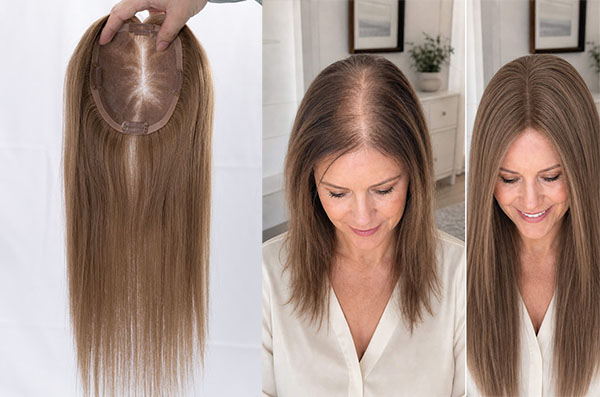
If you are new to hairpieces, the words topper, wiglet, wig, and hair system can blur together fast. I have worked with hair for years, and I still hear these terms used the wrong way in salons. So let me break each one down in plain language, and by the end you will know exactly which piece fits your hair goals.
What Is a Hair Topper and How Does It Work?
You part your hair, see the scalp shining through, and feel deflated. A full wig feels heavy and unnecessary. A topper targets only the problem area.
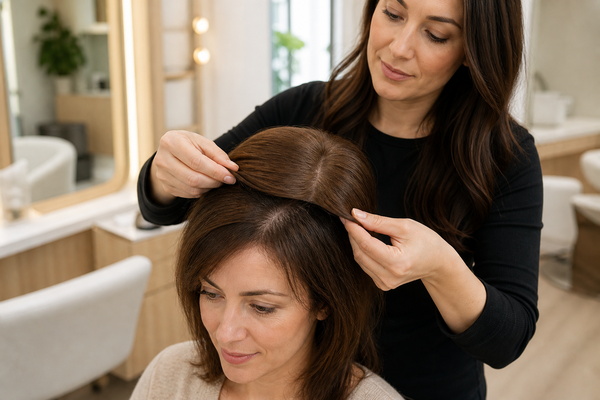
A hair topper is a half-piece that sits on the top and crown of your head. It clips into your existing hair around the thinning area, so it stays secure and blends naturally with your own length.
How a topper actually works
The base of a topper is made from lace, silk, mono filament, or a skin-like polyurethane layer, and the hair is hand-tied or injected into that base. Around the edges you find small pressure-sensitive clips. To wear one, you lift a thin section of your natural hair, snap the clips into it, and let your own hair fall over the blend line. Because the topper uses your real hair as the anchor, it looks like growth from your own scalp. It also leaves the back and sides of your hair completely untouched. That matters if your hair is still thick everywhere except the top, which doctors call female pattern hair loss[1] — the most common thinning pattern for women. One warning from my own experience: never clip a topper over already fragile, breaking hair, because the weight can pull on it and lead to traction alopecia[2]. If your natural hair at the top is very sparse, a topper may not have enough to grip, and a full wig becomes the better choice.
Is a Hair Topper a Wig?
You want quick coverage, and the labels confuse you. Toppers and wigs sit in the same shopping category. But they are not the same product.
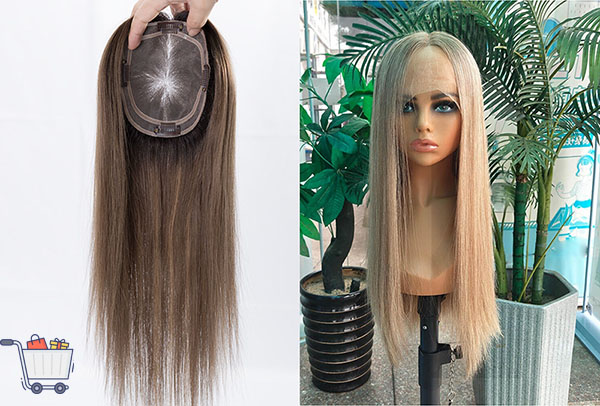
No, a hair topper is not a wig. A topper covers only part of your head and blends with your natural hair, while a wig covers your entire head and replaces your hairline completely.
The key differences at a glance
I tell my customers to think of it this way: a topper works with your hair, and a wig works instead of your hair. Here is how they compare.
| Feature | Hair Topper | Full Wig |
|---|---|---|
| Coverage | Top and crown only | Entire head |
| Attachment | Clips into natural hair | Cap with straps, combs, or adhesive |
| Natural hair needed | Yes, for blending and anchoring | No |
| Breathability | Very breathable | Depends on cap construction |
| Best for | Thinning crown, part-line widening | Full coverage, hair loss, style changes |
| Application time | About 5 minutes | 10–30 minutes or a full install |
That last row matters for daily life. A topper is a grab-and-go piece for most women. A wig asks for a bit more routine, especially a lace front[3] that you melt down or a glueless unit you still need to position carefully.
What Is the Difference Between a Hair Patch, a Hair System, and a Hair Topper?
These three names appear in the same search results, which makes shopping harder. Each word points to a different customer. Picking the wrong one wastes money.
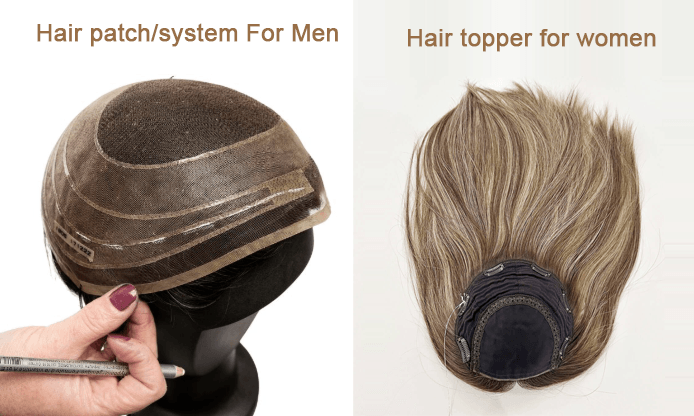
A hair patch and a hair system usually describe men’s hairpieces that cover balding areas and bond to the scalp. A hair topper is a women’s piece that clips into existing hair to add volume on top.
Same goal, different designs
In my factory we make both, and the construction difference is bigger than most people expect. A men’s hair system, also called a toupee[4] or hair patch, is bonded directly to shaved or bare scalp with tape or liquid adhesive, because most men who wear one have little or no hair left to clip onto. The base is built for long wear, often 2 to 6 weeks before a re-bond, and the hairline is the focus. A topper assumes you still have healthy hair around the thinning zone, so it uses clips and stays removable. A "full hair system" for women is essentially a full-coverage piece bonded like a men’s system, which is a step beyond a topper and closer to permanent wear. So if a listing says hair patch or system, check who it is designed for before you buy.
Which Is Better: a Hair Topper or a Full Wig?
You only want to buy once, and both options promise a confidence boost. The wrong pick means an expensive piece sitting in a drawer.
Neither is universally better. A topper is better when your hair is healthy except the top; a wig is better when you want full coverage, a new hairline, or a completely different look.
When to choose each one
I guide customers with three simple questions. First, how much natural hair do you have? If the sides and back are strong, a topper wins because it is lighter, cooler, and faster to apply. Second, what is your goal? If you want volume and coverage where you thin, choose a topper. If you want length, color changes, or full coverage from hair loss[5] or a shaved head, choose a wig. Third, how much daily effort do you want? A topper snaps in and out in minutes. A glueless wig is also beginner-friendly, but lace wigs with adhesive need skill and time. Answer these three, and the choice usually makes itself.
Hair Topper vs. Wiglet vs. Top Piece: Are They the Same Thing?
You find three names for what looks like one product. The prices differ, so you wonder if something is different. Here is the honest answer.
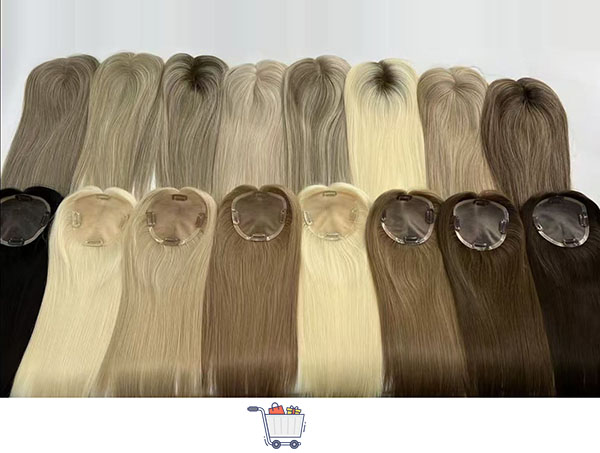
Yes, they are the same product. Hair topper, wiglet, and top piece are different names for a partial hairpiece that covers the crown and top of the head.
Why three names exist
The word wiglet is the oldest of the three, and you still see it on vintage listings and some American retail sites. Top piece is the plain industry term, often used by stylists and wholesalers. Hair topper became the popular search term in recent years, so most brands now label products that way even when the box once said wiglet. There is no difference in construction or function between the three names. What does differ is base size. Toppers come in small, medium, and large bases, from about 4×4 inches for a part-line touch-up to 9×8 inches or larger for advanced thinning. The larger the base, the more coverage you get, and the closer you drift toward full-wig territory. So shop by base size and coverage, not by the name on the tag.
How Much Maintenance Do Toppers Need Compared to Full Wigs?
You are ready to buy, but you want the real cost of upkeep. Nobody wants a high-maintenance piece with a low-maintenance life.
Toppers need slightly less maintenance than wigs because they are smaller. Wash every 7–10 wears, use sulfate-free shampoo, and store them on a stand away from heat and sun.
A simple care routine that works
I give both topper and wig wearers the same core routine, because human hair is human hair no matter how it is attached. Detangle gently from the ends upward before washing. Wash with cool water and sulfate-free[6] products, and let the piece air dry on a stand. Sleep is the big difference: most women remove a topper every night since the clips pop out in seconds, which means less friction damage overnight. Wig wearers who sleep in their units need a satin bonnet or pillowcase to fight friction. A topper made with premium Remy human hair typically lasts 1–2 years of daily wear, while a quality human hair wig can last 1–3 years with good care… Lower-grade or non-Remy hair will age faster, so the hair quality matters more than the piece type. Whichever you choose, heat is the enemy — always use a heat protectant before styling.
Conclusion
A hair topper is a clipped-in partial piece that restores volume where women thin first: the top and crown. A wig covers everything and replaces your whole look. If your hair is healthy except on top, start with a topper. If you need or want full coverage, choose a wig.
References
- MedlinePlus Genetics: Androgenetic Alopecia — the U.S. National Library of Medicine’s overview of pattern hair loss in women and men, including causes and frequency. ↑ Back
- Wikipedia: Traction Alopecia — a referenced introduction to hair loss caused by prolonged pulling, common with tight clips, braids, and heavy hairpieces. ↑ Back
- Wikipedia: Lace Wig — how lace front wigs are constructed, worn, and maintained, including the "melt" application method. ↑ Back
- Wikipedia: Toupee — the history and construction of men’s partial hairpieces, including bonding methods and materials. ↑ Back
- Wikipedia: Hair Loss — a broad overview of hair loss types, causes, and treatments with medical citations. ↑ Back
- Wikipedia: Shampoo — how shampoos work and why sulfate-free formulas are gentler on hairpieces and color-treated hair. ↑ Back