

Can Vitamin B12 Deficiency Cause Hair Loss?
Experiencing hair thinning or loss can be distressing, and identifying potential causes, such as vitamin deficiencies, is crucial for finding effective solutions.
Indeed, vitamin B12 deficiency can contribute to hair loss. This deficiency affects red blood cell production, which in turn impacts hair follicles and hair growth. Healthy red blood cells are vital for transporting oxygen and nutrients to the hair follicles, ensuring proper hair development and maintenance.
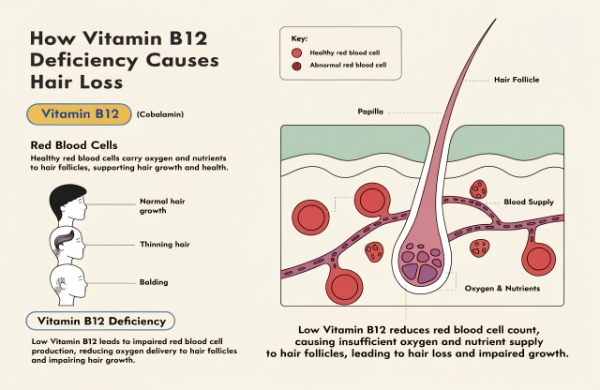
Addressing a B12 deficiency through supplements or dietary changes may help restore hair health. Foods rich in vitamin B12, such as meat, fish, eggs, and dairy products, can be beneficial additions to your diet.
However, consulting with a healthcare provider is essential for an accurate diagnosis and appropriate treatment plan. A professional can guide you on the best course of action, considering your overall health and specific nutritional needs, leading to improved hair health and reduced hair loss.
What Vitamin Am I Lacking If My Hair Is Falling Out?
Hair loss can be an indicator of a nutrient deficiency, and identifying the missing vitamin is key to effective treatment.
Several vitamins and minerals are commonly linked to hair loss, including:
Vitamin B12: Essential for red blood cell production, which supports healthy hair follicles and growth.
Vitamin D: Plays a crucial role in creating new hair follicles. Deficiency can lead to thinning hair.
Biotin (Vitamin B7): Often associated with hair health, supporting keratin structure in hair.
Iron: Necessary for carrying oxygen to cells, including those in the hair follicles, influencing hair growth.
Addressing these deficiencies through a balanced diet rich in these nutrients can support improved hair health. Foods like fish, eggs, spinach, and fortified cereals can be beneficial.
Consulting with a healthcare provider for proper testing and guidance ensures a tailored approach to restoring nutrient levels, ultimately promoting stronger, healthier hair.
What Is the Best Vitamin to Stop Hair Loss?
Fighting hair loss requires the right nutrients. Knowing the best vitamins to support hair health is crucial.
Biotin, vitamin D, and B12 are among the best vitamins to prevent hair loss. They promote healthy follicles and strengthen hair.
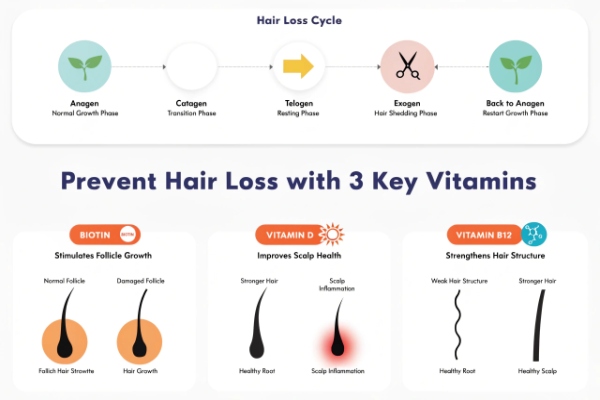
Incorporate these into your diet or supplements to support and maintain hair health. Always consult a healthcare professional before starting new supplements.
Does B12 Help Hair Growth?
When exploring ways to enhance hair growth, the role of vitamins, particularly B12, often comes into focus.
Vitamin B12 plays a crucial role in supporting hair growth by aiding in the production of red blood cells. These cells are responsible for delivering oxygen and essential nutrients to hair follicles, which promotes healthy hair development and growth.
Adequate intake of B12 can contribute to thicker, healthier hair. It’s found in foods like meat, fish, eggs, and dairy products. For those with dietary restrictions, B12 supplements may be beneficial.
Consulting a healthcare provider is important to determine if you have a B12 deficiency and to receive personalized advice on supplementation. This ensures that you take the appropriate steps to support healthy hair growth effectively.
How Long Does B12 Take to Grow Hair?
Patience is essential when using vitamins to enhance hair health, and understanding the timeline can set realistic expectations.
After addressing a B12 deficiency, you might start to notice improvements in hair health within 1-2 months. However, visible changes in hair growth can take longer due to the natural hair growth cycle, which includes phases of growth, rest, and shedding.

Consistency in taking supplements or making dietary changes is crucial for sustained improvement. It’s important to remember that hair grows, on average, about half an inch per month, so visible differences may take time.
Sticking with the regimen and consulting with a healthcare provider will help tailor the approach to your needs, ensuring optimal results for healthier, stronger hair over time.
Will Hair Grow Back After Vitamin B12 Deficiency?
Recovering from a deficiency often raises concerns about hair regrowth and long-term effects.
Hair can grow back after addressing a B12 deficiency. The body needs time to replenish nutrients, so patience and consistent supplementation are key.
Consulting with a healthcare provider ensures a tailored approach to treatment and regrowth.
Conclusion
Vitamin B12 plays a critical role in hair health. Addressing any deficiency can help restore hair and promote growth.