

You had a baby months ago. Now handfuls of hair fill your shower drain, and your thinning crown makes you feel like a stranger. A topper can help.
Yes, hair toppers can help with postpartum hair loss by adding volume and coverage to thinning areas, especially around the crown and part line. A topper does not stop shedding or regrow hair, but it conceals visible gaps while your body recovers. Most postpartum shedding resolves within twelve months.
I remember the first time a friend confided in me about her postpartum hair loss. She was four months postpartum and terrified she was going bald. I told her what I am about to share with you in this article – the facts, the timeline, and the safe ways to feel like yourself again while your hair recovers.
Can Hair Toppers Help with Post Pregnancy Hair Loss?
You see clumps of hair falling after your baby arrives, and you want a quick fix. The shedding feels relentless, and the thinning around your part line is hard to ignore.
Yes, hair toppers can help with post pregnancy hair loss by blending with your existing hair to add density and cover thinning spots. Silk base hair toppers work especially well because the silk top mimics a natural scalp, making the added hair look like it grows from your own head. Toppers provide cosmetic coverage, not medical treatment.

How Postpartum Shedding Works and How Toppers Fill the Gap
Postpartum hair loss is a form of telogen effluvium[1]. During pregnancy, high estrogen levels keep more hairs in the growing phase. After birth, estrogen drops and those hairs enter the shedding phase all at once. This is why you see the bulk of shedding around three to four months postpartum. The condition is temporary and is not true hair loss. Your follicles are healthy and will resume normal growth cycles on their own. Hair loss after pregnancy is the same condition, just described with different words. Whether you call it postpartum shedding or post pregnancy hair loss, the cause and timeline are identical.
Postpartum hair loss[2] affects most new mothers. The shedding peaks at about four months and typically resolves within twelve months. A silk hair topper helps during this window because it sits on top of your existing hair and fills in the thinning areas with volume. The silk base creates the illusion of a natural part line, which is where postpartum thinning is most visible. I wore a silk topper for three months after my second baby, and it gave me back my confidence while I waited for my hair to return.
The key is to choose a hair topper that matches your hair color and density. You want it to blend, not to look like a helmet. Start with a smaller piece – a 5×5 or 6 inch base — that covers just the top and crown area.
| Feature | Regular Hair Topper | Silk Base Hair Topper |
|---|---|---|
| Scalp illusion | Lace or mono top | Silk top (most natural) |
| Best for postpartum | General thinning | Crown and part line gaps |
| Durability | 6-12 months with care | 8-14 months with care |
| Comfort | Lightweight | Slightly thicker but softer |
Can a Hair Topper Conceal Postpartum Thinning Without Treating the Underlying Hair Loss?
You want coverage now, but you also want to make sure you are not ignoring a real problem. Can a topper hide the thinning while your body heals on its own?
Yes, a hair topper can conceal postpartum thinning without treating the underlying hair loss. Toppers add hair volume visually, but they do not address the hormonal shift causing the shedding. Postpartum hair loss is temporary and self-resolving in most cases, so cosmetic coverage is a safe bridge during recovery.

Coverage Is Not Treatment — But That Is Okay
A hair topper is a cosmetic tool, not a medical one. It sits on your head and adds hair where thinning is visible. It does not stop excessive hair shedding[3] or regrow follicles. But here is the important part. Postpartum hair loss is not a disease. It is a normal physiological response to hormonal changes after birth. Your hair follicles are not damaged. They are simply releasing hairs that pregnancy held onto longer than usual.
This means you do not need treatment for most postpartum shedding. You need patience and a way to feel confident while you wait. A topper is that bridge. I always tell new moms that wearing a topper is not about hiding something shameful. It is about giving yourself a tool to feel normal during a temporary phase. Think of it like wearing makeup for a special event. You are not fixing a flaw. You are choosing to present your best self on days when you need a boost.
One caution. If you treat a topper as a permanent fix and never check whether your shedding has resolved, you might miss signs that something else is going on. Track your shedding volume over time. If it does not improve after twelve months, see a doctor.
| Approach | What It Does | What It Does Not Do |
|---|---|---|
| Hair topper | Conceals thinning visually | Stops shedding or regrows hair |
| Volumizing shampoo | Makes existing hair look fuller | Adds new hair |
| Healthy diet | Supports hair growth over time | Provides instant coverage |
| Doctor visit | Diagnoses underlying causes | Provides cosmetic coverage |
What Topper Base Is Gentlest During Postpartum Shedding?
Your scalp feels sensitive after birth. You want coverage, but you do not want a base that pulls or irritates already fragile hair.
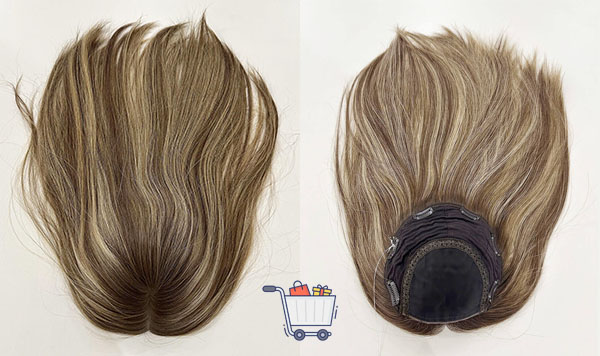
The gentlest topper base for postpartum shedding is a silk base or a lightweight lace front. Silk bases distribute pressure evenly and feel soft against the scalp. Lace fronts are breathable and lightweight. Both options avoid heavy materials that can tug on fragile postpartum hair. Avoid monofilament bases with stiff edges during active shedding.
Choosing a Base That Protects Fragile Hair
During postpartum shedding, your hair is more vulnerable than usual. The hairs that are falling out are in the resting phase, and rough handling can pull out hairs that are still growing. You want a base that applies minimal tension. A temporary hair loss[4] phase means your scalp may also feel more sensitive due to hormonal changes, so comfort matters as much as function.
Silk base toppers are my top recommendation for postpartum use. The silk fabric sits flat against the scalp and does not have the slightly rough texture of some lace or mono tops. The pressure from the clips spreads across a wider area, which reduces pinpoint pulling. Lace front toppers are another gentle option. The lace is thin and breathable, and it creates a natural hairline without needing adhesive along the back.
I suggest avoiding monofilament tops with thick, stiff edges during the first six months postpartum. Mono tops are durable, but the stiffer material can press against a sensitive scalp and create friction. Once your shedding slows down and your scalp feels normal again, you can switch to any base you prefer.
| Base Type | Gentleness | Breathability | Natural Look | Best for Postpartum? |
|---|---|---|---|---|
| Silk base | High | Medium | Very natural | Yes, top choice |
| Lace front | High | High | Natural | Yes, great option |
| Monofilament | Medium | Medium | Natural | After shedding slows |
| Silk + lace combo | High | High | Very natural | Yes, premium option |
Can Topper Clips Worsen Fragile Postpartum Hair?
You are excited to wear a topper, but you are also worried. The clips that hold it in place — could they pull out more of your already thinning hair?
Yes, topper clips can worsen fragile postpartum hair if placed too tightly or worn too long. But clip damage is preventable. Use pressure-sensitive clips, attach them to areas with enough density, remove the topper before sleeping, and rotate clip positions daily to avoid repeated tension on the same strands.
Safe Clip Practices for Postpartum Hair
The concern about clips is real, but it is manageable. Postpartum hair is in a fragile state because many hairs are in the shedding phase. Any mechanical stress — tight clips, rough brushing, or constant pulling — can dislodge hairs that were not ready to fall yet. The causes of hair loss[5] include both hormonal and mechanical factors, and clip tension falls into the mechanical category.
I learned this the hard way. During my postpartum shedding phase, I clipped my topper too tight because I was afraid it would slip. After a week, I noticed extra short broken hairs around my temples. I adjusted my approach. I started using the pressure clips that come with the topper rather than adding stronger ones. I clipped only to areas with enough hair to hold the clip securely — the sides and back, not the thin crown. I also started removing the topper for at least two hours a day to let my scalp breathe.
Here is my checklist for safe clip use during postpartum. Use only the clips that come with the topper, because they are designed to hold without excessive force. Clip to areas with adequate hair density, and if a clip slides or pulls, move it to a thicker spot. Never sleep in a clip-in topper, because the friction against a pillow will cause breakage. Rotate the clip positions slightly each day so the same hairs are not under tension repeatedly. If your hair is too thin for clips, consider a grip band or a velvet headband that holds the topper without clips.
| Clip Practice | Risk to Hair | Recommendation |
|---|---|---|
| Clips on thin areas | High — pulls hair out | Move to thicker areas |
| Sleeping in topper | High — friction breakage | Always remove |
| Pressure clips (included) | Low — gentle hold | Use as provided |
| Stronger replacement clips | Medium-High | Avoid during postpartum |
| Grip band alternative | Very low | Best for very thin hair |
When Should Postpartum Hair Loss Be Checked by a Doctor?
You have been shedding for months. Some days it feels like it will never end. How do you know when it is still normal and when it is time to call a doctor?
You should see a doctor if your postpartum hair loss continues beyond twelve months, if you notice bald patches, if your scalp is itchy or painful, or if you have other symptoms like fatigue or weight changes. Prolonged shedding may point to iron deficiency, thyroid issues, or vitamin deficiencies that require medical treatment rather than cosmetic coverage.
Red Flags That Go Beyond Normal Shedding
Normal postpartum hair loss follows a predictable pattern. It starts two to four months after birth, peaks around four months, and gradually tapers off. By your baby’s first birthday, your hair should be back to its normal fullness. But not every case follows this timeline. Some women experience shedding that lasts longer, or they develop symptoms that suggest a different cause entirely.
Here are the signs that you should see a doctor rather than continue relying on a topper alone. First, if shedding has not slowed down after twelve months, this could mean your hair loss is not purely postpartum. Second, if you see distinct bald patches rather than general thinning, patchy loss can indicate a different condition. Third, if your scalp is red, itchy, flaky, or painful, these symptoms suggest inflammation or infection. Fourth, if you have other symptoms like extreme fatigue, unexplained weight gain or loss, or mood changes, these could point to thyroid dysfunction or nutritional deficiencies.
I always tell new moms to trust their instincts. If something feels wrong, make an appointment. A dermatologist can examine your scalp, run blood tests, and give you a clear diagnosis. A hair topper is a wonderful tool for confidence, but it should never replace medical care when your body is signaling a problem. Your health comes first, and a proper diagnosis can save you months of unnecessary worry.
| Symptom | Normal Postpartum? | When to See a Doctor |
|---|---|---|
| Gradual thinning, 2-4 months | Yes | If it lasts past 12 months |
| Heavy shedding, peaks at 4 months | Yes | If it does not taper by 6 months |
| Bald patches | No | See a doctor immediately |
| Itchy or painful scalp | No | See a doctor |
| Fatigue with hair loss | No | Check thyroid and iron levels |
| Hair returns by 12 months | Yes | No action needed |
Conclusion
Hair toppers are a safe and effective way to cover postpartum thinning while your body recovers. Choose a silk or lace base, use gentle clips, and monitor your shedding timeline. If hair loss persists past twelve months or comes with other symptoms, see a dermatologist. You deserve to feel confident during every stage of motherhood.
References
Cleveland Clinic — Telogen effluvium: symptoms, causes, and treatment. ↑ Back
Cleveland Clinic — Postpartum hair loss: causes, treatment, and what to expect. ↑ Back
American Academy of Dermatology — Hair loss in new moms: dermatologist tips. ↑ Back
Wikipedia — Telogen effluvium overview and triggers. ↑ Back
MedlinePlus — Hair loss causes and conditions overview. ↑ Back