

You look in the mirror and see scalp where hair used to be. The crown is thinning, the part keeps widening, and the front hairline looks fragile. You want coverage without surgery.
Yes, you can cover thinning hair at the crown, part, and front with a hair topper. A topper clips into your existing hair and adds volume exactly where you need it. Choose a silk or lace base sized to match your thinning area, and blend it with your natural hair color for seamless coverage.
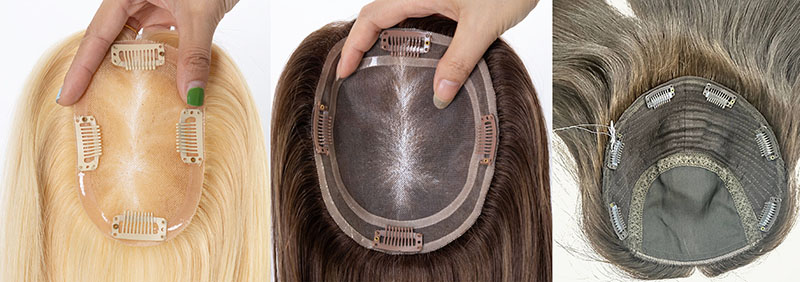
I have helped dozens of women find the right topper for their specific thinning pattern. The key is matching the base size and type to the area you want to cover. Let me walk you through each area.
How Can I Hide My Thinning Hair on Top of My Head?
You see more scalp on the top of your head every month. Ponytails look thinner, and bright lights make the thinning obvious. You need a solution that stays secure all day.
You can hide thinning hair on top of your head with a crown hair topper. A 5×5 or 6×6 inch silk or mono base topper covers the crown area by clipping into the surrounding hair. The added hair blends with your natural strands to create full volume on top.
Choosing the Right Topper for Crown Thinning
Crown thinning is the most common area women want to cover. The top of the head is where pattern hair loss[1] usually starts in women. The hair becomes finer and shorter over time, and the scalp becomes visible through the thinning strands. A crown topper sits right on top of this area and fills it in with new hair that matches your color and texture.
I always tell women to measure their thinning area before buying. Take a soft measuring tape and measure the width and length of the area where you can see scalp. Add one inch to each measurement so the topper has enough hair around the edges to clip onto. For most women with crown thinning, a 5×5 or 6×6 inch base works well. If your thinning extends from the crown toward the front, you may need a 7×7 or 8×8 inch base for full coverage.
The base material matters too. Silk bases look the most natural because they mimic the appearance of hair growing from a scalp. Monofilament bases are durable and let you change the part direction. Lace bases are lightweight and breathable. For crown coverage, I recommend silk or mono because they lay flat against the scalp and stay secure.
| Topper Base Size | Coverage Area | Best For |
|---|---|---|
| 4×4 inch | Small crown spot | Early thinning, small gaps |
| 5×5 inch | Crown and part | Moderate crown thinning |
| 6×6 inch | Crown to front | Wider thinning area |
| 8×8 inch | Full top coverage | Advanced thinning on top |
| 10×10 inch | Full head top + sides | Extensive hair loss |
How to Disguise Thinning Hair at the Front?
Your front hairline is receding, and you hate how it looks in photos. Bangs used to hide it, but now even bangs look sparse. You need frontal coverage that looks natural.
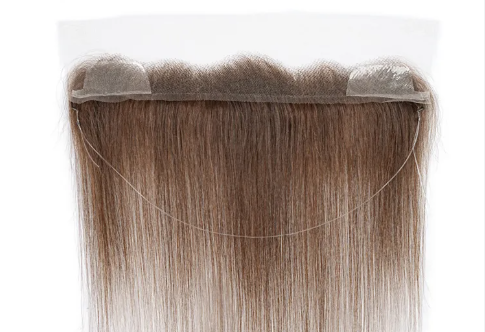
You can disguise thinning hair at the front with a lace front hair topper. A lace front topper has a sheer lace edge that creates an undetectable hairline. The lace blends into your skin tone, so the added hair looks like it grows from your own forehead. Clip it in at the temples for secure frontal coverage.
Frontal Hair Toppers for a Natural Hairline
Frontal thinning is challenging because the front hairline is the most visible part of your head. Everyone sees it when they talk to you. A lace front topper is the best option for this area because the lace creates a realistic hairline that disappears against your skin. The hair appears to grow right from your forehead, and no one can tell you are wearing anything.
I tried a lace front topper myself when my temples thinned after a stressful year. The difference was immediate. I could pull my hair into a half-up style without worrying about visible gaps at my hairline. The key is to choose a lace color that matches your skin tone. Most lace fronts come in transparent, light brown, or medium brown. You can also use foundation or tinted lace spray to blend the lace with your skin.
When choosing a frontal topper, look for one with a lace front that is at least 2 to 3 inches deep. This gives you enough lace to create a natural transition from the hairline to the bulk of the topper. Avoid toppers with lace that is too short, because they can look abrupt. Also, make sure the topper has enough clips at the front and sides to hold it securely without pulling on fragile temple hair.
| Feature | Lace Front Topper | Silk Base Topper | Mono Top Topper |
|---|---|---|---|
| Hairline realism | Excellent | Good | Fair |
| Best area | Front and temples | Crown and part | Crown only |
| Breathability | High | Medium | Medium |
| Need for adhesive | Optional | No | No |
Can a Hair Topper Cover a Widening Part?
Your part keeps getting wider. You try changing where you part your hair, but the thinning shows no matter what. You wonder if a topper can fill in just the part line.
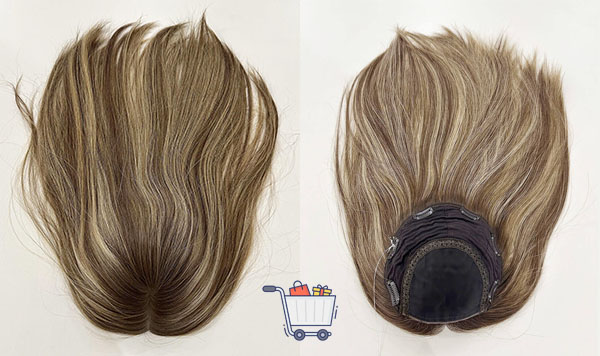
Yes, a hair topper can cover a widening part. A silk base topper is ideal because the silk top creates the illusion of hair growing from a natural part line. Choose a base size that is wider than your widened part, and the topper will fill in the gap with natural-looking density.
Part Coverage with the Right Base Size
A widening part is one of the earliest signs of female pattern hair loss[2]. The hair along the part line becomes thinner and shorter, so the scalp shows through more and more. This is called miniaturization, and it happens gradually over months or years. A topper covers the widened part by adding hair that sits right on top of the thinning area.
The secret to covering a widening part is the base material. A silk base topper has a layer of silk at the top that creates a realistic scalp appearance. When you part the topper hair, the silk looks like your own scalp, and the hair looks like it grows from that part. This is much more natural than a lace or mono top, where the base material can sometimes show through the part line.
I recommend measuring your part width before choosing a topper. A normal part is about 0.25 inches wide. If yours is 0.5 inches or wider, you have noticeable widening. Choose a topper base that is at least 2 inches wider than your part on each side. So if your part is 1 inch wide, a 5×5 inch base will cover it with room to spare. This ensures the topper clips into healthy hair around the thinning area.
| Part Width | Thinning Level | Recommended Base |
|---|---|---|
| 0.25 inch | Normal | No topper needed |
| 0.5 inch | Mild widening | 4×4 or 5×5 inch |
| 0.75 inch | Moderate widening | 5×5 or 6×6 inch |
| 1 inch or more | Advanced widening | 6×6 or 8×8 inch |
| 2 inches or more | Severe widening | 8×8 or 10×10 inch |
Can a Topper Cover a Bald Spot?
You have a smooth, round bald spot on your scalp. It might be from alopecia areata or from years of traction. You want to know if a topper can cover it.
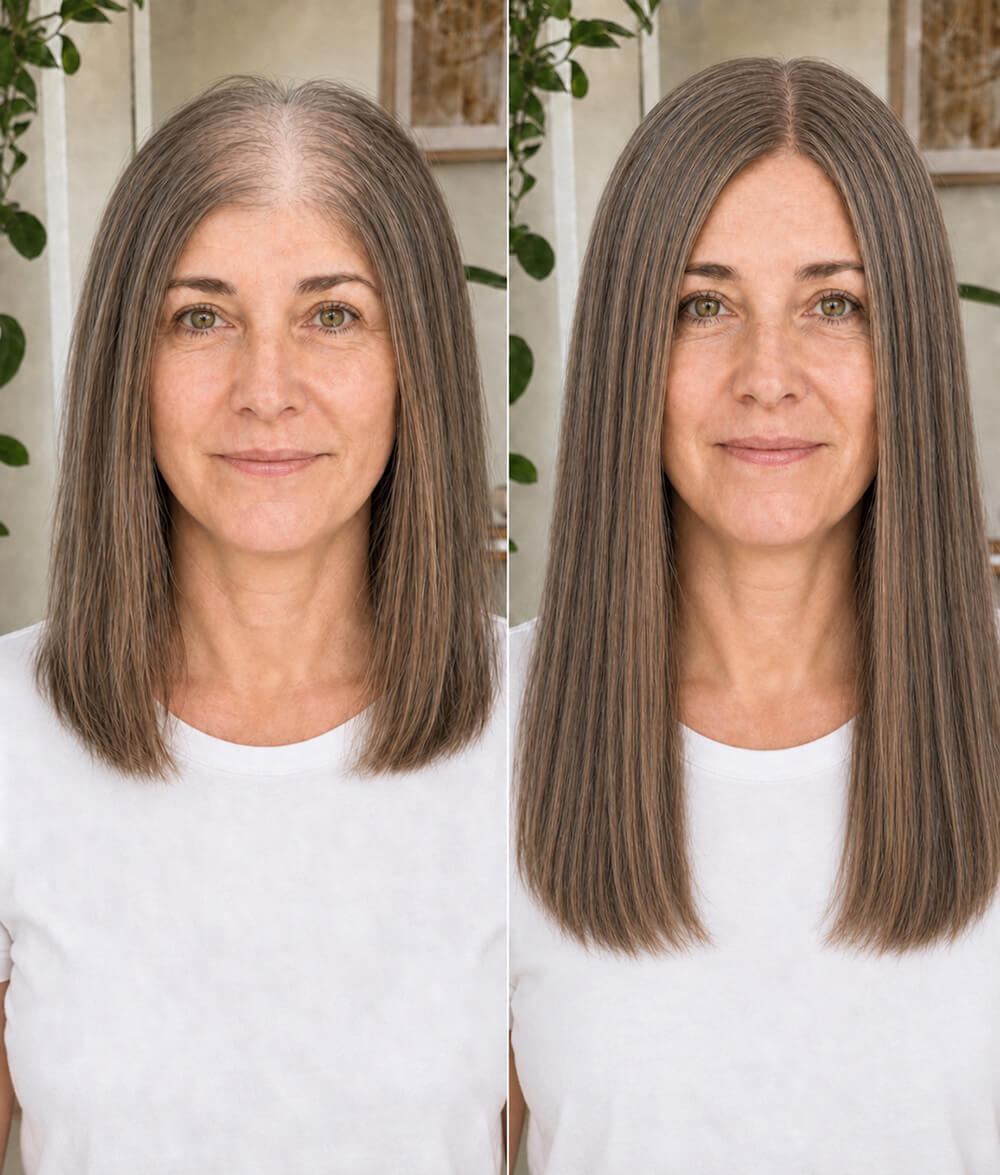
Yes, a topper can cover a bald spot if the surrounding area has enough hair for the clips to grip. If the bald spot is small and surrounded by healthy hair, a 4×4 inch topper works. If the bald spot is large or the surrounding hair is also thin, you may need adhesive or a grip band instead of clips.
Coverage Limits and Safe Application
A bald spot presents a unique challenge. Unlike general thinning, a bald spot is a completely hairless area. This means the topper clips have nothing to grip in the center. The clips must attach to the healthy hair around the edges of the bald spot. If the bald spot is small — about the size of a quarter or a half dollar — there is usually enough surrounding hair to hold a small topper securely.
For larger bald spots, the situation is different. Alopecia areata[3] can cause round or oval patches that are completely smooth. If the patch is larger than 2 inches across, clips alone may not hold the topper in place. In these cases, I recommend using a grip band or velvet headband underneath the topper. The grip band stays on your head through friction, and the topper clips onto the band instead of your hair.
I also want to be honest about the limits. A topper cannot cover a bald spot if the entire top of your head is bald and there is no hair at all for clips or bands. In that case, a full wig is a better choice. A wig covers the entire head and does not need any existing hair to stay in place. If you are unsure, start with a topper and see if it works. You can always switch to a wig later.
| Bald Spot Size | Clip Method | Recommendation |
|---|---|---|
| Under 1 inch | Clips on surrounding hair | Small 4×4 topper |
| 1-2 inches | Clips on surrounding hair | 5×5 topper |
| 2-3 inches | Grip band + clips | 6×6 topper with band |
| Over 3 inches | Adhesive or grip band | Large topper or wig |
| Entire top bald | Wig cap | Full wig |
Do Hair Toppers Work for Female Pattern Hair Loss?
Your doctor said you have female pattern hair loss. It is progressive, meaning it will keep getting worse. You want to know if a topper is a good long-term solution.
Yes, hair toppers work very well for female pattern hair loss. Toppers provide instant cosmetic coverage while the condition progresses. Because toppers are removable, you can upgrade to a larger base size as your thinning worsens. Toppers do not treat the underlying condition, so combine them with medical treatment for best results.
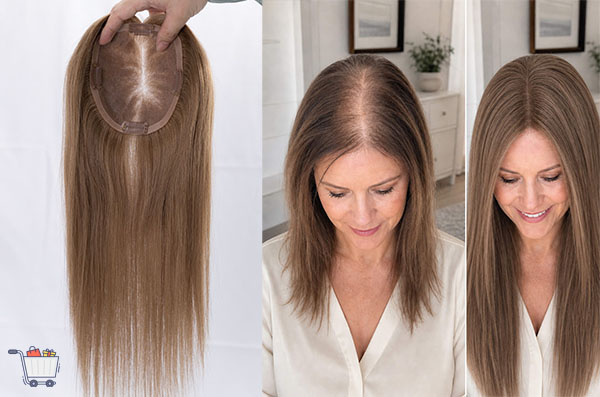
Managing Progressive Thinning with Toppers
Female pattern hair loss is the most common cause of hair loss in women. Hair loss[4] from this condition follows a predictable pattern. It starts with a widening part, then progresses to diffuse thinning across the top of the scalp. The hairline usually stays intact, which is why toppers are such a good fit. A topper covers exactly the area that thins — the top and crown — while leaving the back and sides untouched.
The biggest advantage of toppers for progressive thinning is flexibility. You are not locked into one size forever. I started with a 5×5 inch topper when my part first widened. Two years later, my thinning had spread, so I upgraded to a 7×7 inch base. The transition was easy because toppers are affordable compared to wigs. You can keep your old topper for backup and wear the new one daily.
I also want to stress that a topper should be part of a broader plan. The causes of hair loss[5] include genetics, hormones, and nutrition. A dermatologist can prescribe minoxidil or other treatments that may slow or partially reverse the thinning. Use the topper for confidence while the treatments work in the background. The topper gives you immediate results, and the medical treatment gives you long-term hope.
| Thinning Stage | Topper Size | Medical Treatment |
|---|---|---|
| Early (widening part) | 4×4 or 5×5 inch | Start minoxidil 2% or 5% |
| Moderate (visible scalp) | 5×5 or 6×6 inch | Minoxidil + see dermatologist |
| Advanced (diffuse top thinning) | 7×7 or 8×8 inch | Minoxidil + prescription options |
| Severe (most of top gone) | 10×10 or full wig | Consult hair transplant surgeon |
Conclusion
Hair toppers are a flexible and affordable way to cover thinning at the crown, part, and front. Match your base size to your thinning area, choose silk for natural parts and lace for frontal hairlines, and combine your topper with medical treatment for the best long-term results.
References
Wikipedia — Pattern hair loss (androgenetic alopecia): causes, genetics, and progression. ↑ Back
American Academy of Dermatology — Female pattern hair loss: symptoms, causes, and treatment options. ↑ Back
American Academy of Dermatology — Alopecia areata: signs, symptoms, and patchy hair loss. ↑ Back
Wikipedia — Hair loss overview: types, causes, and management. ↑ Back
MedlinePlus — Hair loss causes and conditions overview. ↑ Back