

How to Choose the Right Hair Topper: Coverage, Base, Density, and Lifestyle
Choosing the right hair topper feels stressful. Too many bases, densities, and sizes exist. One wrong pick looks fake. The right process fixes that.
You choose the right hair topper by matching coverage, base, density, and lifestyle. Measure the thinning area first. Then pick a base for your scalp, a density close to your own hair, and a routine you can keep. That combination looks natural.
I have helped customers pick toppers for years. I keep seeing the same mistakes. People choose by price or photo, not by fit. This guide gives you four simple filters. Use them, and the decision gets easy.
Which type of hair topper is best?
Every topper looks similar from a distance. But each one works differently. The wrong base shows fast.
The best hair topper type matches your scalp and your routine. Silk tops look the most natural. Mono tops breathe well. Lace fronts suit fine hairlines. Your thinning pattern decides which base wins for you.
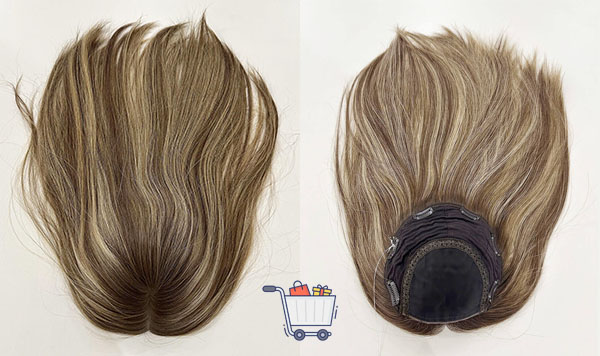
Base types compared
I bought a mono top first because it felt light. It was great in summer. But it did not hide my thinning crown well enough. Then I switched to a silk top, and the difference was instant. The base type controls how a topper looks, feels, and lasts. A silk top uses a thin silk layer that mimics real scalp. It gives the most natural part line. A mono top uses a fine mesh. It feels airy and stays cool, so it suits hot weather. A lace front works best when your hairline is the problem. Some women also use a toupee1 for the same job, but a topper covers a wider area. Think about where you thin, not just what looks pretty. The right base solves your actual issue.
| Base type | Best for | Natural look | Breathability |
|---|---|---|---|
| Silk top | Thinning crown or part | Most natural | Medium |
| Mono top | Sensitive scalp, hot weather | Very natural | High |
| Lace front | Frontal thinning | Natural hairline | High |
What should I look for when buying a hair topper?
A low price can hide low quality. Hair grade, cap size, and knots all matter. I missed these once and paid for it.
When you buy a hair topper, check hair grade, cap size, density, base type, and return policy. Measure your thinning area first. Compare the same factors across brands, then test comfort and security.

Start with your coverage size
Most people guess their size, and that is a mistake. Your coverage area decides your cap size. A small topper covers the crown. A larger one covers the whole top. Measure the thinning zone with a soft tape, then compare it to the base dimensions on the product page. Thinning from androgenetic alopecia2 can spread slowly over the years, so re-measure once a year. Then check the hair itself. Good human hair has cuticles that all point the same way. Run your fingers up a strand. If it catches, the hair is fine. Test the knots too. Hand-tied knots move naturally and stay invisible. Machine wefts feel stiff. I always ask about the return policy before I order, because fit is personal.
| Check | What to look for | Why it matters |
|---|---|---|
| Hair grade | 100% Remy human hair | Lasts longer, tangle-free |
| Base size | Matches your coverage | Hides thinning completely |
| Density | 120%–180% | Blends with your hair |
| Knotting | Hand-tied, bleached knots | Invisible at the part |
| Return policy | Clear and fair | Low risk if it does not fit |
What density hair topper looks most natural?
Density means how thick the hair is. Too thick looks obvious. Too thin fails to cover.
A hair topper with 130% to 150% density looks most natural. Match the density to your own hair, not old photos of yourself. Fine hair usually needs 120% to 130% instead.
Density and your own hair
Density is the amount of hair on the base, shown as a percentage. Think of it as fullness. Your own hair thickness is your reference point. Everyone notices some hair loss3 as they age, so your hair today is thinner than your hair at twenty. Match the topper to today, not to old photos. I recommend 130% to 150% for most women. It adds volume without looking fake. If your hair is very fine, choose 120% to 130%. If you love big, full styles, try 150% to 180%. One more tip: hold the topper next to your own hair in daylight. If the strand thickness and shine match, the density is right. If they clash, your eyes will notice it before anyone else does.
| Density | Best for | Look |
|---|---|---|
| 120%–130% | Fine, thin hair | Light and natural |
| 130%–150% | Most women, daily wear | Natural volume |
| 150%–180% | Thick or styled looks | Full and glamorous |
How do I choose the right hair topper for fine, thin hair?
Fine hair needs a light touch. A heavy topper pulls at your scalp. The wrong base shows through your strands.
For fine, thin hair, choose a light base, a medium density, and hand-tied knots. Pick a soft cap that lies flat. Avoid heavy silk bases that add bulk and pull at your scalp.
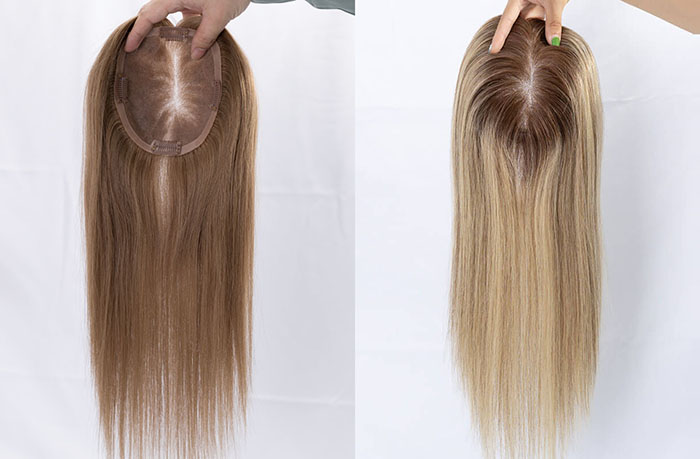
Light bases for fine hair
Fine, thin hair sits close to the scalp. It shows every seam and knot. So the base must be light and flat. Many women with thinning caused by female pattern hair loss4 choose a mono or silk base with open wefts. Open wefts reduce weight. The clips sit flat and stay hidden. Avoid dense bases with thick closures, because they add bulk. I also tell my customers to skip any topper with tight lace that digs into the scalp. Fine hair needs a soft grip, not a strong pull. Choose a density between 120% and 130%. This covers thinning without smothering your own strands. The topper should blend like a shadow, not sit like a cap.
| Feature | Choose | Avoid |
|---|---|---|
| Base | Mono or silk with open wefts | Heavy thick closures |
| Density | 120%–130% | Over 150% |
| Knotting | Hand-tied, bleached | Machine wefts |
| Clips | Flat, cushioned | Oversized clips |
What should I avoid when choosing a hair topper?
Some mistakes are hard to fix. Bad knots, shiny hair, itchy bases. I want you to skip these traps.
Avoid low-grade synthetic hair, heavy bases, mismatched density, and toppers that pull at your edges. Skip brands without clear hair grades or return policies. Never buy without checking knots and cap size.
Common buying mistakes
The biggest mistake is buying a heavy topper for a light scalp. Weight pulls on your hairline, and constant pulling can lead to traction alopecia5. I saw a customer lose real hair at her temples before she switched to a lighter piece. Another common mistake is choosing color from a screen. Screen colors lie. Order a color ring or check under natural light. Also avoid hair that looks too shiny. High shine often means coated or low-grade hair. It will tangle and fade fast. Never skip the size check. A base that is too small leaves gaps, and one that is too big slips. Take your time with the checklist. These small steps stop small problems from becoming expensive ones.
| Mistake | Why it hurts | What to do instead |
|---|---|---|
| Heavy base | Pulls on the hairline | Choose a light open-weft base |
| Color chosen on screen | Wrong shade | Use a color ring |
| Too-shiny hair | Coated, low grade | Ask about the hair grade |
| Wrong size | Gaps or slipping | Measure first |
What is the best rated hair topper?
Everyone wants the top-rated topper. But the best rating means nothing if it does not fit your life.
The best rated hair topper is the one that fits your budget, wear schedule, and styling habits. Read reviews for your own hair type. A quality topper lasts six to twelve months with proper care.
Match the topper to your lifestyle
Your lifestyle decides which topper stays comfortable. Ask how often you will wear it. Daily wear needs a sturdy base and easy clips. Occasional wear lets you choose a lighter, prettier piece. Think about washing, too. A topper needs care every one to two weeks, and that takes time. If your routine is busy, pick a low-maintenance style. Think about heat styling as well. Good human hair handles heat well, so you can curl and straighten it. Some women switch between a topper and a full wig6 for events. I do that myself. Budget matters, but think of cost per month. A quality topper lasts six to twelve months. A cheap one may last weeks. That math decides the real price.
| Lifestyle | Recommended | Why |
|---|---|---|
| Daily wear | Silk top, sturdy clips | Holds up and stays secure |
| Occasional wear | Mono or lace front | Light, easy to store |
| Heat styling | 100% human hair | Curls and straightens well |
| Tight budget | Medium density, classic base | Fewer repairs |
Conclusion
Start with your coverage area. Then choose a base, match the density, and check your lifestyle. These four filters take the guesswork out of shopping. Follow them, and you will find a natural, comfortable topper you love.
References
Toupee — Wikipedia. Encyclopedia entry explaining what a toupee or hairpiece is and how it is worn. ↑ Back
Androgenetic alopecia — MedlinePlus. Medical overview of hereditary hair loss patterns in men and women. ↑ Back
Hair loss — Wikipedia. Encyclopedia overview of the causes and types of hair loss. ↑ Back
Hair loss: Symptoms and causes — Mayo Clinic. Clinical guide to hair loss types, symptoms, and causes. ↑ Back
Traction alopecia — Wikipedia. Encyclopedia entry on hair loss caused by repeated pulling or tension. ↑ Back
Wig — Wikipedia. Encyclopedia entry on wigs and their use for style and hair loss. ↑ Back