

You want a topper. You find two pieces in the same size. One costs $80, and one costs $300. The cheap one tempts you, but you fear it will look like a doll’s hair.
A human hair topper is better than a synthetic one for daily wear, heat styling, and the most natural look. A synthetic topper is better on price, color hold, and low maintenance. Your budget and your routine pick the winner.
I sell both types at Findingdream, and I refuse to push every customer toward human hair. Some women waste money on human hair they never restyle. Some women buy cheap synthetic pieces and hate them after one wash. Let me walk you through the real differences, so you buy right the first time.
Is a Human Hair Topper Better Than a Synthetic Hair Topper?
You asked me which is better. Your friend swears by her human hair piece. Your sister loves her $70 synthetic one. You feel stuck between two camps.
A human hair topper is better if you wear it daily and want to style it like your own hair. A synthetic topper is better if you want a lower price and a style that holds itself. Neither type is better for everyone.
It depends on how you live in it
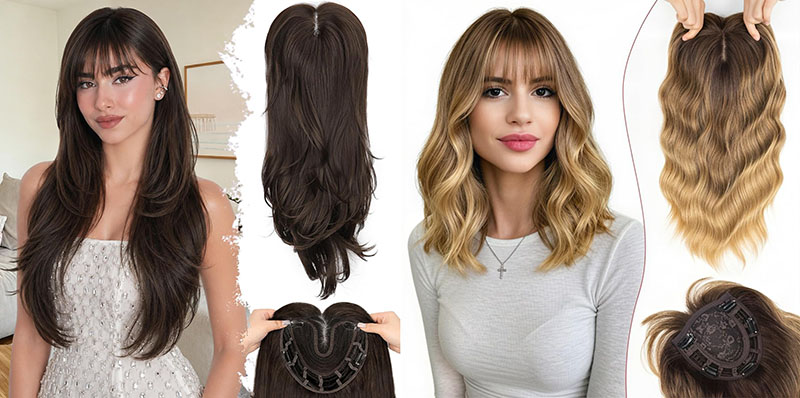
I always answer this question with three questions of my own. How often will you wear it? Do you heat style your hair? And what is your budget for the year? A hair topper works like the top half of hair extensions[1], so it faces the same wear as your own hair every single day. Daily wear grinds the fibers against your pillow, your collar, and your car headrest. Human hair survives that friction much longer. But a woman who wears a topper twice a month for events does not need that durability. She needs a pretty style that pops out of the box, and synthetic does that for a third of the price. Budget also means total cost, not sticker price. Two synthetic toppers per year can still cost less than one human hair topper that lasts two years.
| Your situation | Better choice | Why |
|---|---|---|
| Daily wear, 8+ hours a day | Human hair | Handles constant friction and restyling |
| Occasional wear for events | Synthetic | Cheap, pre-styled, ready to wear |
| You curl or straighten often | Human hair | Takes heat without damage |
| You want zero morning styling | Synthetic | The style bounces back on its own |
| Tight budget under $150 | Synthetic | Real hair at that price is often poor quality |
What Is the Difference Between a Human Hair Topper and a Synthetic Hair Topper?
You read product pages, and the words blur together. Remy, Kanekalon, heat-friendly, monofilament. Nobody explains what is actually inside the piece.
The difference is the fiber. Human hair toppers are made from real human hair with the cuticle kept intact, while synthetic toppers use man-made fibers such as Kanekalon. Human hair restyles freely, and synthetic hair holds one factory-set style.
What hair toppers are made up of
Every topper has two parts: the base and the hair. The base uses lace, monofilament mesh, or silk, and it holds the clips. The hair part changes between the two types. Human hair toppers use collected real hair, and the best ones keep every strand running root-to-end in one direction. That alignment keeps the hairpiece[2] smooth and tangle-free, because the cuticles never rub against each other. Synthetic toppers use fibers like Kanekalon[3], a modacrylic material built to imitate hair. The fiber comes out of the factory with a baked-in wave or curl. That is why synthetic pieces look perfect with no effort, and also why they refuse to change. Human hair behaves like your own hair, so it frizzes in rain and flattens while you sleep, but it also curls and straightens on command.
| Feature | Human hair topper | Synthetic topper |
|---|---|---|
| Fiber | Real human hair, cuticle aligned | Modacrylic fibers such as Kanekalon |
| Styling | Curls, straightens, colors | Holds one factory style |
| Feel | Soft, moves like bio hair | Smooth but slightly slick |
| Color | Natural tones, can be dyed darker | Even color, holds shade for life |
| Price | $250 to $600 | $60 to $150 |
Do Human Hair Toppers Look More Natural?
You want the topper to disappear into your own hair. Your biggest fear is a friend pointing at your head and asking what is going on up there.
Yes, human hair toppers look more natural. Real hair reflects light in a soft, uneven way and moves with the wind. High-quality synthetic toppers now pass for real hair at a distance, but close up the shine gives them away.
How to get the most natural look from each type
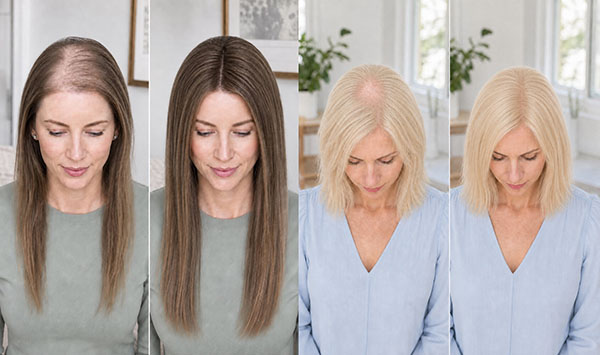
Natural look comes down to three things: shine, movement, and blend. Real human hair[4] has an uneven surface, so it scatters light softly. Cheap synthetic fibers shine like plastic under office lights, and that gloss is the number-one giveaway. Movement matters too. Human hair swings together with your bio hair, while synthetic fiber keeps its own shape and can move slightly out of step. But I have seen synthetic toppers that fooled me. The best synthetic toppers for a natural look share three traits: a darker root color, a loose body wave, and a shorter length around 10 to 12 inches. Darker shades hide the fake shine better than platinum blonde. Loose waves break up the light. Shorter lengths keep the fiber from tangling and frizzing, which is what eventually exposes a synthetic piece. If you want a long, straight, ice-blonde topper, human hair is the only safe road.
| Look goal | Most natural option |
|---|---|
| Long straight platinum blonde | Human hair, 150% density |
| Short dark bob | High-quality synthetic works well |
| Loose beach wave, medium brown | Either type, rooted shade |
| Curly volume | Synthetic holds curls best |
How Long Do Synthetic Hair Toppers Last?
You found a synthetic topper you love. It looks natural, and it costs less than a night out. But you wonder if it dies in a month.
A synthetic hair topper lasts 3 to 6 months with daily wear, and around 12 months with occasional wear. Human hair toppers last 1 to 2 years with the same daily wear. Lifespan depends on friction, washing, and how you store the piece.
Why synthetic fibers age faster
Synthetic hair ages from friction, not from oil or dirt. The man-made fiber[5] has no cuticle, so once the surface gets rough, it stays rough. The first sign is fuzzy ends at the nape, where the hair rubs your collar. Then the shine dulls, and the factory curl starts to relax into a shapeless wave. Washing speeds this up, so I tell customers to wash a synthetic topper only every 8 to 10 wears, with cool water and no rubbing. Human hair ages differently. The cuticle protects the strand, so the hair stays smooth but slowly loses moisture and protein. A human hair topper fades a little, dries out a little, and then keeps going for a second year. Storage matters for both types. Hang the piece on a stand, or lay it flat in its box. A topper crushed in a drawer gathers creases that no brushing removes.
| Wear schedule | Synthetic topper | Human hair topper |
|---|---|---|
| Daily, all day | 3 to 6 months | 12 to 24 months |
| 2 to 3 days a week | 8 to 12 months | 2 to 3 years |
| Occasional events | 12 months or more | 3 years or more |
Can Synthetic Hair Toppers Be Heat Styled?
You bought a synthetic topper, and your curls fall flat by lunch. You reach for your curling iron, and then you freeze. Will the iron melt the hair?
Regular synthetic toppers cannot be heat styled, because heat melts or singes the fiber. Heat-friendly synthetic toppers can take low heat, around 280 to 300°F. Human hair toppers take full heat styling like your own hair.
What a heat-friendly synthetic topper really is ?
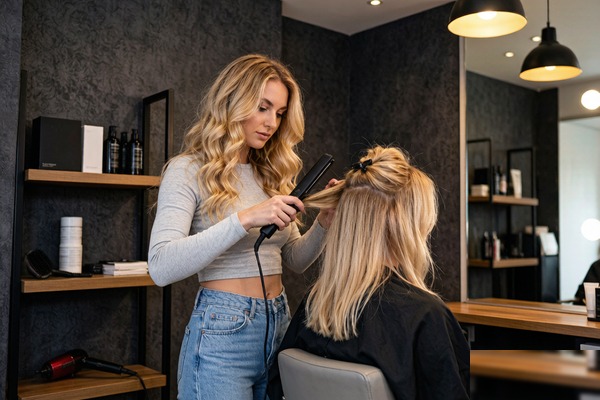
A heat-friendly synthetic topper uses fibers that were engineered to survive limited heat. The fiber softens when heated, holds the new shape as it cools, and keeps that shape after washing. That sounds perfect, but the rules are strict. You must use a hair iron[6] set to low, around 280 to 300°F, and you must never rest the iron in one spot. Higher heat glues the fibers together into a hard, shiny clump, and no product fixes that. I also warn customers that heat-friendly fiber restyles worse with every pass. The fiber has a memory budget, and after ten or fifteen restyles it turns dry and puffy. Human hair has no such budget. You can straighten it Monday, curl it Friday, and color it dark for winter. So pick the heat-friendly option only when you need one or two small tweaks, like bending the ends under. Pick human hair when your style actually changes with your mood.
| Topper type | Heat limit | Restyle freedom |
|---|---|---|
| Regular synthetic | No heat at all | Style is fixed forever |
| Heat-friendly synthetic | Up to 300°F | A few gentle restyles, then degrades |
| Human hair | Full heat tools | Unlimited restyling and color |
Conclusion
Human hair toppers win on natural shine, heat styling, and lifespan. Synthetic toppers win on price, color hold, and grab-and-go convenience. Match the fiber to your wear schedule and your budget, and either choice will serve you well.
References
Wikipedia — Artificial hair integrations — Overview of how hair extensions and toppers attach and blend. ↑ Back
Wikipedia — Wig — Background on hairpieces, their construction, and materials. ↑ Back
Wikipedia — Kanekalon — The modacrylic fiber most synthetic hair pieces are made from. ↑ Back
Wikipedia — Hair — How light reflects off the hair cuticle and creates natural shine. ↑ Back
Wikipedia — Synthetic fiber — How man-made fibers are produced and why they wear down. ↑ Back
Wikipedia — Hair iron — How heat tools reshape hair and synthetic fibers. ↑ Back