

Every listing says "100% Remy hair." Three weeks later, some toppers still shine and others mat into a ball. The difference hides inside every single strand.
Remy hair toppers are partial hairpieces made from 100% human hair with the cuticles kept intact and aligned in one direction. Regular toppers use non-Remy hair with mixed cuticle directions or stripped, coated strands. Remy hair tangles less, styles like natural hair, and lasts one to three years.
I learned the hard way. My first cheap topper turned into a bird’s nest after four washes. My second, a genuine Remy piece, still looks new after eight months of near-daily wear. Here is everything I wish I had known before spending a single dollar.
What are Remy hair toppers, and how are they different from regular hair toppers?
Two toppers can look identical online. Same photos, same shine, same price range. Six weeks later one still looks salon-fresh and the other is frizz. The gap starts at collection.
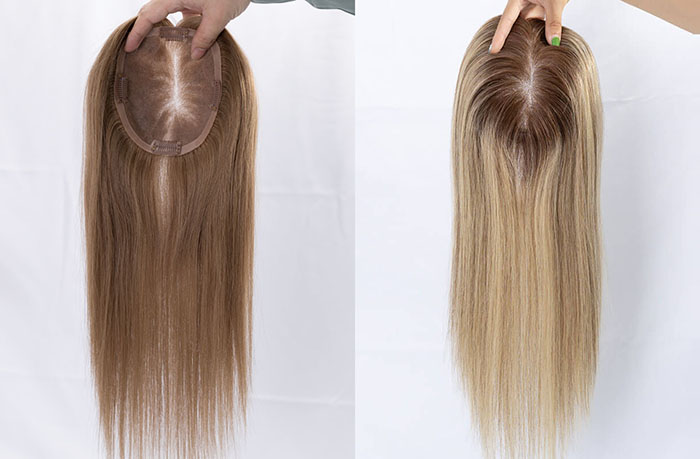
Remy hair toppers are made from human hair collected in one direction, root to tip, so every cuticle stays intact and aligned. Regular toppers use non-Remy hair collected loose, with cuticles mixed or stripped. Remy hair keeps its natural shine and strength. Non-Remy hair needs silicone coatings to look good.
Why cuticle direction controls everything
The secret sits in the cuticle, the outer layer of overlapping scales[1] that covers every strand like roof shingles. Collectors gather Remy hair in one piece, root to tip, so those scales all point downward and lie flat. Strands slide past each other, and the hair stays smooth. Non-Remy hair is collected loose from brushes and floors, so half the scales point upward. Those scales catch each other like Velcro, and that friction is exactly what creates matting.
| Feature | Remy hair topper | Non-Remy topper | Synthetic topper |
|---|---|---|---|
| Cuticle direction | Aligned root to tip | Mixed or stripped | None (plastic fiber) |
| Shine after 10 washes | Soft and natural | Dull once coating washes off | Unchanged but plastic-like |
| Tangling | Minimal | Heavy matting | Moderate frizz |
| Heat styling | Yes, up to 350°F | Limited, dries out fast | Melts or frizzes |
| Lifespan | 12–24 months | 2–3 months | 1–3 months |
| Typical price | $150–$400 | $60–$120 | $30–$80 |
Can Remy hair toppers be styled and treated like natural hair?
You want loose waves on Friday and a sleek bob on Monday. Synthetic melts under a flat iron. So you keep asking what Remy can really take.
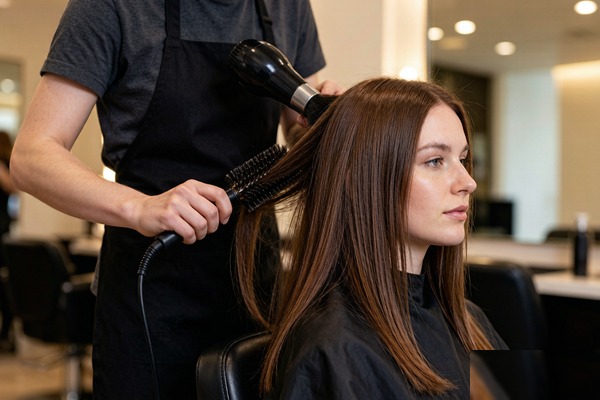
Yes, Remy hair toppers can be styled and treated like natural hair. Intact cuticles protect the inner strand, so you can curl, straighten, blow-dry, and low-light them. Keep hot tools under 350°F, use heat protectant, and let a professional handle bleaching or full color changes.
Heat, color, and wash rules
Every strand of hair is built from keratin[2], the same fibrous protein found in your nails. Intact Remy cuticles shield that protein from heat and chemicals, so styling works the same as on your own hair. Still, moderation matters. Dermatologists warn that excessive heat damages hair[3] no matter how healthy it starts. I keep my flat iron at 320°F, mist on heat protectant first, and deep condition weekly. For color, going darker is gentle, but bleaching always belongs in professional hands.
| Styling action | Remy hair | Non-Remy hair | Synthetic hair |
|---|---|---|---|
| Flat iron / curling wand | Yes, 300–350°F | Risky, dries out fast | No, melts or frizzes |
| Dye darker | Yes | Fades unevenly | No |
| Bleach / highlights | Professional only | Breaks down quickly | No |
| Blow dry | Yes, medium heat | Yes, but degrades fast | Cool setting only |
| Washing | 1–2 times a week | Same, but ages fast | Same |
How can you tell if a topper is made with genuine Remy hair?
Every seller claims "100% Remy human hair." Some stretch the truth. Four simple tests separate real Remy from coated non-Remy before your money leaves your account.
You can spot genuine Remy hair with four tests. Real Remy feels slightly rough when you stroke it upward, shines softly instead of looking plastic, stays smooth after washing, and tangles far less than non-Remy hair because every cuticle points one way.
The four at-home tests
Start with the feel test. Genuine Remy feels silky when you stroke downward and slightly grippy when you stroke upward, because you are brushing against the scales. Fake Remy feels slick both ways because its cuticles are stripped off. Then check shine: real hair reflects soft light, while silicone-coated hair looks glassy. Finally, wash it a few times. The silicone layer on fake Remy rinses out within three to five washes, and then dullness, matting, and hair breakage[4] follow fast.
| Test | Genuine Remy result | Fake Remy result |
|---|---|---|
| Feel test (stroke upward) | Slight grip or roughness | Slick and waxy both ways |
| Shine test | Soft, natural reflection | Glassy, plastic-like gloss |
| Wash test (after 5 washes) | Still smooth | Dull, matted, tangled |
| Tangle test (end of day) | Brush glides through | Nests near the base |
| Price reality | Rarely under $100 for a full topper | Suspiciously cheap |
Are Remy hair toppers worth the higher price?
Remy toppers cost two to three times more up front. Your budget screams no. But thin hair already steals enough from you, and cheap hair just joins the theft.
Yes, Remy hair toppers are worth the higher price for daily wear. A $250 Remy topper lasts 12–24 months, while an $80 non-Remy piece dies in 2–3 months. Per month of wear, Remy costs less, looks better, and protects you from the confidence hit of visible fake hair.

Doing the math per wear
Run the numbers before you decide. Many of us wear toppers every day while managing hair loss[5], and the most common cause, androgenetic alopecia[6], tends to progress slowly over years. Daily wear grinds any fiber down, so quality compounds over time. An eighty-dollar non-Remy topper mats by month three and gets replaced four times a year. A Remy piece keeps looking natural for a year or two. Buying factory-direct, the way we sell at Findingdream, removes the middleman markup that makes Remy seem unaffordable.
| $80 non-Remy topper | $250 Remy topper | |
|---|---|---|
| Expected lifespan | 2–3 months | 12–24 months |
| Replacements per year | 4–5 | 1 |
| Cost per month | $27–$40 | $10–$20 |
| Look at month 6 | Matted and dull | Still natural |
| Confidence cost | High | Low |
Conclusion
Remy hair toppers are not a luxury label. They are the difference between hair that behaves and hair that betrays you. Check cuticle alignment, run the four tests, and buy from sellers who show real photos. Your mirror will thank you for years.
References
Wikipedia — Hair: cuticle structure and how overlapping scales protect each strand. ↑ Back
Wikipedia — Keratin: the fibrous structural protein that builds human hair. ↑ Back
American Academy of Dermatology — Hair styling without damage: dermatologist guidance on heat tools. ↑ Back
American Academy of Dermatology — 10 hair care habits that can damage your hair, including breakage triggers. ↑ Back
Mayo Clinic — Hair loss: symptoms and causes. ↑ Back
MedlinePlus Genetics — Androgenetic alopecia: the most common form of progressive hair loss. ↑ Back