

Daily topper wear should feel freeing, not like a countdown to scalp pain. I use fit, weight, heat, and attachment pressure to prevent that problem.
Yes, I believe most people can wear a well-fitted hair topper every day. I recommend removing it before sleep, keeping the scalp clean and dry, rotating clip positions, and taking it off whenever pain, itching, or persistent heat appears.

I have learned that “every day” and “all day without adjustment” are different ideas. A human hair topper can be part of a daily routine, but comfort still depends on the base, density, attachment, weather, and condition of the wearer’s scalp and natural hair.
Can You Wear a Hair Topper Every Day?
A topper can restore confidence every morning, but a poor fit can turn that routine into pressure, pulling, and constant adjustment. I start with fit.
Yes, I find that daily wear is realistic when the topper is light, secure without excessive tension, removed before bed, and checked regularly for sore areas, broken hairs, or scalp irritation.
Daily Wear Depends on the Whole System
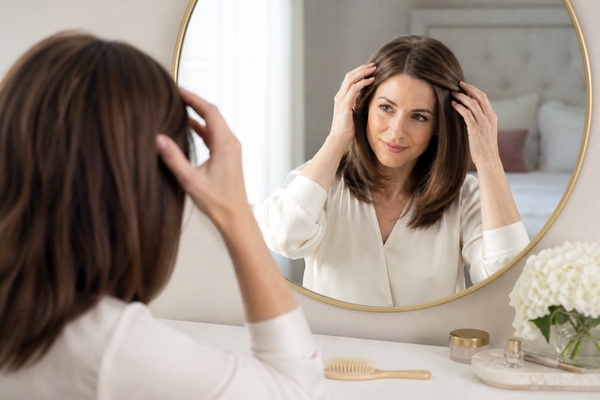
I do not judge daily wear by the topper alone. I look at the base size, hair density, attachment method, natural-hair strength, and the wearer’s routine as one system. A larger or denser topper adds weight. A base that is too small may require the clips to hold more tightly. A base that is too large may move and rub. I also check whether the topper matches the area that needs coverage, because extra coverage is not always extra comfort. I ask a new wearer to notice how the scalp feels after one hour, at midday, and after removal. I want the topper to feel secure, but I do not want security to come from pain. Daily wear works best when the fit remains stable with gentle attachment pressure.
How Comfortable Is a Hair Topper to Wear Throughout the Day?
A topper may feel comfortable in the morning and irritating by late afternoon. I prevent that change by checking pressure, movement, and moisture.
I find a properly fitted topper can remain comfortable throughout the day. It should feel light and stable, with no sharp clip pressure, tight pulling, sliding, itching, or headache.

Comfort Should Stay Quiet
I describe a comfortable topper as something the wearer stops thinking about. It should not need repeated pushing, scratching, or re-clipping. I first check the clip locations because a clip placed in sparse or fragile hair may pull more than one placed in stronger hair. I then check the base edge, because a rough seam or folded edge can create a pressure point. For a sensitive scalp, I may test a thin, breathable barrier in a small area, but I avoid adding bulk that makes the topper unstable. The American Cancer Society explains that a soft cap liner1 under an unlined hat or wig can improve comfort and wick away sweat. I apply that idea cautiously to a partial topper, which may need only a small comfort pad instead of a full liner.
Do Hair Toppers Cause Sweating?
Heat and moisture can build under any hairpiece, and discomfort grows when the base is dense or the weather is humid. I plan for airflow.
Hair toppers do not create sweat, but they can trap some heat and moisture over the covered area. I reduce this effect with a breathable base, lighter density, clean attachment points, and short cooling breaks.

Manage Moisture Before It Becomes Irritation
I expect some perspiration on a warm day, especially near clips, tape, or a dense silk base. I do not treat normal moisture as proof that the topper for thinning hair is unsafe. I look for the difference between temporary warmth and ongoing itching, burning, rash, or tenderness. I recommend removing the topper in private when possible, blotting the scalp gently, and letting both the scalp and base dry before reattachment. Macmillan recommends a cotton wig liner2 to absorb moisture and also suggests scalp freshening and removal breaks for cooling. I use the same moisture-management principles while remembering that a topper covers less area than a full wig. I also clean the base on schedule, because oil and product buildup can make a breathable material feel less comfortable.
Are Hair Toppers Comfortable for All-Day Wear?
All-day wear is possible, but ignoring early discomfort can make a small fit issue worse. I use symptoms as a stop signal.
Yes, many wearers can use a hair topper all day when it fits correctly. I recommend removing or adjusting it if the wearer develops pain, stinging, persistent itching, redness, a headache, or strong pulling.

All-Day Comfort Is Conditional
I never promise that one topper will feel comfortable for every scalp or every day. Hormonal changes, weather, hair density, scalp sensitivity, and recent styling can all change the experience. I also separate pressure from skin reaction. Pressure usually improves when I change the clip position, reduce density, or correct the base size. A skin reaction needs more caution. The NHS explains that contact dermatitis3 can follow exposure to an irritant or allergen and may cause itching, dryness, cracking, or blistering. I therefore advise a wearer to stop using any suspected tape, adhesive, liner, or scalp product and seek professional advice when symptoms are persistent, recurrent, or severe. A topper should support confidence, not require someone to tolerate worsening discomfort.
Are Hair Toppers Cooler Than Wigs?
Full wigs cover the whole scalp, while toppers cover only the thinning area. I use that difference to improve airflow without sacrificing coverage.
Hair toppers usually feel cooler than full wigs because they cover less of the scalp. However, base material, hair density, length, weather, and attachment method can matter as much as coverage.
Less Coverage Usually Means More Open Scalp
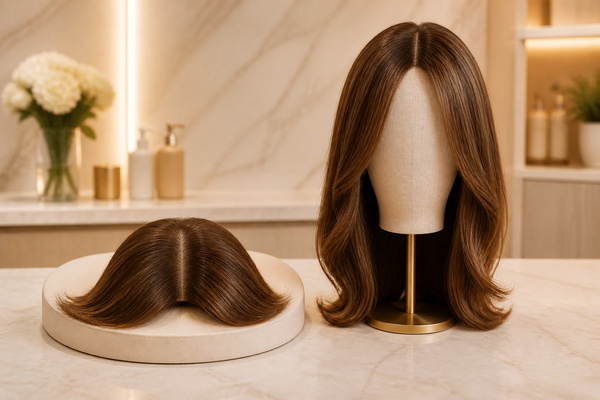
I generally expect a topper to feel cooler because much of the natural hair and scalp remain uncovered. That open area can release heat more easily than a full cap. But I do not treat every topper as automatically cool. The National Alopecia Areata Foundation explains that cap construction4 includes the materials, attachment method, and way the cap sits against the scalp, and that these features affect comfort and breathability. A thick polyurethane base, very high density, long heavy hair, or a full liner may hold more warmth. A lace or monofilament design can feel different from a silk top. I ask the wearer to choose the smallest base that gives stable, believable coverage rather than the largest base available. I also compare products at the same hair length and density. Otherwise, a heavy topper may feel warmer than a carefully designed lightweight wig, even though it covers less scalp.
How Many Hours a Day Can I Wear a Topper?
A fixed hour limit sounds simple, but it ignores fit, scalp condition, climate, and experience. I prefer gradual wear with planned checks.
There is no universal daily hour limit for a hair topper. I suggest starting with two to four hours, increasing gradually, and removing it immediately if pain, pulling, itching, or overheating develops.

Build Wear Time Gradually
I use the schedule below as a practical fitting guide, not a medical rule. A new wearer needs time to learn placement and recognize pressure points. I start with a short home trial, then extend the wear period only if the scalp and natural hair feel normal after removal. For an established wearer, a workday may be reasonable when the topper remains stable and comfortable. I still recommend a quick midday check on hot days or after exercise. I do not recommend sleeping in a daily clip-in topper, because movement against the pillow can pull the natural hair, tangle the topper, and keep the scalp covered longer than needed. I also treat any new pain or irritation as a reason to shorten the day, even if the wearer previously managed longer hours.
| Wear stage | My practical starting range | What I check |
|---|---|---|
| First home trial | 2–4 hours | Clip pressure, itching, sliding |
| Comfortable beginner | 4–8 hours | Scalp marks, pulling, heat |
| Experienced wearer | A normal workday if comfortable | Midday fit and moisture |
| Evening and sleep | Remove the topper | Scalp recovery and topper care |
Should I Give My Hair a Break From Topper Clips?
Clips create security, but repeated pressure on the same fragile hairs can become uncomfortable. I reduce that stress before damage becomes visible.
Yes, I recommend regular breaks from topper clips, especially when natural hair is fine, fragile, sore, or breaking. I also rotate clip positions and consider tape, adhesive, or integration options when suitable.
Move Pressure Instead of Hiding It
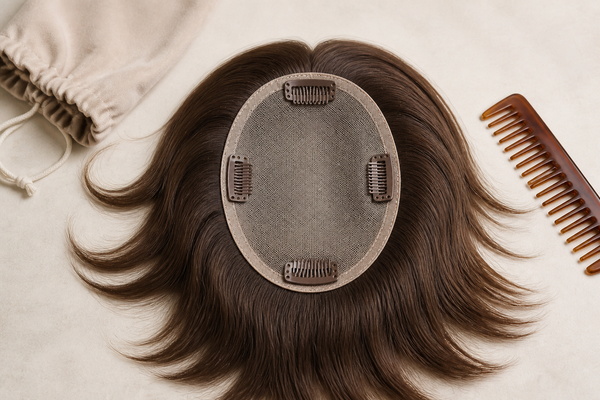
I never tell a wearer to “get used to” a clip that hurts. Pain often means the clip is gripping too much hair, too little hair, or the same weak area every day. I may move the clip a few millimeters, replace a stiff clip with a softer one, add another attachment point to distribute weight, or reduce the topper’s density. I also schedule clip-free time at home and remove the topper before sleep. The American Academy of Dermatology explains that repeated pulling can cause traction alopecia5, and it advises changing a style when pain, stinging, crusting, or tenting appears. A topper clip is not the same as a tight hairstyle, but I apply the same sensible principle: repeated tension deserves attention, and ongoing pain is not normal.
How Do I Make a Hair Topper More Comfortable?
Many comfort problems come from the wrong size, excess weight, or poor placement. I fix the cause instead of adding more attachment force.
I make a topper more comfortable by choosing the right base size, lowering unnecessary density, placing attachments in stronger hair, smoothing base edges, controlling moisture, and taking breaks before discomfort starts.
Use a Comfort Checklist
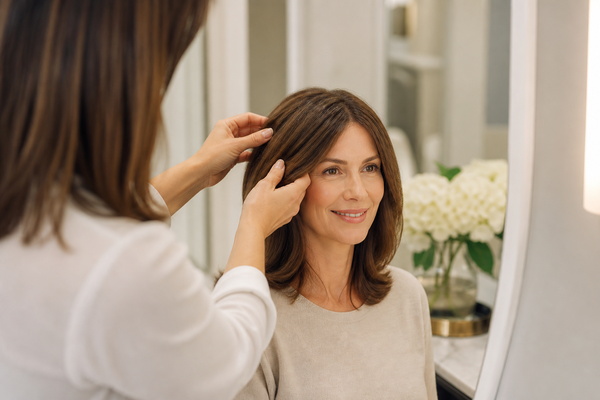
I begin with the base footprint. It should cover the thinning area and reach enough stronger hair for stable attachment, but it should not be oversized without a reason. I then check density and length, because extra hair adds weight and heat. I position clips away from sore or very sparse areas and make sure each clip closes without pulling the scalp upward. I keep the natural hair loose beneath the topper and avoid building a tight ponytail under it. I also keep heat tools on a low or medium setting and style gently. A controlled study of hair shaft damage6 found progressively greater surface damage as drying temperature increased. I use the lowest effective setting and limit repeated passes. Finally, I clean the base and attachment areas as required, carry a small comb, and plan a private cooling break on long or humid days. Comfort usually improves through several small corrections rather than one dramatic change.
Conclusion
I believe daily topper wear can be comfortable when fit, weight, airflow, attachment pressure, and breaks work together. I treat pain, persistent itching, and pulling as signals to adjust or stop, not as a normal price of coverage.
References
ACS explains that a soft cap liner can improve comfort and wick away sweat. ↩
Macmillan recommends cotton wig liners, scalp freshening, and removal breaks for cooling. ↩
NHS defines contact dermatitis, its triggers, symptoms, and care thresholds. ↩
NAAF explains cap construction and its effects on comfort and breathability. ↩
AAD defines traction alopecia and warning signs associated with repeated pulling. ↩
PMC reports greater hair-surface damage at higher drying temperatures. ↩