

A topper rarely fails on one obvious day. Gradual shedding, dryness, and base wear can make an aging piece harder to recognize.
Hair toppers commonly last about 6–18 months with regular wear, while a premium human hair topper may reach 12–24 months or longer with careful rotation and maintenance. I replace one when the base, density, fit, or hair quality can no longer be restored safely and naturally.
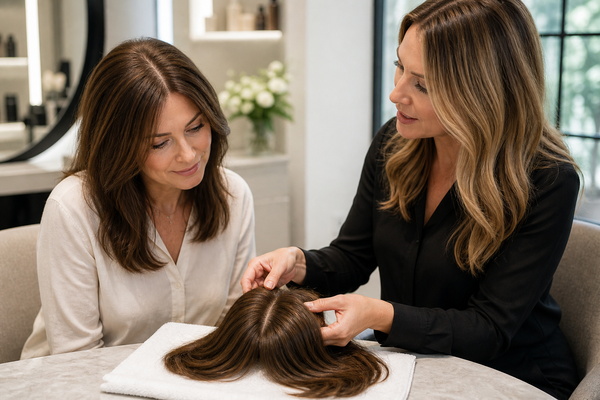
I treat those numbers as planning ranges, not promises. Wear frequency, base construction, hair processing, styling habits, climate, and repair history can move the replacement date forward or backward.
How Long Do Human Hair Toppers Last?
Two toppers bought together can age very differently. Comparing only the purchase date can hide the effects of construction, use, and maintenance.
A human hair topper typically lasts 6–18 months with frequent wear. A high-quality piece may last 12–24 months or longer when I rotate it, limit heat and chemical processing, wash it gently, and maintain the base. Daily wear usually shortens its life compared with occasional use.
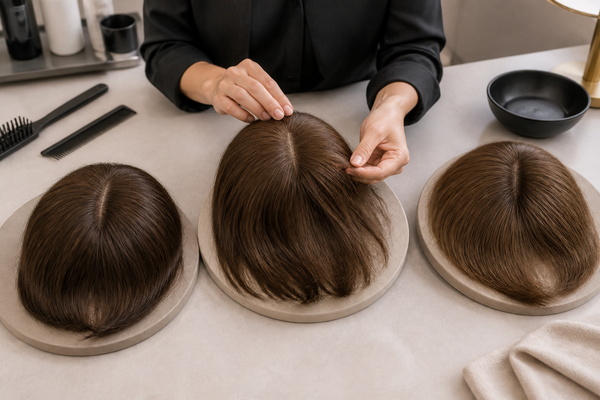
I estimate lifespan from the whole construction
I start with the base because the hair and base do not always age at the same speed. Fine lace can look very natural, but its delicate mesh needs careful handling. Silk, monofilament, and reinforced designs may tolerate different levels of tension, cleaning, and repair. The National Alopecia Areata Foundation explains that hand-tied construction1 uses individually tied hairs and differs from monofilament and wefted designs. That distinction matters because repeated brushing force eventually reaches knots, seams, or wefts. I also consider hair length and color. Long hair receives more friction from shoulders and clothing. Very light or heavily processed colors may feel dry sooner. I therefore give a range after examining the exact topper instead of promising that every human hair topper will last the same number of months.
| Wear pattern | Practical planning range | What may change it |
|---|---|---|
| Daily or near-daily wear | About 6–12 months | Friction, styling, climate, and one-piece use |
| Regular wear with careful rotation | About 12–18 months | Base quality, gentle care, and repair access |
| Occasional wear | 18–24 months or longer | Storage, processing level, and low handling |
| Premium piece with maintenance | Potentially beyond 24 months | Sound base, replaceable clips, and repairable density |
How Do I Care for a Hair Topper So It Lasts Longer?
Expensive hair does not protect itself. Small repeated mistakes during washing, brushing, drying, and storage can remove months of useful wear.
I extend a hair topper’s life by rotating pieces, detangling from the ends, washing only when needed, keeping conditioner off the base, using low controlled heat, and storing it completely dry. I also hold the hair above a tangle so brushing force does not pull directly on the knots.
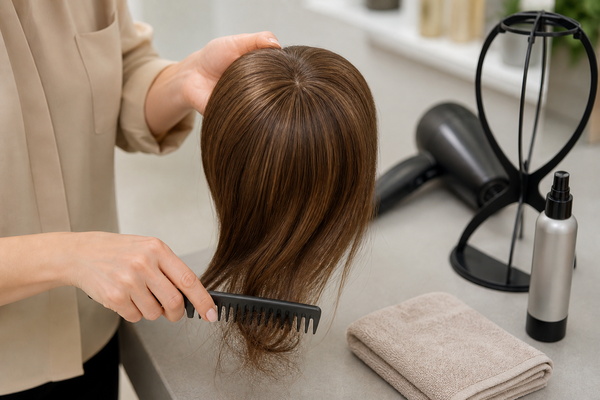
I reduce cumulative stress instead of chasing quick fixes
I think about lifespan as a stress budget. Every wear, wash, brush stroke, color service, and hot-tool pass uses a small part of that budget. The National Alopecia Areata Foundation recommends that human hair wigs2 receive suitable washing, conditioning, heat protection, storage, and professional maintenance. I apply the same gentle principles to a removable topper while still following its own care card. I keep the hair cuticle3, the overlapping protective outer layer of the hair shaft, in mind when I smooth shampoo and airflow downward. I never scrub lengths together, wring the piece, or store it damp. I also inspect clips and stitching early. Replacing one loose clip is much easier than repairing a torn base after the clip has pulled on it for weeks.
| Care habit | Why I use it | Mistake I avoid |
|---|---|---|
| Rotate two toppers | Reduces continuous wear on one piece | Using the same topper every day without rest |
| Detangle before washing | Prevents wet knots from tightening | Starting at the root and pulling downward |
| Keep products off the base | Protects knots and attachment materials | Saturating lace, silk, or polyurethane |
| Use controlled heat | Limits repeated surface damage | High heat on the base or one fixed spot |
| Store fully dry | Protects shape and freshness | Closing damp hair inside a box or bag |
How Often Should a Hair Topper Be Replaced?
A calendar reminder can make me replace a useful topper too early or keep a failing one too long. Condition gives me a better answer.
I inspect a hair topper every few months and replace it when normal cleaning, restyling, and reasonable repair no longer restore its appearance, fit, or security. Frequent wear may require replacement within a year, while a rotated and carefully maintained topper can remain usable much longer.
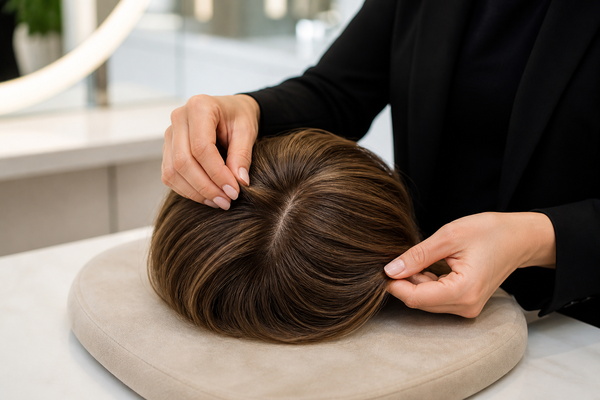
I use checkpoints rather than a fixed expiration date
I check the topper at three levels. First, I look at the hair. I compare shine, softness, movement, tangling, color, and end density with photographs from the first month. Second, I inspect the construction. I look for widening part lines, loose knots, stretched edges, torn mesh, separating silk layers, bent clips, and weakened stitching. Third, I assess the result on the head. The topper should still sit securely, blend at the perimeter, and create believable coverage without constant repositioning. I do not replace it because one curl fell flat or because the color needs a small refresh. Those issues may be serviceable. I do consider replacement when several problems appear together, especially when the base has lost stability and the hair has also lost enough density or length that a repair would not restore the original balance. A scheduled inspection helps me make that decision before the piece fails during an important day.
| Checkpoint | Usually serviceable | Possible replacement sign |
|---|---|---|
| Hair condition | Mild dryness or faded tone | Persistent matting, breakage, or sparse ends |
| Base condition | Loose clip or small local repair | Widespread tearing, stretching, or separation |
| Density | Small thin area | Several visible bald areas or unnatural parting |
| Fit and security | Minor clip adjustment | Base no longer sits flat or stays secure |
What Makes a Hair Topper Wear Out Faster?
Most toppers do not age from one dramatic accident. Repeated heat, sunlight, friction, chemicals, and rough handling create damage layer by layer.
Daily wear, sleeping or swimming in the topper, high heat, repeated coloring or bleaching, strong cleansers, friction, rough detangling, wet storage, and product buildup can shorten its life. Long hair, delicate bases, and using one topper without rotation can also increase wear.
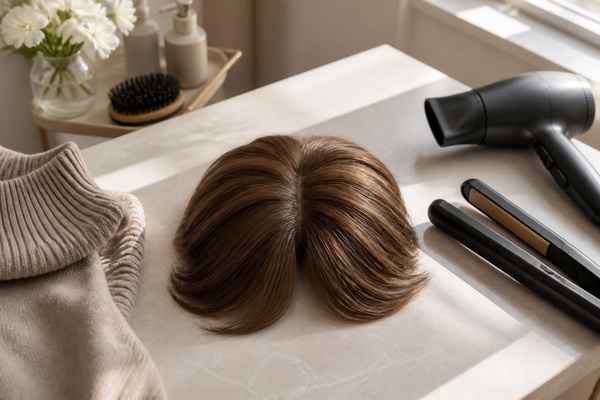
I control the damage I can prevent
Heat and light affect real human hair even after it has been made into a topper. A controlled study of hair shaft damage4 found that surface damage increased as dryer temperature rose. I therefore keep a dryer moving and use the lowest effective temperature instead of pressing a hot tool repeatedly over dry ends. Research on solar radiation5 also describes effects on hair color, strength, luster, protein content, and surface roughness. I do not leave a topper in a sunny car or beside a bright window for long storage. Friction matters too. Long ends rub against collars, shoulders, car seats, and pillows. I remove the topper before sleep and use a separate piece for swimming or intense exercise when possible. These choices do not stop normal aging, but they avoid spending the topper’s useful life on damage that adds no styling benefit.
| Stress factor | Common result | Lower-wear choice |
|---|---|---|
| High heat | Dryness, roughness, and breakage | Heat protectant and lower controlled settings |
| Sun exposure | Fading and surface change | Covered, shaded storage |
| Shoulder friction | Tangling and thin ends | Gentle detangling and style rotation |
| Bleach or repeated color | Weaker, more porous hair | Professional strand test and minimal processing |
| Sleeping or swimming | Matting and attachment stress | Remove it or use a designated backup piece |
Can a Shedding Hair Topper Be Repaired?
Seeing hair in the brush can feel like the topper is finished. Some shedding is repairable, but the remaining base must still be strong.
Yes, a shedding hair topper can sometimes be repaired. A professional may ventilate new hair into sound lace or monofilament, reinforce a small area, secure wefts, or replace clips. I replace it when shedding is widespread, the base is fragile, or repair would cost too much for the remaining condition.
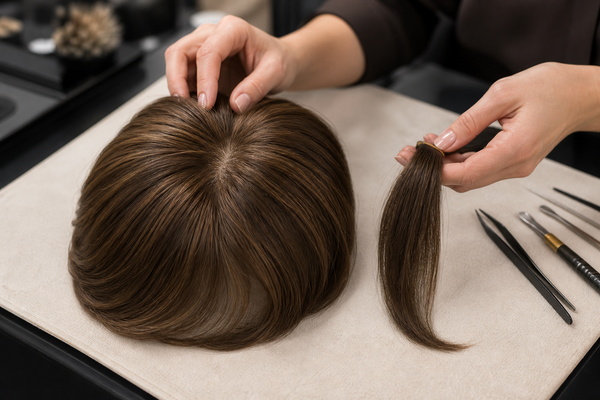
I repair the cause, not only the visible thin spot
I first decide whether the missing density comes from hair breakage, loose knots, damaged wefts, or a torn base. The Trichological Society explains that hair shedding6 can develop as washing and brushing weaken hand-tied knots, and that professionals may knot additional hair into a wig. That process is often called ventilation. It can work well when the base around the thin area remains stable. A technician may also replace a clip, reinforce stitching, close a small lace tear, or add hair to a localized part. I avoid home glue, random sewing, or heavy knot sealer unless the manufacturer approves it, because a quick patch can stiffen delicate material and make a later repair harder. Before authorizing work, I ask for the repair price, expected appearance, color match, turnaround time, and realistic remaining life. A repair should restore useful wear, not only postpone replacement for a few days.
| Problem | Possible professional repair | Replace when |
|---|---|---|
| Localized shedding | Add ventilated hair | Thin areas are widespread |
| Loose or damaged clip | Replace or restitch clip | Surrounding base is torn or stretched |
| Small lace tear | Reinforce or patch | Mesh is brittle across a large area |
| Dry or faded hair | Deep service, trim, or tone | Hair remains matted or severely broken |
How Do I Know When I Need a New Topper?
Familiarity can hide slow decline. A topper may still be wearable while no longer giving the secure, natural result I originally bought it for.
I need a new topper when the base no longer lies flat, the part looks sparse, clips cannot hold securely, tears keep spreading, ends remain thin or matted, color cannot be corrected safely, or several repairs cost close to replacement. Photos in daylight help me spot gradual change.
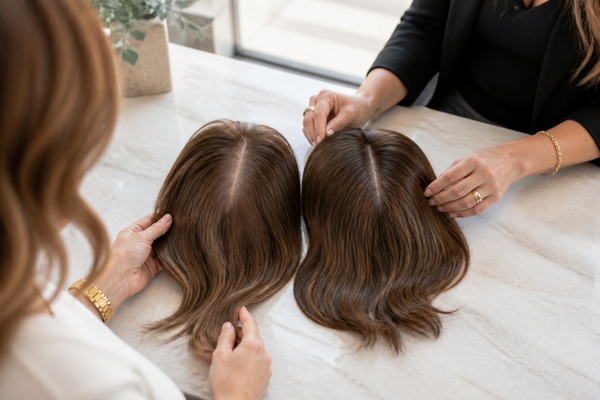
I separate cosmetic refreshes from end-of-life damage
I do not call every change permanent. A professional wash can remove buildup. A trim can improve thin ends. A toner may refresh warmth, and a clip can be replaced. But repeated chemical correction has limits. Research on bleaching damage7 reports that excessive bleaching can remove the cuticle layer, expose the cortex, and alter structural integrity. I therefore do not keep lightening fragile hair just to avoid buying a new topper. I compare the cost and likely result of repair with the condition of the whole piece. If a repaired part will sit beside brittle hair, unstable mesh, and low overall density, replacement is usually the better investment. I also retire a topper when I no longer trust it to stay secure. A backup piece lets me replace calmly and color-match accurately instead of making an emergency purchase after a clip, seam, or thin part fails.
| Sign | Try service first | Prepare to replace |
|---|---|---|
| Dullness or buildup | Professional cleaning | Hair stays rough and tangled afterward |
| Faded or warm color | Gentle professional toning | More processing would weaken the hair |
| Sparse part | Local ventilation | Base shows through across several areas |
| Fit problem | Clip or minor base adjustment | Base is stretched and will not lie flat |
| Repeated repairs | Request a full assessment | Combined cost approaches a new topper |
Conclusion
I expect most frequently worn human hair toppers to provide about 6–18 months of useful wear, with longer life possible through quality, rotation, and careful maintenance. I repair localized problems when the base is sound, but I replace a topper when appearance, fit, security, and repair value decline together.
References
NAAF explains hand-tied, monofilament, lace-front, and wefted construction. ↩
NAAF gives washing, heat-protection, storage, and maintenance guidance for human hair wigs. ↩
Wikipedia defines the hair cuticle as the protective outer layer of the hair shaft. ↩
PubMed reports increasing hair-surface damage at higher dryer temperatures. ↩
PubMed reviews the effects of solar radiation on human hair properties. ↩
Trichological Society explains shedding from weakened knots and professional hair replacement. ↩
PubMed reports structural damage caused by excessive hair bleaching. ↩