

Are Luxury Hair Toppers Worth It? Benefits, Lifespan, and Who They Are For
Luxury prices can hide stock construction, poor color work, or unnecessary density. I look past the label before I decide whether the upgrade has value.
Luxury hair toppers are worth it when their hair quality, base design, customization, fit, and support improve daily wear. I would pay more for benefits I can verify, but not for a luxury label alone. The right choice depends on coverage needs, wearing frequency, budget, and maintenance.
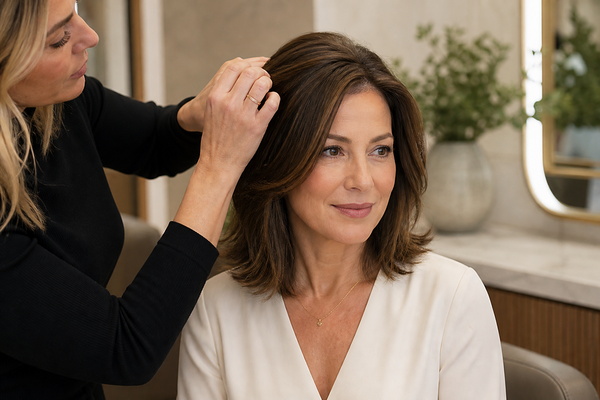
I treat a luxury topper as a working part of a daily routine. It needs to look natural in daylight, feel comfortable for the intended wearing time, and remain practical after the first salon styling. Price matters, but performance matters more.
Who Should Consider Using Luxury Hair Toppers?
Daily wear magnifies every mismatch in color, density, comfort, and security. I start with the wearer before comparing price tiers.
Luxury hair toppers are best for people who wear toppers often, need precise crown or part coverage, want natural movement and dimensional color, or require customized size and density. They also suit wearers who value professional fitting, repair options, and dependable after-sales support.
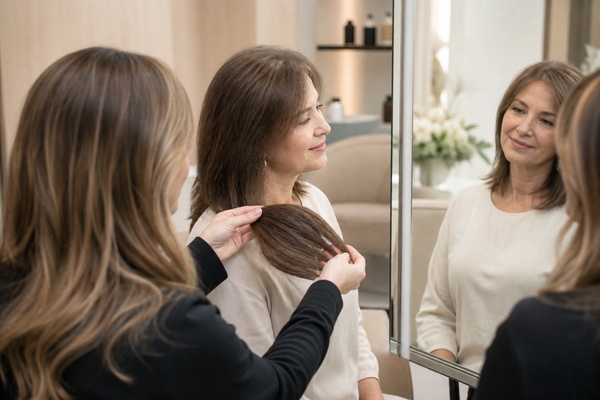
I match the topper to the wearer’s real priorities
I first ask how often the topper will be worn and which area needs coverage. Someone who wears a piece five days a week will notice small problems more than someone who uses it for occasional events. I also look at the strength of the natural hair around the coverage area because clips need stable support. Then I consider color, texture, length, density, part position, and styling habits. A luxury piece can make sense when the natural hair has complex highlights, a fine texture, or low density that stock toppers rarely match. It can also help when a wearer needs a specific base contour or a lighter front. But I do not recommend a costly topper simply because hair loss feels urgent. I want the wearer to understand the attachment method, care routine, and return terms before committing.
| A luxury topper may suit me when… | I should pause when… | My next check |
|---|---|---|
| I expect frequent or daily wear | I only need occasional coverage | I compare cost per wear |
| I need precise color and density | I have not tested a color sample | I compare it in daylight |
| I want a natural part and fine edge | I have not measured the thinning area | I map the required coverage |
| I can maintain human hair carefully | I want a wash-and-go routine | I compare human and synthetic fibers |
| I value adjustments and repairs | The seller offers no written support policy | I request the terms before paying |
I decide whether the higher price solves a real problem
I list the exact improvements I expect from the higher price. These may include a finer base, more consistent hair, better color placement, lower density, a measured contour, a flatter part, or access to alterations. I then ask the seller to explain how the product delivers each benefit. A generic stock base with a single preset color does not become luxurious because it arrives in premium packaging. I also calculate cost per wear instead of comparing purchase prices alone. A carefully fitted topper worn 150 times may offer more value than a cheaper piece that stays in a drawer because it feels bulky or looks mismatched. However, a high price cannot guarantee lifespan. Bleaching, heat, friction, rough handling, frequent washing, and weak base areas can shorten the life of any topper.
What Makes a Hair Topper a Luxury Topper?
Soft hair can impress on day one while a thick edge or weak construction spoils daily wear. I inspect every layer separately.
A luxury hair topper combines high-quality hair, a refined and correctly shaped base, skilled ventilation or wefting, balanced density, realistic color, secure low-tension attachment, useful customization, and professional support. I expect every premium claim to describe a material, construction method, fitting benefit, or service I can verify.
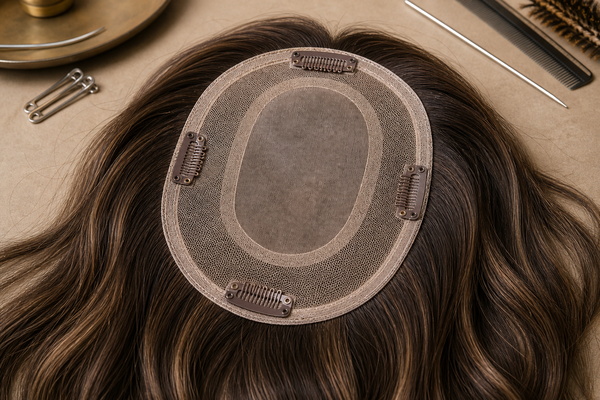
I inspect hair quality, base construction, and workmanship separately
I start with the hair. I check whether the texture remains natural after washing and whether the ends feel healthy without a heavy coating. Then I inspect the base. A fine lace front1 can help create a natural-looking front, while monofilament material can support a realistic scalp effect and flexible parting. I also inspect the edge thickness, reinforcement, seam quality, clip position, and base contour. Next, I examine how the hair is attached. The American Cancer Society explains that hand-tied2 construction places individual fibers into the cap and can create a natural, lightweight, and breathable result. I still judge the final piece by comfort and appearance because one premium feature cannot correct the wrong size, color, or density.
| Quality area | What I expect from a luxury topper | Warning sign |
|---|---|---|
| Hair | Consistent texture, natural movement, and healthy-looking ends | Heavy coating that hides dryness or tangling |
| Base | Fine material, correct contour, and neat reinforcement | Thick edges, puckering, or visible seams |
| Density | Coverage that blends with the sides and ends | Excess density used to hide a poor fit |
| Color | Root depth, tone, highlights, and distribution that blend | One flat stock shade described as custom color |
| Attachment | Secure placement without concentrated tension | Extra clips added without checking natural-hair strength |
| Customization | Measured size, selected part, density, color, and finish | “Custom” only means choosing length and shade |
| Support | Clear alteration, repair, care, and return terms | No written policy after payment |
I expect customization to reduce correction after delivery
I expect a luxury consultation to begin with measurements and questions. The fitter should identify the thinning area, the preferred part, the natural-hair density, and the places that can safely support attachment. The color plan should compare the topper with the natural mid-lengths and ends in daylight. It should consider root depth, warmth, coolness, highlights, and lowlights instead of relying on one shade number. I also ask whether the base size, front shape, part direction, clip layout, density, texture, and length can be selected before production. These decisions have more value than decorative extras. I prefer the final cut and blending to be completed while the topper is being worn because the perimeter and fall change on the head. Good customization should reduce bulk, visible edges, repeated salon corrections, and unnecessary thinning after delivery.
Affordable or Premium Hair Toppers: Which Should I Choose?
Affordable does not mean unsuitable, and premium does not mean perfect. I compare the features I will actually use.
I choose an affordable topper for occasional wear, a straightforward stock match, easy care, or a first trial. I choose a premium topper for frequent wear, refined blending, complex color, human-hair styling, a finer base, or meaningful customization. The better option meets my needs without unused upgrades.
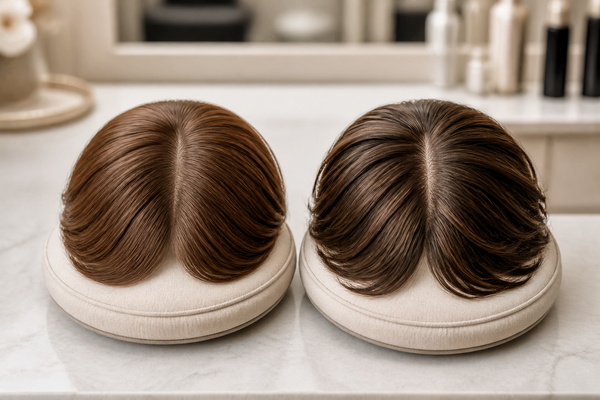
I compare fiber, construction, service, and cost per wear
I begin with the fiber because it changes both appearance and maintenance. Synthetic hair can hold a preset style and may require less daily styling. Human hair usually offers more styling freedom and natural movement, but it also needs regular care. Cancer Research UK’s comparison of real hair wigs3 notes that they cost more than synthetic wigs and can be restyled or recolored. I use that information as a fiber comparison, not as a guaranteed lifespan for toppers. A topper has different stress because it blends with natural hair and may be clipped on and removed often. I also compare the base, edge, density, color work, return policy, fitting service, and repair access. An affordable stock piece can be the smarter purchase when it already fits and blends well.
| My priority | An affordable topper may work when… | A premium topper may help when… |
|---|---|---|
| Occasional coverage | A stock size and shade already blend | I need a highly refined event finish |
| Frequent wear | The standard base stays comfortable | I need a finer edge and tailored density |
| Easy maintenance | I prefer a preset synthetic style | I accept regular human-hair styling |
| Color | One stock shade matches naturally | I need roots, highlights, or dimensional color |
| Fit | A standard base covers the correct area | I need a measured contour or custom clip layout |
| Budget | The lowest initial cost matters most | Better cost per wear matters more |
I review the finished plan before ordering. Long hair adds little value if I will cut away several inches. High density is wasteful if a stylist must remove a large amount before the piece can blend. A delicate lace front may not suit a wearer who needs a stronger perimeter or who handles the piece quickly every morning. I also compare the included service. Some premium prices cover consultation, color adjustment, cutting, blending, and later repairs. Other prices cover only the product. I ask for those differences in writing. I would rather buy a simpler topper that fits my routine than an elaborate piece that demands maintenance I cannot provide. The best value comes from useful specifications, realistic care expectations, and a piece I will actually wear.
How Do I Choose the Right Luxury Hair Topper for My Needs?
A beautiful product photo cannot confirm fit, comfort, or blend. I choose from measurements, samples, and written specifications.
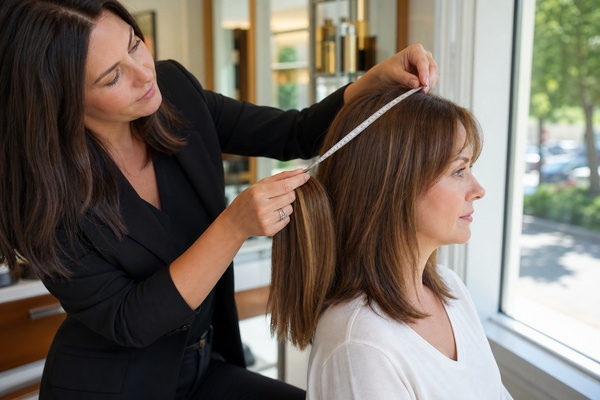
I choose the right luxury hair topper by measuring the coverage area, checking natural-hair strength, selecting a suitable base and attachment, matching color and density in daylight, confirming texture and finished length, and reviewing maintenance, alteration, repair, and return policies before ordering.
I follow a fitting sequence before discussing upgrades
I first map the area that needs coverage. The base should extend beyond the thinning area into hair that is strong enough to support the selected attachment. A base that is too small may place clips in weak hair. A base that is too large may cross unnecessary areas and create bulk. I then compare base materials. Lace may help at a visible front. Monofilament can support parting and a scalp-like effect. Silk-style construction can add visual depth, while wefted areas may add durability and volume. Every option changes weight, flexibility, breathability, edge visibility, and repairability. I check the part position, front contour, and clip layout on the head. Then I compare the color beside the natural mid-lengths and ends in daylight. I choose density after fit and color because excess hair can hide an otherwise good base.
I ask precise questions before I pay
I ask for the exact fiber type, base dimensions, base materials, construction method, density, hair length, total weight, color process, and attachment layout. I request close views of the front, part, perimeter, and underside. I also ask whether the photographs show the actual piece or only a representative sample. If the topper is described as custom, I want a written list of the features I can select. I check which decisions become final once production begins. Then I review the return window, restocking fees, color-service exclusions, adjustment times, and available repairs. I also request care limits for washing, heat, coloring, swimming, sleeping, and products used near the base. Clear answers allow me to compare products. Vague labels such as “medical grade,” “European quality,” or “best hair” do not replace measurable specifications.
| Question I ask | A useful answer includes | A weak answer sounds like |
|---|---|---|
| What hair is used? | Fiber type, processing, texture, and origin-claim limits | “Only the highest grade” |
| How is the base constructed? | Material, size, contour, seams, and ventilation | “An invisible luxury base” |
| What is customized? | Specific selectable measurements and finishes | “Anything you want” |
| What can be repaired? | Clips, seams, small tears, density, and service limits | “It should never need repair” |
| What is the return policy? | Time limit, condition, exclusions, and fees | “Contact us if there is a problem” |
How Long Do Luxury Hair Toppers Last, and What Maintenance Do They Require?
A costly topper can age quickly when treated like growing hair. I protect the hair and base because neither can repair itself.
Luxury hair topper lifespan is not fixed. Frequent wear, processing, base delicacy, friction, heat, washing, coloring, storage, and repairs all affect it. I judge a topper by fiber condition, shedding, base integrity, clip security, and blend instead of relying on one promised number.
I estimate lifespan from use and construction instead of price
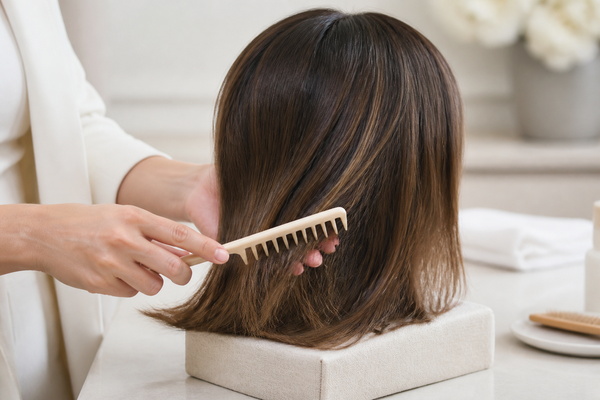
I treat every lifespan figure as an estimate rather than a warranty. Macmillan Cancer Support states that following product wig care4 instructions helps a piece look good and last as long as possible. It also explains that human-hair wigs may need professional cleaning and styling. I apply the care principle to toppers, but I do not copy a full-wig lifespan directly. Toppers face repeated blending, clipping, and removal, and their bases can be smaller and more delicate. I track the number of wears, the amount of lightening in the hair, the base type, the length, and the styling routine. A rotated pair may last longer in calendar time because each piece receives fewer wears. I ask the seller for a realistic estimate based on the exact construction and my planned routine.
I reduce friction and repair small problems early
I detangle before washing and support the base while I work. I begin at the ends and move upward in small sections. I wash only when the piece needs it and follow the maker’s instructions for water temperature and products. I keep heavy conditioner away from knots, bonds, tape, and reinforced seams unless the maker approves it. A 2025 review indexed by PubMed reports that bleaching, coloring, heat, brushing, humidity, and cleanliness can affect hair friction5. The same review explains that conditioners can temporarily reduce friction. I therefore reduce repeated mechanical stress instead of waiting for severe tangling. I blot rather than wring, use controlled heat, and store the topper clean, dry, and supported. I repair loose clips, open seams, or small tears before they spread.
| Maintenance task | My practical approach | What I avoid |
|---|---|---|
| Detangling | I support the base and work from the ends upward | Pulling a brush through knots from the roots |
| Washing | I follow buildup, wear, and maker guidance | Washing automatically on a rigid schedule |
| Conditioning | I focus on the mid-lengths and ends | Saturating knots, bonds, tape, or seams |
| Heat styling | I use protection and the lowest effective heat | Repeated high heat on lightened hair |
| Storage | I keep the piece dry, supported, and covered | Folding it into a bag while damp |
| Inspection | I check clips, seams, lace, and thin areas | Waiting for a small issue to become a large repair |
Conclusion
Luxury hair toppers are worth it when better hair, construction, fit, customization, and support solve needs I truly have. I compare verifiable benefits, maintenance, cost per wear, and repair access. I choose the simplest piece that delivers a natural, comfortable, dependable result.
References
Breastcancer.org describes lace fronts and monofilament tops as realism features. It explains that sheer front material can imitate a natural hairline, while fine top material supports a scalp-like appearance. ↩
American Cancer Society explains hand-tied construction for wigs and toppers. It states that individual fibers are tied to the cap, producing a natural look with lighter and more breathable construction. ↩
Cancer Research UK compares synthetic and real-hair wigs. It notes that real hair costs more and can be restyled or recolored, while synthetic options are cheaper and generally need less styling. ↩
Macmillan explains wig care and longevity. It advises following product instructions and notes that careful washing, appropriate temperatures, and suitable styling practices help protect the piece. ↩
PubMed indexes a 2025 review of human-hair friction. The review reports that bleaching, coloring, heat, brushing, humidity, and cleanliness affect friction, while conditioners can temporarily reduce it. ↩