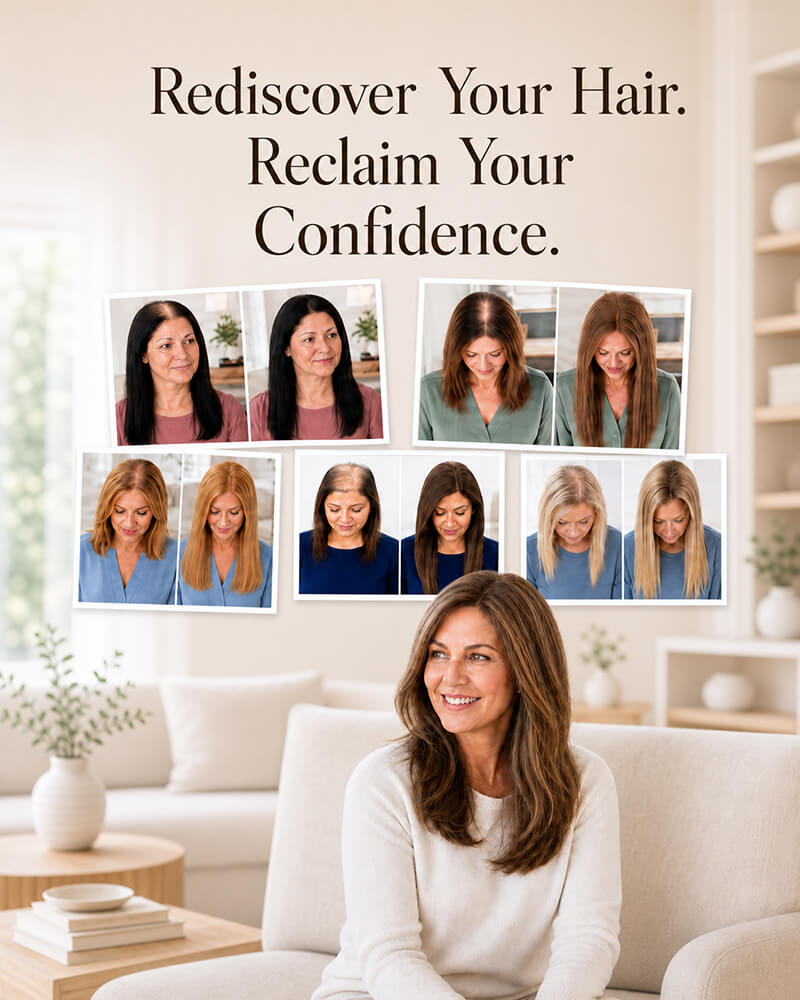

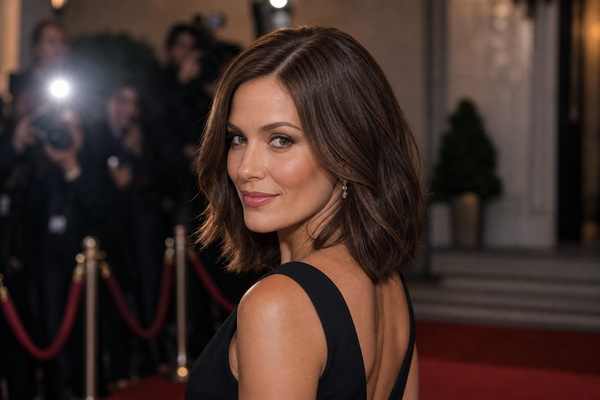
Celebrity hair can look impossibly full from every angle. That comparison can make a first-time topper buyer doubt whether alternative hair will ever look believable.
Which celebrities wear hair toppers? Ricki Lake has specifically said she wore a topper. Zendaya, Keira Knightley, Kim Kardashian, Kylie Jenner, Jennifer Aniston, and Ted Danson have publicly discussed wigs, extensions, clip-in pieces, or hairpieces. Their disclosures normalize alternative hair, but they do not confirm identical products or reasons.
I understand why celebrity examples feel reassuring. But I also know that a wig, a topper, an extension system, and a clip-in piece are not interchangeable labels. I separate verified disclosure from visual guesswork throughout this article.
Which Celebrities Have Admitted to Wearing Hair Toppers?
Online lists often label every fuller celebrity hairstyle a topper. That shortcut spreads rumors and makes honest product education much harder.
Ricki Lake is the clearest publicly verified celebrity topper example because she used the word “topper” herself. Other stars often confirm wigs, extensions, or hairpieces instead. I only call someone a topper wearer when the person or a reliable first-hand source identifies that specific product.
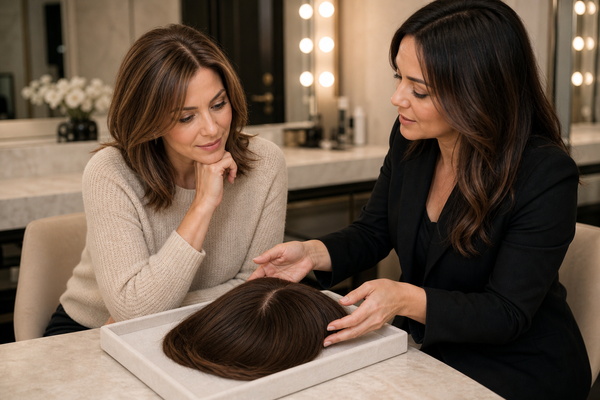
The exact product name matters
I found one unusually direct example in Ricki Lake’s topper1 disclosure. She explained that she had worn a hairpiece for several years and identified it as what people call a topper. She also described discomfort and pulling in her personal experience. I do not use that story to say every topper causes the same problems. A well-fitted removable topper can have a different base, weight, attachment method, and wear schedule. The story matters because it confirms the specific product category without asking readers to diagnose a photograph. It also shows that public figures can share complicated feelings about alternative hair. A topper can provide coverage and still require careful attention to fit, scalp access, attachment tension, and comfort. When I evaluate any celebrity claim, I ask one simple question first: Did the person actually say “topper,” or did someone else decide that a wig or extension must be one?
| Public Claim | What It Confirms | What It Does Not Confirm |
|---|---|---|
| “I wore a topper” | Specific use of a top hairpiece | The exact base, clips, density, or current use |
| “I wore a wig” | Full or near-full alternative hair | A topper or thinning-hair diagnosis |
| “I used extensions” | Added length or density | Crown coverage from a topper |
| A stylist confirms a piece | Use for that documented look | Daily wear or the wearer’s private reason |
| A photo looks unusually full | Nothing by itself | Product type, hair loss, or personal health |
This evidence rule protects the celebrity, but it also helps buyers. It stops a woman from choosing the wrong product because a social-media caption mislabeled a look.
What Famous Actors Wear Wigs or Hairpieces?
Film and television hair must survive repeated scenes, color changes, and continuity demands. Viewers may mistake production tools for private daily choices.
Famous actors have used wigs or hairpieces for roles, continuity, protection, and coverage. Keira Knightley discussed using wigs after repeated film coloring affected her hair. Ted Danson publicly described the hairpiece connected with his Cheers character. Neither example proves that either actor currently wears a daily topper.
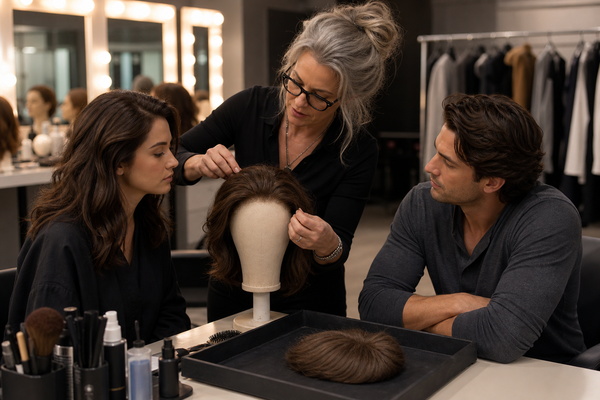
Screen use and personal use are different
I treat Keira Knightley’s wigs2 as a verified example because the reporting is based on her own interview. She connected wig use with the effects of repeated hair coloring for films. I treat Ted Danson’s hairpiece3 as another verified example because he openly discussed the piece associated with his television image. These cases show how broad the word “hairpiece” can be. One actor may use a full wig to avoid repeated processing. Another may use a small piece for a character’s expected appearance. A woman shopping for thinning-hair coverage should not copy the category without comparing her own needs. A topper is usually designed to integrate with existing hair and cover a defined area on the part, top, or crown. A film wig may instead create a complete character, preserve continuity, or change color and length overnight.
| Production Need | Common Alternative-Hair Choice | Buyer Lesson |
|---|---|---|
| Major color or length change | Full wig | A dramatic screen look may not involve natural hair |
| Small area of added coverage | Partial hairpiece | Base size should match the area that needs coverage |
| More length or lower density | Extensions or clip-ins | Extensions do not automatically cover crown thinning |
| Exact scene continuity | Custom wig or piece | Consistent placement and styling affect realism |
| Protection from repeated processing | Wig or protective style | Product choice can be about styling, not hair loss |
Celebrity use becomes useful when it expands our understanding of options. It becomes misleading when it turns into a diagnosis or a promise that one product will solve every type of thinning.
Do the Kardashians Wear Hair Toppers or Wigs?
The Kardashian-Jenner family changes hair color and length quickly. That visibility encourages speculation about toppers, even when a documented look used something else.
Kardashian-Jenner family members have publicly used wigs, including Kim Kardashian and Kylie Jenner. I found no reliable statement confirming that either woman wears a hair topper for thinning hair. A visible part, sudden color change, or unusually full style cannot establish the exact product or the reason for wearing it.
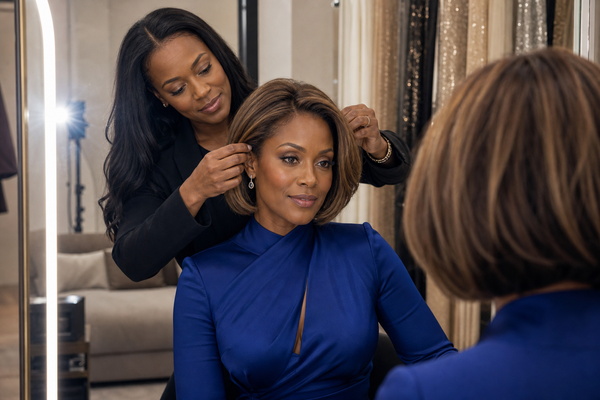
What the public evidence actually shows
The clearest recent evidence I found shows Kim Kardashian’s wig4 being tested during a documented Met Gala fitting. The discussion focused on color, lighting, roots, photography, and whether the wig suited the final creative look. That is evidence of a wig fitting, not a topper for thinning. Public reporting on Kylie Jenner’s wigs5 is also explicit. Kylie explained that dramatic colors were wigs and that avoiding bleach made the changes easier. Again, that does not establish topper use. I think these examples are still valuable for buyers because they reveal the preparation behind an effortless-looking result. Celebrity hair teams test color under cameras, refine the front, adjust the fit, and consider how the whole style works with clothing and makeup. A daily topper buyer can use the same logic on a smaller scale without expecting a celebrity-sized glam team.
| Person | Publicly Supported Product | Responsible Conclusion |
|---|---|---|
| Kim Kardashian | Wig used during a documented fitting | Confirmed wig use for that look; topper use not established |
| Kylie Jenner | Wigs for dramatic color changes | Confirmed wig use; thinning-hair reason not established |
| Kendall Jenner | Extensions have been publicly discussed | Extension use does not prove topper use |
| Other family members | Styles may include added hair | Verify each look instead of treating the family as one claim |
I would never identify hair loss from a red-carpet image. Lighting, styling powder, teasing, extensions, wigs, toppers, color contrast, and camera sharpening can all change how dense hair appears.
Does Jennifer Aniston Wear Hairpieces?
Jennifer Aniston’s hair is so closely watched that any change attracts theories. Repetition can make an unsupported topper claim feel like a confirmed fact.
Jennifer Aniston has publicly discussed extensions and clip-in pieces used to add fullness. I found no reliable confirmation that she wears a topper for thinning hair. Her use of added hair shows that even a famous hairstyle may combine natural hair with temporary pieces, but the product label still matters.
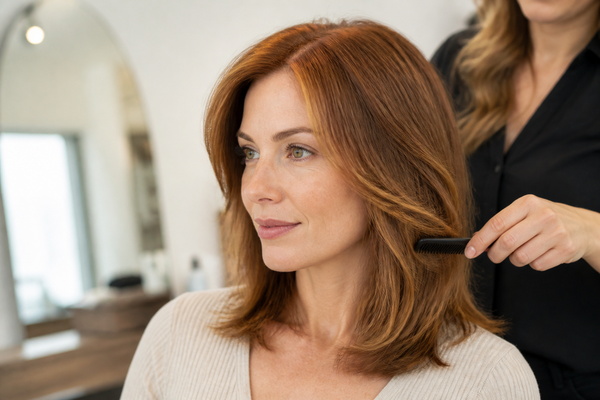
Confirm the piece before naming it
In a direct hair interview, Jennifer Aniston’s extensions6 were discussed alongside clip-in pieces that added fullness when her ends felt thin. That statement supports extension and clip-in use. It does not support a claim that she wears a crown topper or uses alternative hair because of a diagnosed condition. I make this distinction because shoppers often search a celebrity’s name while trying to identify a product that could recreate the same fullness. The better question is not “Does she secretly wear a topper?” The better question is “Which product would create the part, crown, length, or density that I need?” A topper can support crown coverage and top volume. Clip-in extensions usually add density or length through the sides and back. A full wig can change the complete look. Correct product selection matters more than attaching an uncertain celebrity label to the purchase.
| Desired Result | Likely Product Category | Key Check |
|---|---|---|
| Fuller part or crown | Hair topper | Base coverage and natural density |
| Thicker ends | Clip-in extensions | Safe placement and compatible length |
| More overall length | Extension system | Weight, blend, and natural-hair strength |
| Complete color change | Wig | Cap fit, hairline, and color harmony |
| Small local enhancement | Partial hairpiece | Exact placement and secure attachment |
I recommend bringing inspiration photos to a topper consultation, but I would use the images to discuss shape and volume. I would not use them as proof of what a celebrity wears.
Do Hair Toppers Look Natural Enough for a Red Carpet?
High-resolution photos reveal harsh color breaks, bulky density, and visible edges. That pressure can make ordinary buyers assume a natural topper is impossible.
Hair toppers can look natural enough for a red carpet when the base, density, color, part, front edge, and cut suit the wearer. Celebrity wig use proves that alternative hair can survive close photography, but a good result comes from fitting and blending rather than fame or price alone.
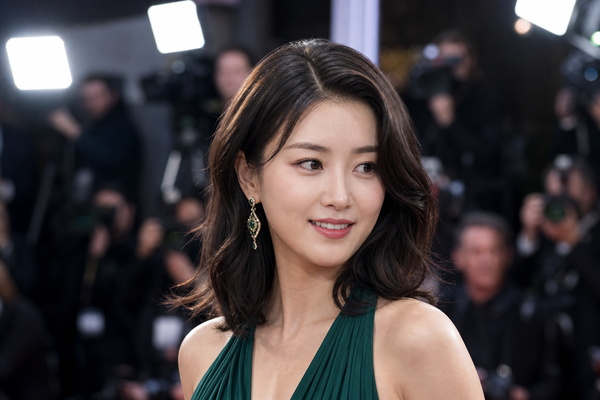
What makes alternative hair camera-ready?
I use Zendaya’s red-carpet wigs7 as strong proof that alternative hair can look intentional, polished, and varied under intense public attention. Zendaya openly explained that wigs and extensions let her change styles while keeping her own hair underneath. The lesson for a topper buyer is not to copy a dramatic celebrity style. The lesson is that added hair can become part of a believable total look. The British Association of Dermatologists also notes that real-hair wigs and natural hairpieces8 can look more natural and can be styled with low heat. In practice, I first match the root and color temperature. Then I choose a base that covers the full thinning area without becoming unnecessarily large. I keep density proportional to the sides. I align the part, soften the front, blend the perimeter, and check the result in daylight and photographs. A red-carpet finish is a process, not a product label.
| Natural-Looking Detail | Why It Matters on Camera | Practical Check |
|---|---|---|
| Root color | High contrast exposes the transition | Compare in indirect daylight |
| Density | Excess hair can create a helmet shape | Match the wearer’s sides and back |
| Part direction | A conflicting part separates the piece | Align or professionally redirect it |
| Front edge | Cameras can catch a hard line | Choose a suitable base and soften placement |
| Perimeter blend | Unblended lengths move separately | Cut and style topper and natural hair together |
| Secure fit | Lifting changes the silhouette | Test normal head movement before an event |
Celebrities reassure buyers because they make alternative hair visible as a professional beauty tool. But the most reassuring result is not a famous name. It is a topper that fits comfortably, moves naturally, and still looks like the woman wearing it.
Conclusion
Ricki Lake is a verified celebrity topper example, while other stars have confirmed wigs, extensions, clip-ins, or hairpieces. I use these disclosures to normalize alternative hair, not to spread rumors. Natural results depend on accurate product choice, fit, density, color, and careful blending.
References
NewBeauty records Ricki Lake describing a hairpiece she wore for five years as a “topper,” while also sharing her personal concerns about heat, pulling, itching, and scalp access. ↩
ABC News reports Keira Knightley’s explanation that repeated coloring for films affected her hair and that she used wigs for several years. ↩
Los Angeles Times reports Ted Danson discussing the hairpiece associated with his Cheers character and distinguishing his screen image from how he appeared away from the set. ↩
Vogue documents Kim Kardashian testing a tonal neutral wig during a Met Gala fitting and discussing color changes before the final red-carpet decision. ↩
Allure reports Kylie Jenner clarifying that her dramatic hair colors were wigs and that avoiding bleach made frequent color changes easier. ↩
Marie Claire records Jennifer Aniston discussing extensions and clip-in pieces used to add fullness when her hair was damaged and the ends appeared thin. ↩
Zendaya Interview records Zendaya explaining that she used wigs or hair extensions for frequent red-carpet changes while keeping her regular hair underneath. ↩
BAD explains that real-hair wigs and hairpieces can look more natural, can be styled with low heat, and may help disguise female-pattern hair loss. ↩