

Your new topper looked flawless for the first month. Then it turned dry, flat, and tangled at the ends. The hair did not fail. The care routine did.
A hair topper stays soft and natural when you care for it gently. Wash it every 8 to 10 wears with cool water and a sulfate-free shampoo, condition only the lengths, let it air-dry flat, and store it away from heat and sun.
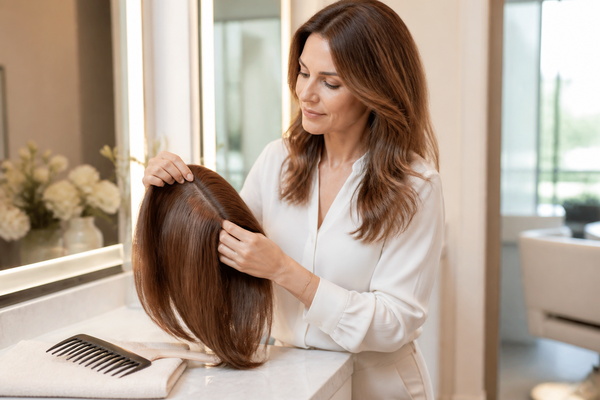
A topper cannot repair itself the way your own hair can. So the routine carries all the weight. In this guide, I walk you through the full care cycle: how often to wash, which products are safe, the exact wash steps, styling limits, storage, and the small fixes that add months of life. I keep every step simple, because care that feels easy is care you will actually repeat.
How Often Should You Wash a Hair Topper?
Washing feels like care. In truth, every wash takes a small amount of life out of the hair. But wait too long, and product builds up fast.
Wash a hair topper every 8 to 10 wears, or sooner when it feels heavy or looks dull. A topper never touches scalp oil, so it stays clean far longer than your own hair. Sweat, dry shampoo, and styling spray are the only reasons to wash early.
What Counts as a Wear
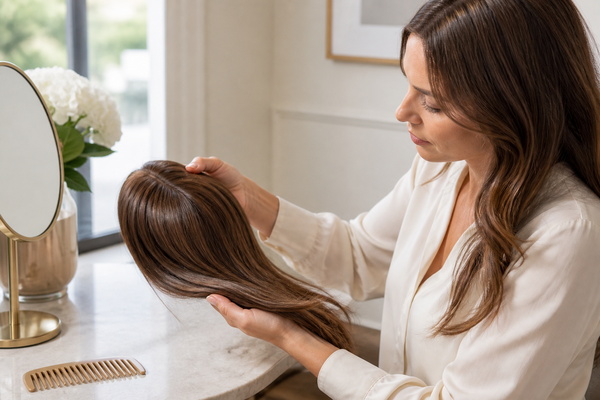
I count a wear as a full day out of the house. A quick dinner in mild weather barely counts. A hot, sweaty afternoon counts double, because salt and dampness dry the ends. If you wear your topper twice a week, that means one wash roughly every month. A daily wearer should wash about once a week. When in doubt, trust your hands. Stiff, coated, or dull hair needs a wash. Soft, movable hair does not.
What Products Are Safe on a Hair Topper?
The wrong bottle can ruin good hair in one wash. Harsh cleansers strip shine in minutes. A few label checks prevent all of that.
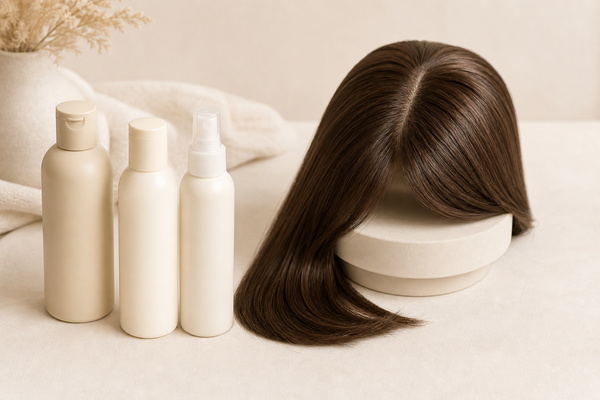
Use a sulfate-free shampoo, a light conditioner on the lengths only, and alcohol-free styling products on a hair topper. Products made for dry or color-treated hair are safe picks. Skip clarifying shampoos, heavy oils near the base, and sprays loaded with drying alcohol.
Reading the Label
Sulfates are the strong cleansers that make shampoo foam. The most common one, sodium laureth sulfate[1], lifts dirt fast, but it also strips softness from processed hair. A gentler routine matters even more for a topper, because this hair has no scalp feeding it oil. Dermatologists note that sulfates in shampoo[2] can be too strong for dry, fine, or color-treated hair, and topper hair fits all three descriptions. When you shop, look for one simple phrase on the bottle: sulfate-free.
| Product | Safe for a topper? | Best use |
|---|---|---|
| Sulfate-free shampoo | Yes | Every wash, with cool water |
| Moisturizing conditioner | Yes, lengths only | Mid-shaft to ends |
| Light leave-in spray | Yes | After drying, on the ends |
| Dry shampoo | Sparingly | Between washes, roots of your own hair only |
| Clarifying shampoo | No | Strips too much and ages the hair |
| Heavy oils and butters | No | Weigh hair down and coat the base |
How Do You Wash and Dry a Topper Step by Step?
The hair is weakest when wet. One rough move can leave frizz that never fully leaves. A calm, five-step wash protects it.
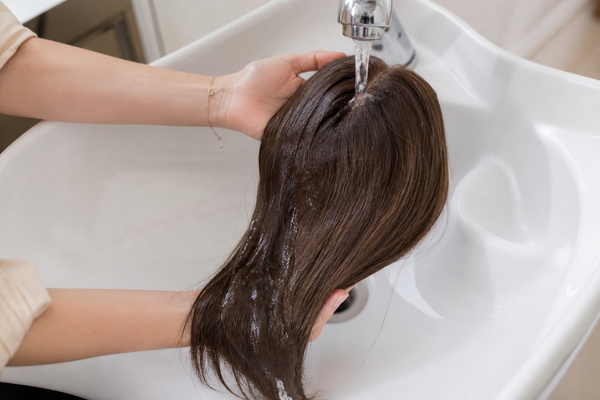
To wash a hair topper, brush it dry first, rinse it under cool running water, shampoo downward, condition the lengths, then press out the water and dry it flat on a towel. Never soak it, never wring it, and never brush it soaking wet.
The Five Steps
- Brush the hair dry, starting from the ends and moving up.
- Hold the topper under cool running water. Let the water flow one way, from root to end.
- Smooth sulfate-free shampoo down the hair with your hands. Do not scrub or twist.
- Apply conditioner to the lengths, wait two minutes, then rinse until the water runs clear.
- Press the hair between a soft towel, lay it flat, and let it air-dry away from radiators and sun.
How Do You Detangle Without Shedding?
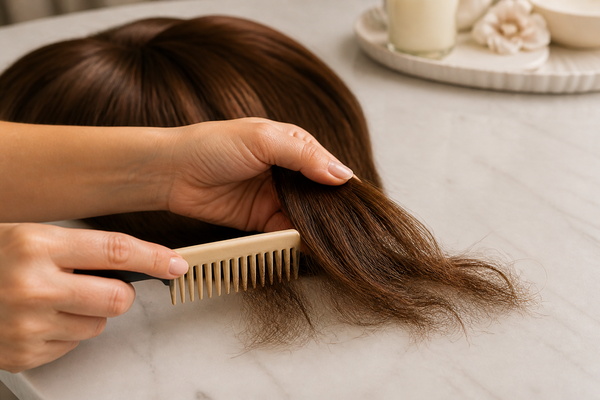
A few strands in the sink look scary, but most shedding comes from rough brushing. Start at the ends and work upward in small sections. Wet hair stretches and snaps, so comb only after drying. When the comb stops, do not pull. Go back to the ends, free the knot with your fingers, and then continue. A light coat of conditioner[3] smooths the cuticle and lets the comb glide instead of drag. The base needs the gentlest touch of all. Hold the hair just above the knots while you comb, so the pull never reaches the roots.
Can You Cut, Color, or Heat-Style a Topper?
You want a small change. The topper looks like it can take one. Some changes it handles well. Some it never forgives.
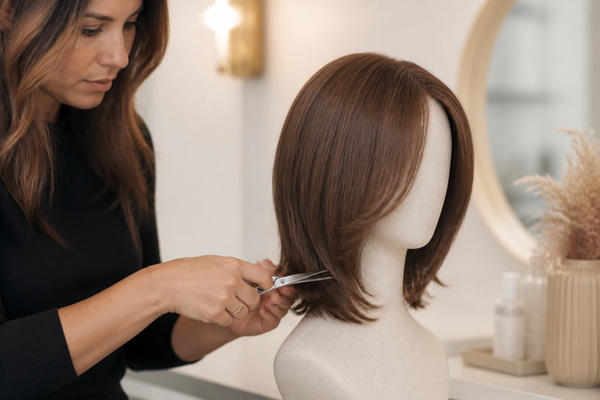
A human hair topper can be trimmed by a stylist, styled on low heat, and gently toned darker. Bleaching and lifting color stay high-risk, because this hair can no longer repair itself. Synthetic toppers follow different rules and mostly cannot take color at all.
The Safe Zone and the Risk Zone
| Change | Risk | Notes |
|---|---|---|
| Trim or layers | Low | Ask a stylist to cut it while you wear it |
| Curling or flat iron | Low with care | Use heat protectant and a low setting |
| Toning darker or a gloss | Moderate | Strand-test first, stay near your shade |
| Box dye at home | High | Results turn uneven and are hard to fix |
| Bleaching or lifting | Highest | Can ruin the hair in a single pass |
Heat is the habit to watch, not the rule to ban. I save my hot tools for special days and let the topper air-dry into its cut the rest of the time. Each wash and each heat pass ages the hair a little, so the goal is simple: fewer of both, done gently. If you want the full styling rules for human hair versus synthetic, I cover them in a separate styling guide.
How Should You Store a Topper Between Wears?
Storage is the quiet half of care. Nobody watches the topper overnight. But the wrong spot works on it for hours while you sleep.
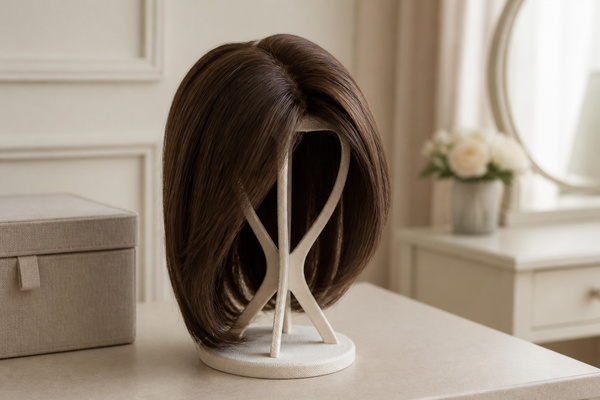
Store a hair topper on a mannequin head or a wig stand, away from heat, sunlight, and dust. For travel, keep it fully dry, fold it loosely, and place it in its box or a silk bag. Always let it dry completely before putting it away.
Stand, Box, or Bag?
| Storage method | Best for | Shape retention |
|---|---|---|
| Mannequin head or stand | Daily wearers | Best, keeps the style and volume |
| Original box | Travel and long breaks | Good, fold along the part line |
| Silk or satin bag | Short trips | Fair, keep it loose, never compressed |
A stand earns its space fast. The style holds overnight, so morning styling takes minutes instead of a full reset. The box works well between seasons, and a silk bag protects the hair in transit. One rule applies to all three: dry before you store. Damp hair in a closed box develops odor and tangles that no wash fully brings back.
How Long Should a Topper Last with Good Care?
Two toppers. Same hair, same price, same seller. One fades in five months, and one still looks fresh after two years. The routine makes almost all of that difference.
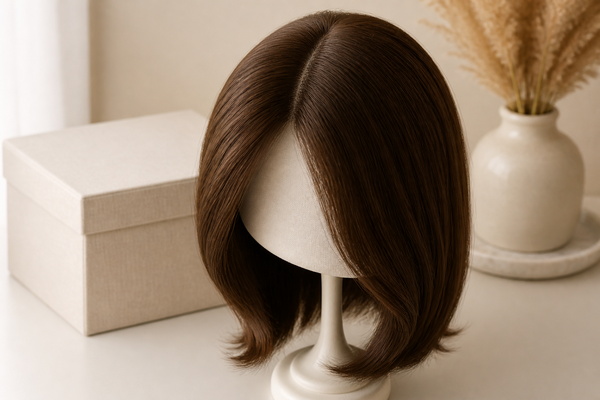
With gentle care, a human hair topper lasts about 9 to 12 months of daily wear, and 18 months or more with occasional wear. Washing less often, storing it on a stand, and saving heat styling for special days are the three habits that stretch its life the most.
What Shortens the Life
Three habits age a topper fast: washing too often, heat styling daily, and sleeping in it. Sunscreen and chlorine also dry the hair, so rinse the topper after a beach or pool day. When the ends feel straw-like no matter how you condition, or the base shows visible wear, the topper is telling you the end is near. I cover the full list of replacement signs in a separate guide, so this one stays focused on the routine itself.
Why Does My Topper Tangle, Shed, or Feel Dry?
Something feels off. The ends knot by lunchtime. A few strands sit on your collar. Before you blame the hair, check the usual causes first.
Most topper problems trace back to three causes: too much heat, too much product, or sleeping in it. Fix the routine before you shop for a replacement. A few strands shedding each day is normal wear, not a defect.
Quick Fixes for Common Problems
| Problem | Likely cause | Fix |
|---|---|---|
| Ends tangle by afternoon | Dry ends and friction | Light leave-in on the ends, detangle nightly |
| Hair feels dry and stiff | Over-washing or heat | Skip one wash, deep-condition the lengths |
| A few strands shed | Normal wear, rough brushing | Detangle from the ends, hold hair above the base |
| Dull, coated look | Product buildup near the base | Rinse downward, keep creams off the knots |
| Feels heavy or flat | Too much oil or serum | Switch to lighter products, wash with cool water |
One caution here. Topper shedding and your own hair shedding are two different things. If your natural hair seems to thin faster than before, read about hair loss[4] causes and speak with a doctor. A topper covers thinning hair. It never treats it.
What Does a Simple Hair Topper Care Routine Look Like?
You do not need a shelf of products. You need a short list of habits, done on a schedule.
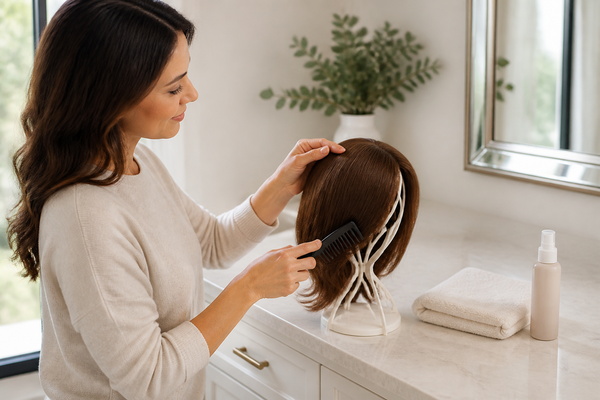
A simple hair topper routine is: detangle after every wear, wash every 8 to 10 wears, deep-condition the lengths once a month, and store it on a stand every night. That is the entire routine. Everything else in this guide explains how to do those four things well.
The Routine at a Glance
| Frequency | Task |
|---|---|
| After each wear | Brush from the ends, place it on the stand |
| Weekly check | Look at the ends, apply leave-in if they feel dry |
| Every 8 to 10 wears | Wash, condition, air-dry flat |
| Monthly | Deep-condition the lengths, check the clips and base |
| Before storage | Make sure the hair is fully dry |
Print this table or save it to your phone. When the routine lives somewhere visible, it actually happens, and the topper repays you with months of soft, natural wear.
Conclusion
Good care is not expensive. It is consistent. Wash rarely and gently, keep products off the base, dry flat, store on a stand, and save the heat for special days. A well-cared-for topper stays soft and natural far longer than a neglected one. If you are ready to start, browse our human hair toppers collection.
References
Wikipedia — Sodium laureth sulfate, the common foaming cleanser in shampoo. ↑ Back
Healthline — Sulfate in shampoo: when sulfates are too strong for dry, fine, or color-treated hair. ↑ Back
Wikipedia — Hair conditioner and how it smooths the cuticle. ↑ Back
Mayo Clinic — Hair loss symptoms and causes overview. ↑ Back