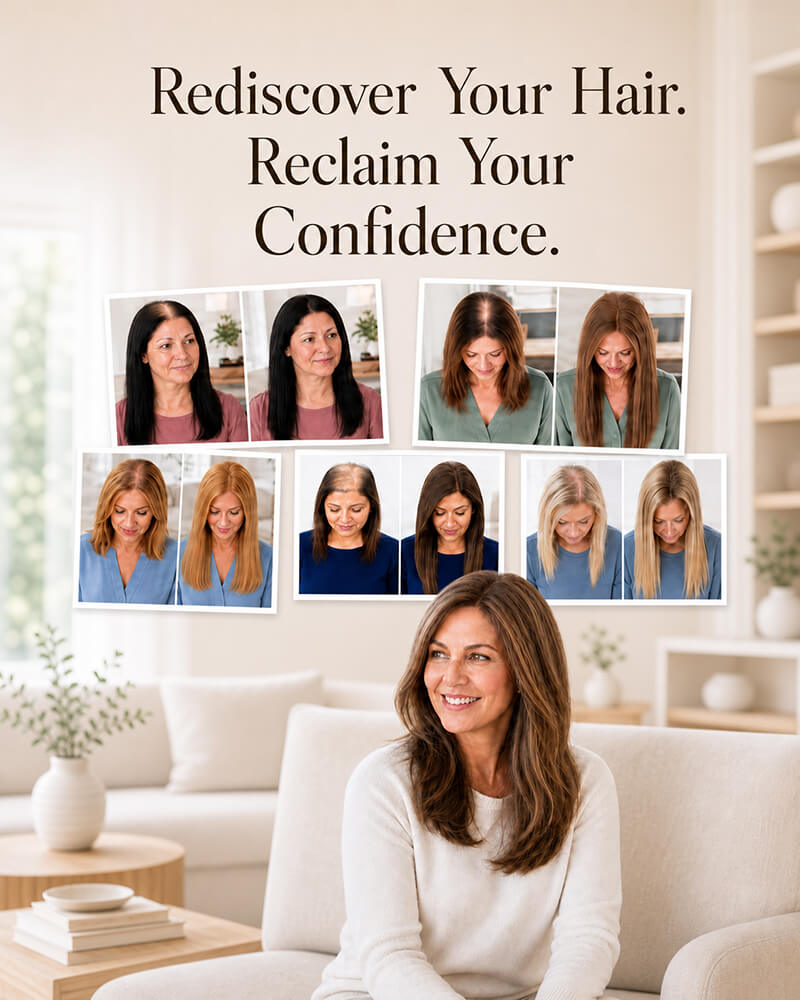

Fine or thinning hair can make the front look sparse, but a heavy extension may create more stress. I believe the right design matters most.
Hairline extensions can suit fine or mildly thin hair when they are lightweight, correctly sized, and attached without tension. I recommend enough healthy natural hair to support and conceal them. Anyone with active shedding, scalp pain, breakage, or very fragile hair should seek professional advice first.

I do not judge suitability by the words “fine” or “thin” alone. I look at strand thickness, overall density, hairline condition, attachment weight, and the result the wearer wants.
What Is the Difference Between Fine Hair and Thin Hair?
Fine and thin sound interchangeable, so people often choose the wrong amount of added hair. I start by separating strand size from scalp coverage.
Fine hair describes small-diameter strands, while thin hair describes lower overall density or visible scalp. A person can have fine but plentiful hair, thick strands with low density, or both. I assess each feature separately because the safest attachment and most natural density may differ.
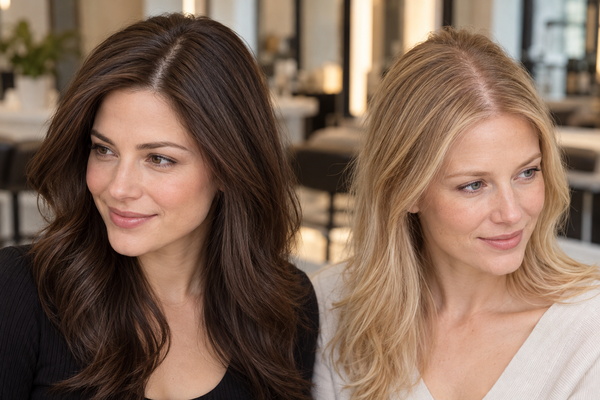
I assess the support hair before adding volume
I first look at what the natural hair can comfortably hold. Hair fullness reflects several features, including density, fiber diameter1, length, and resistance to breakage. That is why two people who both call their hair “thin” may need different solutions. Fine but healthy hair may support a small, light piece if there is enough coverage over the attachment. Lower-density hair may need an even smaller base, a softer density, or a different anchor position. If the front is so sparse that the clips cannot stay hidden, I would not add a larger piece just to force coverage. A partial hairpiece with another attachment method, or a professional consultation, may give a cleaner result with less stress.
| Hair profile | What I notice | What I usually prioritize |
|---|---|---|
| Fine strands, good density | Many narrow strands with adequate coverage | Slim base, light density, careful color match |
| Medium or thick strands, low density | More visible scalp with fewer support hairs | Small attachment area and modest added volume |
| Fine strands and low density | Limited grip and limited concealment | Lowest practical weight and professional fitting |
| Fragile or actively shedding hair | Breakage, short broken hairs, or rapid change | Pause extensions and investigate the cause first |
What Makes Hairline Extensions Safer for Fine or Thin Hair?
The wrong piece can feel heavy or show through fine hair. I reduce that risk by choosing less weight, less bulk, and a balanced anchor.
Hairline extensions are better suited to fine or thin hair when they use a lightweight, low-profile base, modest density, and secure attachments. I avoid oversized pieces, excessive length, and any fit that pulls. The piece should add believable fullness without asking fragile strands to carry too much weight.
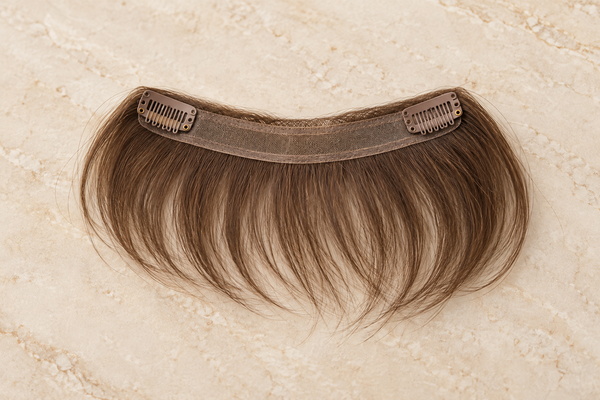
I choose proportion before dramatic volume
I treat weight as a design decision, not a marketing number. A long or dense piece creates more leverage when it moves, so I prefer the shortest and lightest option that can achieve the desired face-framing effect. I also match the extension density to the natural hair instead of making the front suddenly much fuller than the sides. Dermatologists warn that extensions can damage natural hair when tension and care are poorly managed, and pain or a headache means the style is too tight.Extension safety2 matters even when the piece looks small. I also consider the available attachment methods3 because some anchor to existing hair and others to skin. The best option depends on where healthy support hair remains and how often the wearer wants to remove the piece.
| Design choice | Better direction for delicate hair | Warning sign |
|---|---|---|
| Weight | Light enough to forget during normal wear | Pulling, sliding, or a heavy feeling |
| Base | Slim and no larger than the coverage area | Bulky edge or visible ridge |
| Density | Similar to the natural sides and lengths | Sudden, helmet-like fullness |
| Length | Close to the wearer’s own face-framing layers | Extra length that swings and tugs |
| Attachment | Secure with no pinching or concentrated pressure | Pain, headache, soreness, or broken hairs |
How Should I Fit and Blend Hairline Extensions?
A beautiful color match cannot rescue a tense or visible fit. I place comfort first, then concealment, and only then final styling.
I fit hairline extensions on clean, dry, healthy support hair slightly behind the most delicate edge. I use the fewest attachments needed, check that the base lies flat, and make sure natural hair covers every join. The finished fit should feel secure but never tight, sore, or painful.
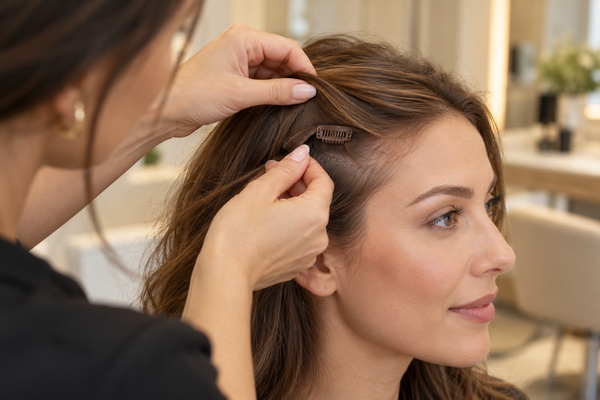
I use a comfort-first fitting routine
I begin with the wearer’s usual part because the extension must work with daily movement, not only with a salon pose. I section a small area behind the fragile front edge and avoid attaching to baby hairs. Then I secure the piece without pulling the surrounding hair out of its natural direction. I ask the wearer to turn her head, raise her eyebrows, and lightly touch the area. These small movements reveal pinching that a mirror may miss. I also check the view from above, both sides, and bright window light because fine hair can expose an attachment under strong light. The British Association of Dermatologists explains that repeated pulling can cause traction alopecia4, and it lists hair extensions among associated styles. So I remove or reposition the piece immediately if I see tension, redness, soreness, or new breakage.
| Fit check | What I want to see or feel | My response if it fails |
|---|---|---|
| Comfort | No pain, pinching, or headache | Remove and refit with less tension |
| Concealment | Natural hair covers the base in normal movement | Move the piece or choose a smaller base |
| Security | The piece stays flat without gripping aggressively | Adjust placement instead of adding pressure |
| Blend | Color, texture, length, and density look continuous | Trim or style gently with professional help |
| End-of-day scalp | No soreness, redness, or tender spots | Stop wearing and reassess the attachment |
I remove clip-in hairline pieces before sleeping, showering, or vigorous exercise unless the maker clearly designed the system for another routine. I open every clip before lifting the piece away. I never pull it through the hair. I also rotate placement slightly when the design allows, and I give the natural hair regular rest days. I style the extension off the head when possible, especially when using heat. This reduces repeated brushing, heat, and tension near the hairline. I keep the piece clean, but I do not wash it more often than necessary because rough handling can shorten its life and make the ends harder to blend.
When Should I Avoid Hairline Extensions?
Sometimes the smartest styling choice is to wait. I do not use cosmetic coverage to ignore active loss, scalp symptoms, or weak support hair.
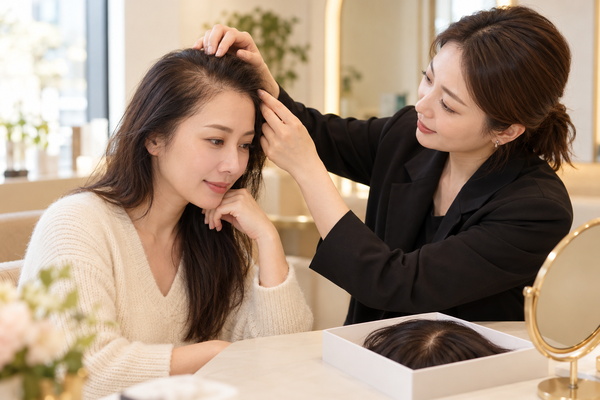
I would avoid hairline extensions during sudden shedding, patchy loss, scalp inflammation, unexplained soreness, active traction damage, or severe fragility. I would also pause if the attachment cannot stay hidden without tightness. A dermatologist or qualified hair-loss professional should assess the cause before any tension-based piece is worn.
I treat warning signs as useful information
I stop the fitting when the scalp or hair shows signs that need a different kind of help. New bald patches, a rapidly widening part, heavy shedding, scaling, redness, burning, or pain are not problems that an extension should hide and forget. Mayo Clinic advises medical review for sudden or patchy loss and for more hair than usual coming out during washing or combing.Sudden hair loss5 can have several causes, so I avoid guessing. I also avoid clips on areas that already have short broken hairs or tenderness. If the hairline is stable but simply too sparse to conceal a clip, I would discuss a skin-anchored partial piece, a soft topper, hair fibers, or a no-tension styling change. The goal is believable coverage that respects the hair that remains.
Conclusion
Hairline extensions can work for fine or mildly thin hair, but I choose the smallest effective piece and insist on a painless fit. I pause when hair is fragile, actively shedding, or symptomatic. Good coverage should look natural and feel almost unnoticeable.
References
PMC reviews hair cosmetics and explains that visible fullness depends on density, fiber diameter, length, breakage resistance, and healthy fiber structure. ↩
AAD advises that pain or a headache signals excessive tightness and recommends removing clip-in extensions before washing natural hair. ↩
DermNet outlines how partial hair additions may attach to existing hair or skin through several techniques, including bonding and adhesives. ↩
BAD defines traction alopecia as hair loss from repeated pulling and notes that long-term tension can permanently damage follicles. ↩
Mayo Clinic recommends medical review for sudden or patchy loss and for unusually heavy shedding during washing or combing. ↩