

Fine hair can look fuller with an extension, but the wrong weight, grip, or placement can turn a confidence boost into breakage or thinning.
Hairline extensions can damage fine hair, but I do not consider them automatically harmful. I see the greatest risk when an attachment is too tight or heavy, grips too few hairs, stays in too long, or repeatedly stresses the same area.
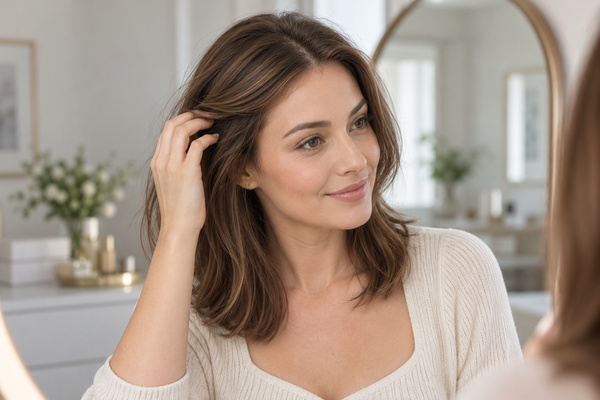
I judge safety by the fit, the wearer’s starting hair condition, and what the scalp feels like during wear. A light piece that sits comfortably is very different from a heavy piece that pulls all day.
Why Can Hairline Extensions Stress Fine Hair?
Fine strands can support added hair, but a small attachment area may concentrate too much weight and tension on a limited number of natural hairs.
Hairline extensions stress fine hair when I place more weight on an attachment section than the natural strands can comfortably support. Repeated tension can cause shaft breakage, while prolonged pulling can also contribute to traction-related hair loss.
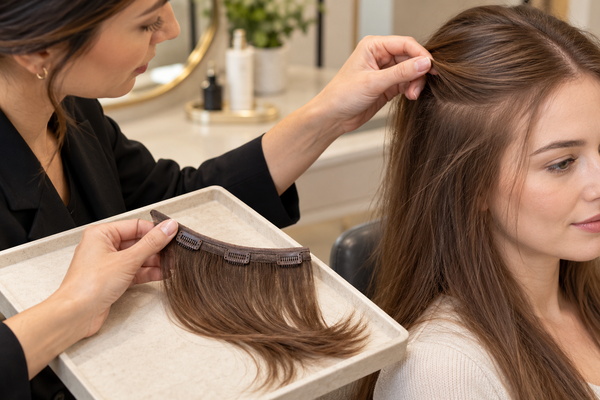
I separate strand breakage from follicle stress
I treat these as two related but different problems. Breakage happens along the visible hair shaft, so I may notice short snapped hairs, rough ends, or uneven density near an attachment point. Follicle stress happens at the root. Repeated pulling can lead to traction alopecia1, which DermNet describes as hair loss caused by prolonged or repeated tension. A clinical review also reports cases of extension-related alopecia2 at attachment sites. I do not assume that fine hair is doomed to damage. Instead, I use a practical load test. I choose a smaller and lighter piece, spread the support across enough healthy hair, and avoid attaching it directly to fragile baby hairs. If the piece creates a pulling sensation, changes the direction of the roots, or depends on only a few strands, I consider the fit unsuitable even if it looks good in a photograph.
| Fit factor | Lower-risk sign I look for | Higher-risk sign I avoid |
|---|---|---|
| Piece weight | The piece feels light and balanced | The wearer feels constant downward pull |
| Attachment area | Enough healthy hair shares the load | A small section carries most of the weight |
| Placement | The piece sits behind fragile edge hairs | Clips or bonds grip sparse baby hairs |
| Daily comfort | The scalp feels normal | Pain, stinging, headache, or tenderness |
| Repeated wear | Placement and wear time allow recovery | The same stressed point is used every day |
I also look at the hair before fitting anything. If I see active shedding, inflamed skin, broken edge hairs, or a rapidly widening part, I pause. An extension can improve appearance, but I do not use it to cover a problem that first needs a medical diagnosis.
What Warning Signs Mean the Fit Is Too Tight?
A secure attachment should not hurt. Ignoring discomfort can allow a correctable fitting problem to become repeated stress on the same fragile area.
A hairline extension is too tight when I notice pain, stinging, headache, scalp redness, itching, crusting, raised skin, or new broken hairs near the attachment. I remove or loosen it immediately instead of waiting for the scalp to “get used to it.”
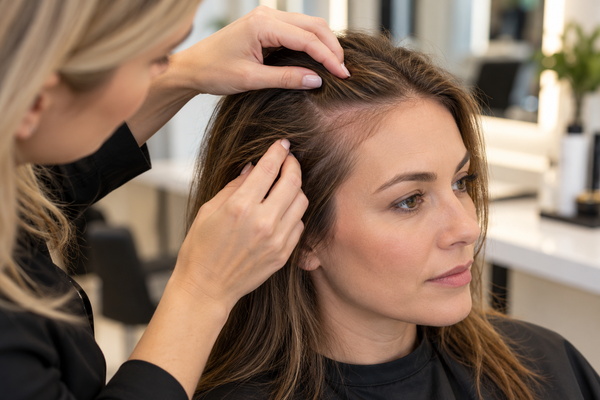
I treat discomfort as useful information
I never describe pain as a normal break-in stage. The British Association of Dermatologists lists itching, soreness, flaking, redness, spots, and hair casts among possible signs associated with traction. Its leaflet also explains that longstanding cases may leave smooth, shiny skin after follicles have been permanently damaged. That is why I treat scalp soreness3 as a reason to stop and inspect the fit. I also compare the hairline in good light every few weeks. I look for short broken hairs, a thinner temple, a wider gap around a clip, or a small area that feels tender after removal. I do not wait for a visible bald patch. Early changes may be subtle, and a comfortable style today can become stressful if the piece shifts, the clips wear out, or the natural hair becomes thinner.
| What I notice | What it may mean | What I do next |
|---|---|---|
| Immediate pain or headache | The attachment is too tight | I remove or loosen it now |
| Redness, itching, or bumps | The scalp is irritated or under stress | I stop wearing it and let the scalp settle |
| Short hairs near the clip | The shafts may be breaking | I change the placement and reduce the load |
| Thinning at one repeated point | The same follicles may be carrying too much tension | I pause wear and arrange a professional assessment |
| Smooth or shiny sparse skin | The loss may be longstanding | I seek a dermatologist promptly |
I remember that hair loss has more than one cause. A receding edge or widening part does not prove that an extension caused it. If thinning continues after I remove the piece, appears in unrelated areas, or comes with scalp inflammation, I recommend a dermatologist rather than guessing.
How Can I Reduce the Risk for Fine Hair?
Fine hair needs a lighter plan, not stronger gripping. A careful fitting and gentle routine can reduce avoidable pulling, friction, and repeated stress.
I reduce risk by choosing the lightest useful piece, attaching it only to healthy hair, checking comfort before leaving the mirror, removing it gently, limiting continuous wear, and giving stressed areas time to recover.

I start with the smallest useful amount of hair
I begin with the result the wearer actually needs. If the goal is soft coverage near the front, I do not choose extra length and density that add unnecessary weight. I match the piece to the natural density and trim or blend it so the wearer does not need to pull the surrounding hair tightly over it. I secure it behind the most fragile edge hairs and make sure each attachment closes smoothly without pinching. I also check that the natural hair is dry, detangled, and free from heavy buildup before placement. Hospital hair-care guidance notes that thinning or falling hair is fragile hair4 and recommends reducing tugging and rough handling. I apply that same gentle principle during attachment and removal. I hold the roots for support, open each clip fully, and lift the piece away without dragging it through the hair.
I build recovery time into the routine
I do not judge a fitting only by the first five minutes. I ask how the scalp feels after several hours and how the natural hair looks after removal. For removable pieces, I take them off before sleep and before washing the natural hair. The American Academy of Dermatology’s extension care5 guidance advises removing clip-ins before washing and says pain or headache indicates excessive tightness. I also avoid stacking heat, chemical processing, and daily traction on the same delicate area. Small placement changes can help, but I never move a clip onto even weaker hair just to keep wearing the piece. If the edge looks stressed, I choose a break, a different attachment design, or a non-attached coverage option.
I know when home adjustments are no longer enough
I stop experimenting when the wearer has ongoing tenderness, visible loss, inflamed bumps, spreading thinning, or a smooth shiny patch. Alopecia UK explains that early intervention6 improves the chance of recovery when tension is the cause, while prolonged strain can destroy follicles. I therefore recommend taking the piece out and arranging a dermatologist visit when warning signs persist. I do not recommend self-treating with minoxidil, steroids, supplements, or another medical product based only on an online article. A clinician should first identify the cause of the thinning. Fine hair may coexist with pattern hair loss, temporary shedding, inflammatory scalp disease, or another condition that needs a different plan.
| My safer-wear checklist | Yes or no? |
|---|---|
| The piece is the lightest size that meets the goal | |
| No clip or bond grips sparse baby hairs | |
| The wearer feels no pain, stinging, or headache | |
| The hairline looks unchanged after removal | |
| Removal happens without pulling or dragging | |
| The scalp gets regular extension-free time | |
| Persistent thinning receives professional evaluation |
Conclusion
I believe hairline extensions can work for fine hair when the piece is light, the fit is gentle, and warning signs are respected. I stop wear at the first sign of pain, breakage, or increasing thinning.
References
DermNet defines traction alopecia as acquired hair loss from prolonged or repeated tension and lists extensions among its possible causes. ↩
PMC Review summarizes reported alopecia at extension attachment sites and notes that continued traction may progress from non-scarring to permanent loss. ↩
BAD lists soreness, itching, flaking, redness, and hair casts as warning signs and explains that longstanding traction can permanently destroy follicles. ↩
Gloucestershire NHS advises gentle handling for thinning or shedding hair and recommends reducing tugging, rough brushing, and repeated traction. ↩
AAD advises professional fitting, immediate loosening when extensions hurt, clip-in removal before washing, and regular breaks from extension wear. ↩
Alopecia UK explains that early traction alopecia may recover after strain stops, while prolonged tension can cause permanent follicle damage. ↩