

Are Hair Toppers Good for Thin Hair? Who Is a Good Candidate?
You see more scalp in the mirror every month. A full wig feels like too much, but doing nothing feels worse. A hair topper sits right between those two options.
Yes, hair toppers are good for thin hair, and they are built for exactly that situation. A topper clips into the hair you still have to add volume and coverage only where you need it, so it works best for people with active thinning at the crown or part who still have enough healthy hair to anchor the clips.
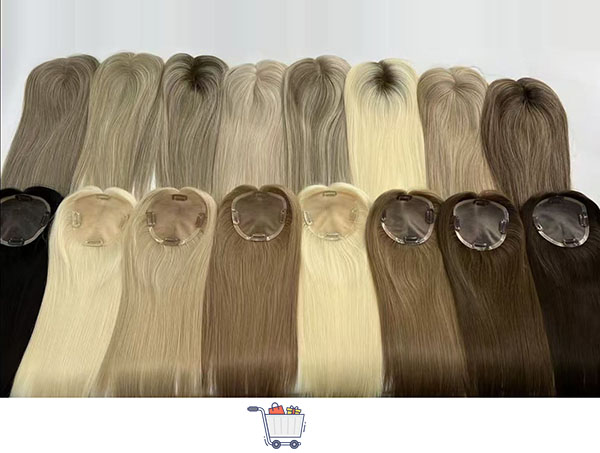
If you are watching your part widen or your crown thin out, you have probably asked yourself whether a topper is an option or whether you should wait. The eight questions below all circle the same worry, so I have grouped them into five clear sections that cover whether a topper fits your hair right now.
Are Hair Toppers Good for Thin Hair, and Who Is a Good Candidate?
You want a fix that helps, not one that makes things worse. A topper is not a wig, and it is not a medical treatment. It is a cosmetic half-piece.
Hair toppers are ideal for thin hair because they add density only on top, and a good candidate is anyone with mild to moderate thinning who still has a band of healthy hair around the hairline and sides for the clips to grip. Almost anyone in that stage can wear one.
Why toppers and thin hair work together
A topper is designed to sit over the thinning zone, usually the crown or the part, and blend into the hair you keep. Because it does not cover your whole head, it is lighter and less noticeable than a wig, and it lets your own hairline show. The most common cause of this kind of thinning is androgenetic alopecia[1], a hereditary condition that gradually thins the top of the scalp while leaving the sides intact, which is exactly the pattern a topper is made to cover.
That leftover healthy hair matters more than people realize. The clips need something to hold onto, so a person whose sides and back are still dense is a strong candidate even when the crown looks sparse. Toppers also suit people whose hair loss[2] comes from stress, postpartum shedding, or seasonal thinning, because those forms often recover and a topper bridges the gap without commitment. In short, if your loss is concentrated on top and your perimeter hair is stable, a topper is one of the most natural-looking options you can reach for.
Do I Have Enough Hair for a Topper?
You part your hair and the scalp gleams back. You wonder if there is anything left for a clip to hold. This question decides everything.
You have enough hair for a topper if you have at least two to three inches of dense, healthy growth around the perimeter of your head where the clips attach. Even a very thin crown is fine, because the clips anchor to the stronger sides and back, not to the thinning top itself.
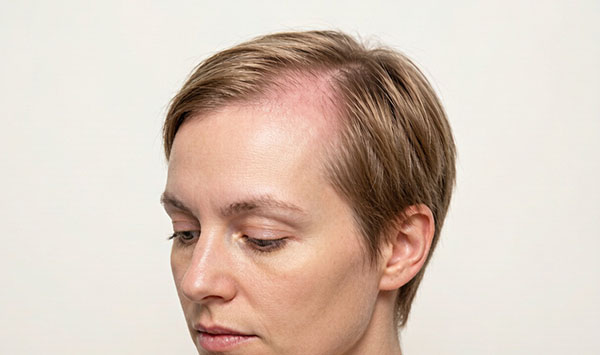
How to check your own hair
The clips on a topper grip along the hairline, the temples, and the back of the head, so what matters is the density in those bands rather than on top. Run your fingers through the hair just above your ears and at your nape. If that hair feels full and holds tension when you gently pull it, the clips will usually stay secure. A crown that is nearly bare is not a dealbreaker on its own, because the topper covers that area instead of clipping into it.
Where people run into trouble is when the perimeter itself has thinned out. If the hair above your ears is fine and fragile, the clips can slip, slide, and tug, which over time may add stress to already weak strands. If you are unsure whether your loss has a medical cause, the safest first step is to see a board-certified dermatologist[3], who can identify the type of loss and tell you whether your remaining hair is strong enough for a wearable piece. A quick in-person check saves you from buying a topper that will not stay put.
Can I Use a Hair Topper While Waiting for Hair Regrowth?
You started treatment and hope is back. But regrowth takes months, and you want to feel like yourself now. A topper can cover that in-between stretch.
Yes, you can wear a hair topper while waiting for regrowth, and it is one of the best uses for one. A topper gives you instant coverage during the slow months of treatment without interfering with your scalp, so you can continue medications or regrowth routines underneath.
Bridging the regrowth gap
Hair regrowth from treatments like minoxidil or postpartum recovery often takes three to six months to show, and during that window the mirror can feel discouraging. A topper lets you walk out the door looking full and polished the same day, which is a real confidence boost when you are waiting on biology. Because a topper clips on and off, you can remove it at night, apply your treatment to a clean scalp, and put the piece back in the morning without any conflict between the two.
The one caution is fit and tension. If your regrowth treatment makes your scalp sensitive, choose a topper with a lighter base and fewer clips so it does not pull. Avoid anything that tugs at the hairline, because repeated tension can cause a separate kind of loss called traction alopecia. Used gently, a topper is a cosmetic layer that sits on top of your routine, not a replacement for it, and many people wear one happily through the entire regrowth timeline.
How to Wear a Hair Topper with Thin Hair
You bought the topper and now it sits in the box. Putting it in wrong makes it look obvious. A few small steps make it disappear into your hair.
To wear a hair topper with thin hair, tease a small section at each clip point, snap the clips closed bottom to top, blend your own hair over the base, and finish with a light mist of hairspray. The key is anchoring each clip into slightly backcombed hair instead of smooth, slippery strands.
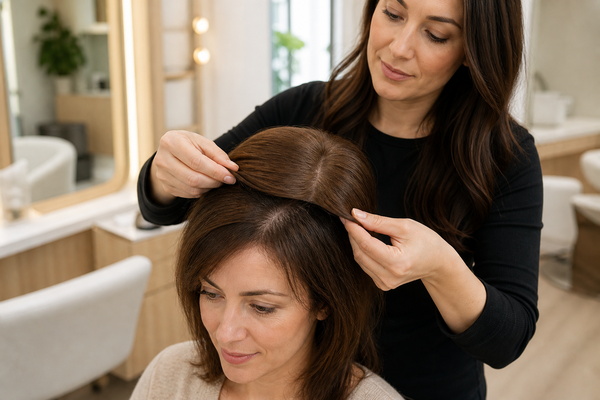
Step-by-step for a secure hold
Start with dry, product-free hair, because clips slide on oily strands. Part your hair where the topper’s base will sit, then take a tiny section at the nape clip point and backcomb the roots lightly with a fine-tooth comb. This creates a little cushion the clip can grip. Snap the lowest clip first, then work up to the crown and the front, pressing each one flush against the scalp. Once all clips are closed, use your fingers or a comb to blend your own hair over the topper’s edge so no seam shows.
For thin hair, a few extra habits keep it secure all day. Choose a topper with a base size that matches your thinning area rather than a larger one, because extra weight on sparse hair leads to slippage. If your hair is very fine, a light hold spray on the clip points adds grip without stiffness. Remove the topper before sleeping, and never pull it off in one hard tug, because gentle unclipping protects the strands that hold it. With practice, the whole routine takes under five minutes and the piece stays put through a full workday.
When Is Hair Loss Too Advanced for a Topper?
You try the topper and it lifts at the edges. The clips have nothing to hold. At some point, a topper stops being the right answer.
Hair loss is too advanced for a topper when the perimeter hair around your hairline and sides has thinned enough that the clips cannot grip securely. At that stage, a full wig or a bonded hair system is usually a better fit, because they do not rely on your remaining hair for support.
Recognizing the cutoff
The limit is not about how bare the crown is, because a topper covers that. The limit is about the anchor hair. When the sides and back become sparse, soft, or fragile, the clips start to slip, slide forward, and pull on strands that cannot take the load. That is the signal to switch, because forcing a topper onto hair that cannot support it can worsen the very loss you are trying to hide. If you find yourself re-clipping every hour or feeling the piece shift when you move, your hair has likely passed the topper stage.
The good news is that other options step in exactly where toppers leave off. A full wig covers the entire head and needs no perimeter anchoring, so it works even with advanced loss. For men, a bonded toupee[4] or hair system adheres directly to the scalp and stays secure regardless of how much native hair remains. The right choice is simply a matter of matching the piece to how much anchor hair you still have, and moving to the next option when that anchor is gone.
Conclusion
A hair topper is a strong choice for thin hair as long as you have healthy perimeter hair to anchor the clips. It covers the crown, bridges regrowth, and blends with your own length. When the sides thin too, a full wig or bonded system takes over, so the best piece is always the one that matches where your hair is today.
References
MedlinePlus Genetics — Androgenetic Alopecia — a trusted U.S. government resource explaining the hereditary cause of patterned thinning. ↑ Back
Wikipedia — Hair Loss — an overview of the causes, types, and terminology of hair loss. ↑ Back
American Academy of Dermatology — Hair Loss: Tips for Managing — dermatologist guidance on when to seek professional help for hair loss. ↑ Back
Wikipedia — Toupée — background on the men’s hairpiece that evolved into modern bonded hair systems. ↑ Back