

I understand why a musty smell at home and more hair in a brush can feel connected. Both problems are stressful, and both deserve a careful response.
Household mold, including so-called black mold, is not an established direct cause of hair loss. Moldy buildings can affect health, but I treat mold cleanup and a hair-loss assessment as separate steps. A scalp fungal infection can cause hair loss, but it is different from household mold exposure.
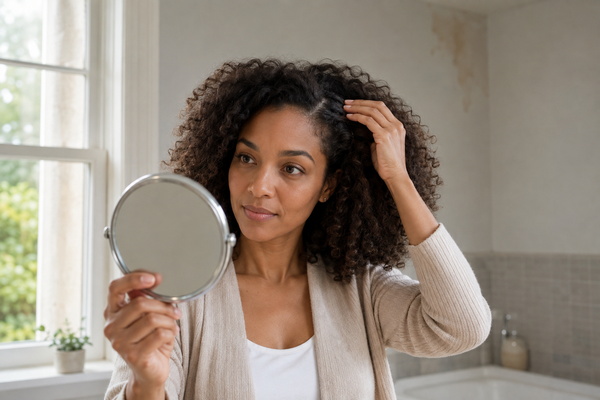
I see a lot of online advice that turns a possible environmental concern into a certain explanation for shedding. I take a more useful approach. I address visible or musty mold because indoor dampness should be fixed. I also look at the hair and scalp on their own terms. That distinction can help someone avoid both ignoring a home problem and assuming that every shed strand has one cause.
Can Household Mold or Black Mold Directly Cause Hair Loss?
I know that it is tempting to link a water-damaged wall with a new hair concern. A simple story can feel comforting when the cause of shedding is unclear.
No reliable clinical source establishes household mold or black mold as a direct cause of hair loss. I would still remove mold and correct the moisture source, but I would not treat hair shedding alone as proof that mold is causing it.
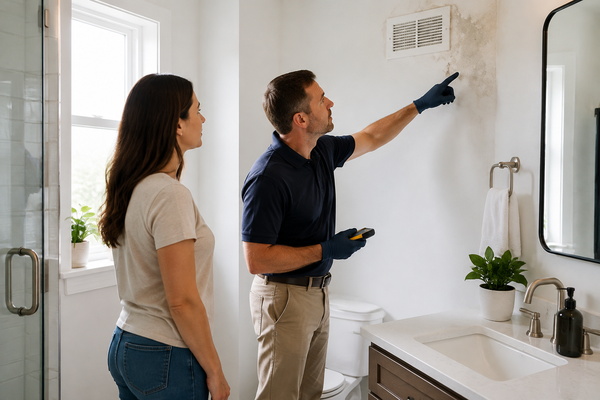
Why I separate a damp building from a hair-loss diagnosis
I take indoor moisture seriously because it can support mold growth and affect health. The World Health Organization’s review of dampness and mould1 identifies respiratory symptoms, allergies, and asthma among the main documented effects of damp or mouldy buildings. Hair loss is not identified there as a direct established outcome. That does not mean I dismiss someone’s symptoms or leave a damp home untreated. It means I avoid claiming a cause that has not been established. I also keep in mind that hair shedding may follow illness, stress, hormonal changes, nutritional issues, medications, scalp disease, or genetic pattern hair loss. I think a useful article should leave room for proper diagnosis instead of promising that one environmental discovery explains every hair change.
What “black mold” does and does not tell me
I do not use color as a shortcut for danger or for the cause of shedding. The label “black mold” commonly refers to Stachybotrys chartarum2, which is a greenish-black mold that needs ongoing moisture to grow. The CDC states that no test proves an association between this mold and particular health symptoms. It also says that people do not need to identify the specific mold type before removal; all indoor mold should be treated with the same practical focus on cleanup and moisture control. I find that advice helpful because it shifts attention from alarming labels to the real problem: a leak, condensation, flooding, poor ventilation, or another moisture source that needs correction.
| What I notice | What I do not assume | What I do next |
|---|---|---|
| A musty smell, a leak, or visible growth | I do not assume the color identifies the health risk | I arrange safe cleanup and fix the moisture source |
| More hair in my brush | I do not assume mold is the direct cause | I note the timing, scalp changes, health events, and hair-care routine |
| Itchy, scaly scalp with broken hairs | I do not treat it as ordinary shedding | I seek clinical advice for a possible scalp condition |
| Sudden patches or progressive thinning | I do not wait for a home test to explain it | I speak with a dermatologist or other qualified clinician |
When Can a Fungus Be Relevant to Hair Loss?
I think this is where the wording matters most. “Mold” in a bathroom and a fungus infecting the scalp are not interchangeable ideas.
A fungal scalp infection can cause hair loss, but it is different from exposure to household mold. Tinea capitis, also called scalp ringworm, can cause scaly or itchy patches, broken hairs, and patchy hair loss. It needs medical diagnosis and treatment.
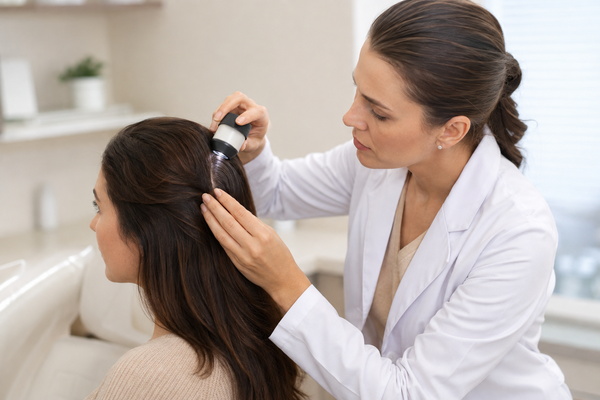
Why I would not self-diagnose a scalp infection
I distinguish a medical scalp infection from an environmental worry because the treatment path is different. The NHS explains that ringworm on the scalp3, also called tinea capitis, may cause patchy hair loss and usually needs prescription antifungal tablets and shampoo. I would not assume that dandruff, irritation, or a small bald patch is tinea capitis, because several scalp conditions can look similar. A clinician can examine the scalp and decide whether testing or prescription treatment is needed. That matters because leaving a true scalp infection untreated can allow it to spread and can lead to more hair loss. I also avoid borrowing antifungal products or using a household mold cleaner on the scalp. A wall, a bathroom surface, and living skin require very different care.
What a clinician may need to rule out
I would expect a clinician to consider the shape and location of the loss, the condition of the scalp, and the person’s wider health history. A review of tinea capitis4 notes that the condition can show fine scaling, circular areas of hair loss, and broken hairs that look like black dots. The same review says that diagnosis can be confirmed with appropriate fungal testing and that oral antifungal treatment is generally needed. I do not give a treatment regimen in a hair article, because age, pregnancy status, medications, medical history, and the exact diagnosis can affect what is safe. I do encourage prompt professional advice if someone has patchy loss, scalp pain, pus-filled bumps, intense itching, or a spreading scaly area.
What Should I Do If I Find Mold and Notice Hair Shedding?
I think two parallel actions work best: make the home safer and get the hair concern assessed on its own evidence. Neither action needs to wait for the other.
If I find mold and also notice shedding, I fix the moisture problem and track the hair changes separately. I seek medical advice for sudden, patchy, painful, or progressive hair loss, especially when scalp symptoms are present. I do not rely on a mold test to diagnose hair loss.

A practical order of steps
I start with the visible home issue. The practical goal is to prevent persistent dampness and microbial growth indoors: identify and repair the moisture source, such as a plumbing leak, condensation problem, damaged roof, or poor bathroom ventilation. I would then choose an appropriate cleanup approach for the size and location of the issue, and I would seek professional help when the scope or safety is unclear. At the same time, I would take clear photos of the hairline and part once a month, note when shedding changed, and list recent illness, major stress, dietary changes, medications, and new styling practices. Those details give a dermatologist a more useful starting point than a single photo of a shower drain.
When I would book a hair-loss appointment
I would not wait if I saw a bald patch, a rapidly widening part, pain, crusting, swelling, pus, or substantial shedding that continued. Mayo Clinic lists several possible causes of hair loss5, including hereditary hair loss, hormonal changes, medical conditions such as scalp infections, medication effects, stressful events, and certain styling practices. I find that range reassuring in one way: it shows why a single explanation can be misleading. A qualified clinician can help separate normal shedding from a condition that needs treatment. If I also had respiratory symptoms or felt unwell in a damp building, I would discuss those symptoms with an appropriate healthcare professional rather than treating hair loss as the only signal.
Conclusion
I would remove household mold and repair the moisture source, but I would not claim it directly caused hair loss. I would treat scalp symptoms and new shedding as a separate medical question, because true scalp fungal infections and many other conditions can affect hair.
References
World Health Organization reviews the health evidence on indoor dampness and mould. It identifies respiratory symptoms, allergies, and asthma among the main documented effects and recommends preventing or minimizing persistent dampness and microbial growth. ↩
Centers for Disease Control and Prevention identifies Stachybotrys chartarum as a greenish-black mold and states that no test proves a link to particular health symptoms. It recommends removing all indoor molds. ↩
NHS explains that scalp ringworm (tinea capitis) may cause patchy hair loss and normally requires prescription antifungal tablets and shampoo. ↩
PubMed: Tinea Capitis: An Updated Review summarizes tinea capitis signs, diagnostic confirmation, and treatment. The review notes that topical therapy alone does not reach the hair follicle deeply enough for treatment. ↩
Mayo Clinic outlines multiple possible causes of hair loss, including hereditary factors, hormonal changes, medical conditions, medication effects, stressful events, and certain hair-care practices. ↩