

A hair topper that does not fit your scalp and hairline looks fake. The base and size decide everything. Most women pick by photo. You can pick by fact.
To choose the right hair topper base, match the base to your scalp and the size to your thinning area. Lace and mono breathe well. Silk and skin look most natural at the part. Measure first, then pick the base your routine can keep.
I have helped hundreds of women pick toppers. I see the same confusion every week. Lace, mono, silk, and skin all sound the same on a product page. They are not. Here is what each one really does.
How do I measure my hair loss area for a hair topper?
Too small leaves gaps. Too big slips and slides. Most women guess their size. That guess is the reason toppers look fake.
To measure your hair loss area for a topper, use a soft tape to trace the thinning zone from your hairline to the crown, then note the width and depth. Compare those numbers to the base size chart. A larger base is more secure, but it must fit your thinning area.
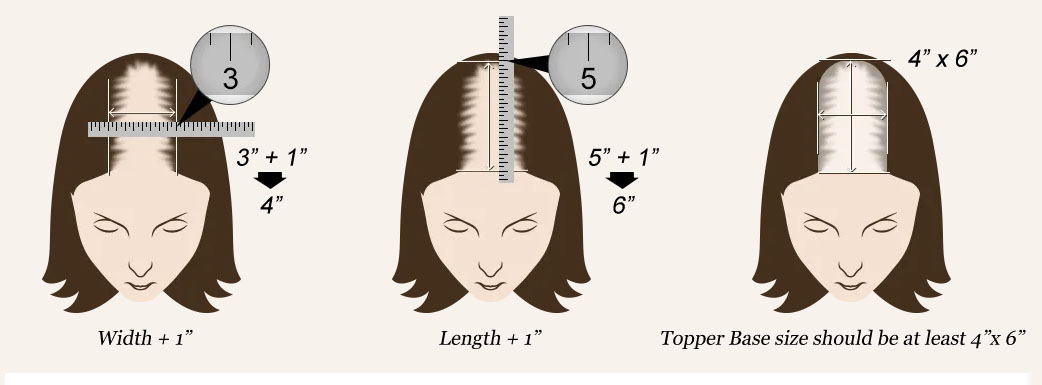
Trace the thinning zone first
Grab a soft measuring tape and a mirror. Part your hair where you normally part it. Mark the front edge of the thinning zone, the back edge, and both sides. Write down the width and the depth. Do this in daylight. Most brands list base size in inches, like 5.5×6 or 8×8. The first number is the width from ear to ear. The second is the depth from front to back. Match your numbers to that chart. If you are between sizes, go up. Thinning from androgenetic alopecia[1] spreads slowly over the years, so re-measure once a year. Your hair loss[2] pattern changes. Your topper should change with it.
| Base size | Covers | Best for |
|---|---|---|
| 4×4 | Crown only | Small thinning spot |
| 5.5×6 | Crown and part | Moderate thinning |
| 7×8 | Most of the top | Wider thinning |
| 8×8 | Full top | Large area coverage |
Which hair topper base is best: lace, mono, silk, or skin?
Four bases promise the same thing. Natural hair. Only one fits your scalp and your routine. Pick wrong, and the part line gives you away.
The best hair topper base matches your scalp, hairline, and lifestyle. Silk looks most natural at the part. Mono breathes best in heat. Lace blends into a thinning hairline. Skin gives the most realistic scalp. None wins for everyone.
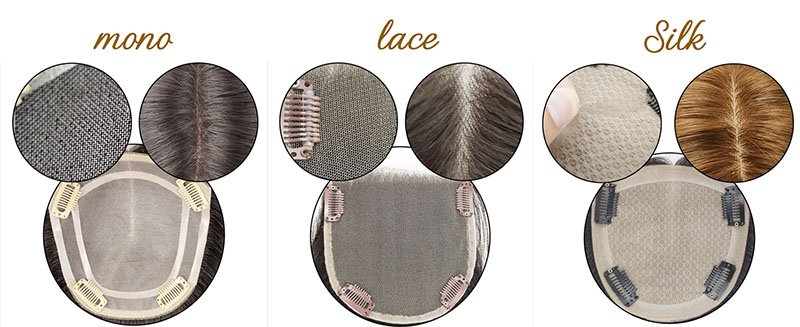
Match the base to your thinning pattern
Think about where you thin first. A receding hairline needs lace, because lace melts into your own hair. A thinning crown needs silk or mono, because the part line needs to look like scalp. A bald area needs skin, because skin mimics real skin texture. Your wig[3] history does not matter here. Your scalp does. Daily wearers often choose silk. Hot weather wearers choose mono. I keep one lace topper for summer and one silk topper for winter. That way I get both looks without fighting my scalp.
| Base | Best for | Natural look | Breathability |
|---|---|---|---|
| Lace | Thinning hairline | Natural hairline | High |
| Mono | Hot weather, sensitive scalp | Very natural | High |
| Silk | Visible part line | Most natural part | Medium |
| Skin | Bald areas | Most realistic scalp | Low |
What is a silk-top hair topper, and how is it different from a mirage base?
You see silk top on every page. Then mirage base appears. The names blur. One hides the difference between natural and obvious.
A silk-top hair topper uses a thin silk layer at the part line, so the scalp shows through naturally. A mirage base uses a fine mesh for a soft, airy scalp effect. Silk suits a visible part. Mirage suits a light, cool feel.
Silk top vs. mirage base
Both bases try to do the same job. Both mimic a scalp at the part line. But they do it differently. A silk top has a woven silk layer. It gives a smooth, defined part that looks like a real scalp. It also holds a little heat. A mirage base is a fine, stretchy mesh. It feels lighter and cooler on the head. Many women with sensitive scalps prefer mirage. The part line on a mirage is softer and less defined than silk. If you wear a center part daily, silk wins. If you want a barely-there feel, mirage wins. As a hairpiece[4] maker, I see both bases sent back. The reason is almost always a mismatch between the base and the wearer’s scalp. Not a defect.
| Feature | Silk top | Mirage base |
|---|---|---|
| Part line | Clean and defined | Soft and natural |
| Weight | Slightly heavier | Light and airy |
| Cooling | Medium | High |
| Best for | Daily visible part | Sensitive scalp, heat |
Silk base vs. skin base: what’s the difference?
Silk and skin sound alike. They look alike at first glance. But they feel different on your scalp, and they age differently with wear.
A silk base uses woven silk that looks like scalp and stays cool. A skin base uses a thin silicone layer that looks exactly like real skin. Skin gives the most realistic part. Silk lasts longer and resists heat better.
Silk for longevity, skin for realism
A skin base is thin, flat, and almost invisible on the scalp. It looks real in photos and in person. That is why women with female pattern hair loss[5] love it for special occasions. But skin has limits. It traps heat. It can lift at the edges when you sweat. And it needs careful handling. Silk is more forgiving. It lasts longer. It styles well with heat tools. It hides the part line well. But it never looks quite as flat as skin. My honest advice is simple. Pick skin for photos and events. Pick silk for daily wear. Both bases serve different jobs, and both are good at theirs.
| Feature | Silk base | Skin base |
|---|---|---|
| Realism | Very natural | Most realistic |
| Lifespan | Longer | Shorter |
| Heat styling | Good | Limited |
| Breathing | Medium | Low |
| Best for | Daily wear | Events, photos |
Are silk base toppers better than lace toppers?
Silk gives a clean part. Lace melts into the hairline. Both have fans. Your thinning pattern decides which one you will actually love.
Silk base toppers are not always better than lace toppers. Silk wins for a smooth part line and daily wear. Lace wins for a natural hairline, breathability, and a seamless blend with your own hair. Pick by your problem area.
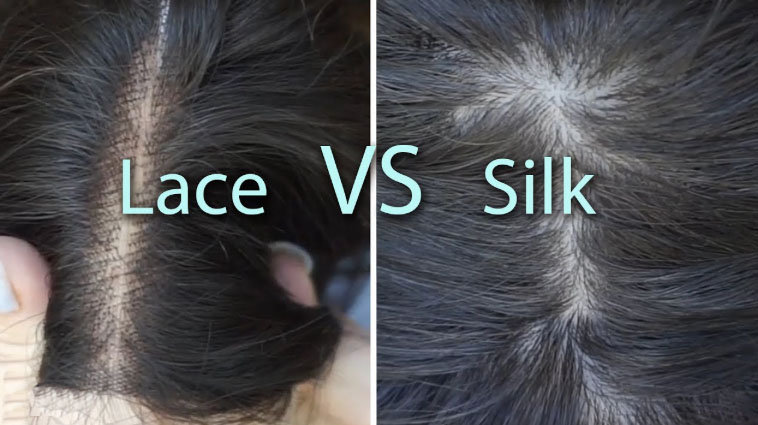
Pick by your problem area
If your crown thins but your hairline is strong, silk serves you well. The part line looks clean, and the base lies flat. If your hairline is the problem, lace is the better tool. Lace sits at the front edge and blends into your own baby hairs. It disappears. Silk at the hairline can show a hard edge. Another point is weight. Silk is denser, so it pulls a little more. Constant pulling can stress your edges and lead to traction alopecia[6]. Lace is lighter and gentler on the hairline. For daily wear on a busy schedule, I choose silk for the crown and lace for the hairline. Match the base to the problem. Not to the trend.
| Feature | Silk base | Lace base |
|---|---|---|
| Hairline blend | Good | Excellent |
| Part line | Clean and smooth | Soft |
| Weight | Heavier | Light |
| Breathability | Medium | High |
| Durability | Longer | Medium |
What base is best for a hot or sensitive scalp?
A hot scalp ruins a good hair day. Sweat makes toppers slip and itch. The wrong base makes it worse. The right base changes everything.
Lace and mono are the most breathable bases, so both help a hot scalp. For a sensitive scalp, choose a lightweight mono or mirage base. Avoid heavy silk layers and tight skin bases that trap heat and cause irritation.
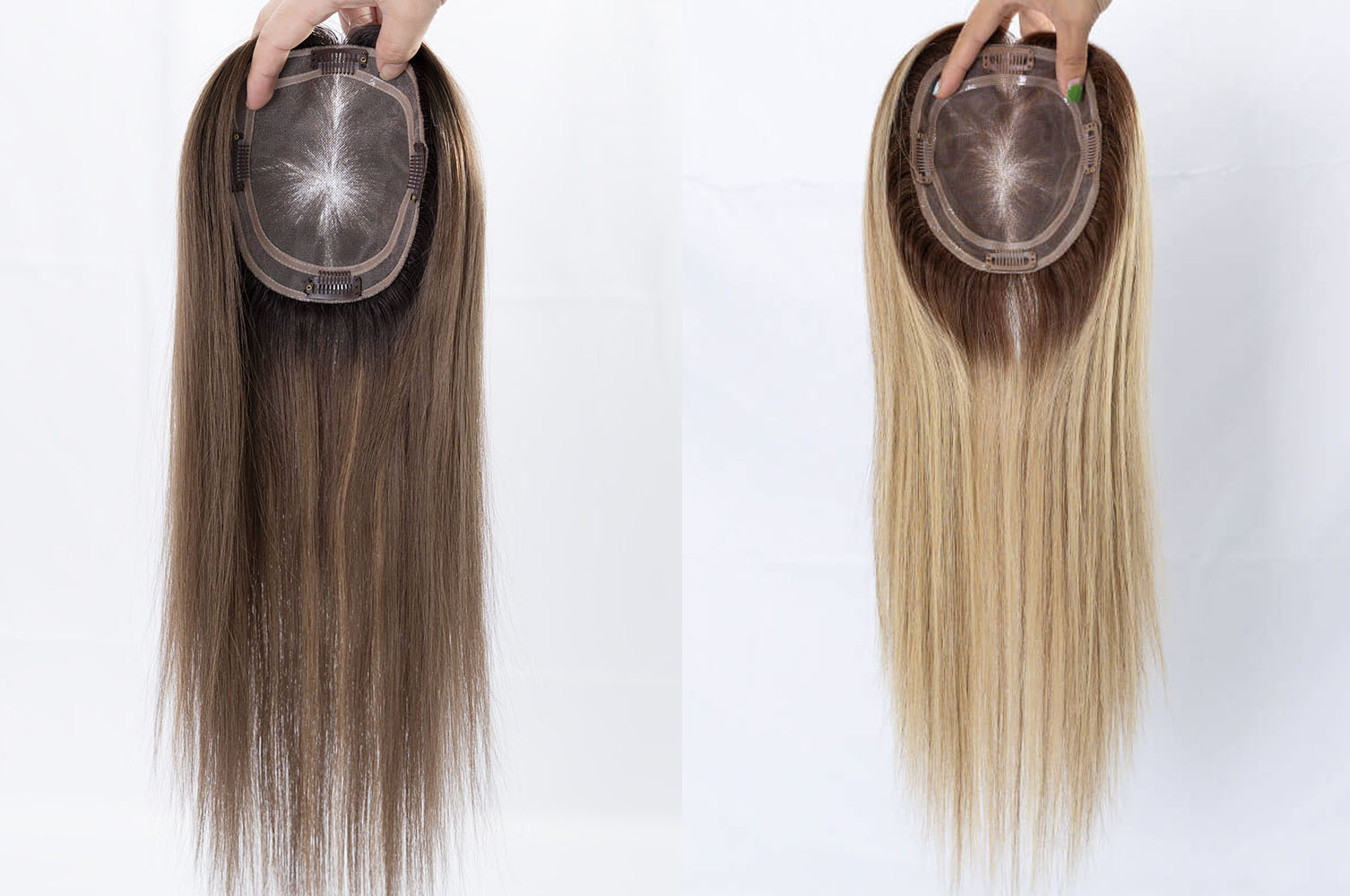
Lace airflow and scalp comfort
Lace is made of an open mesh. Air passes through it, so your scalp stays cooler than under silk or skin. This matters more than you think. A sweaty scalp itches. It also makes clips slip. For long days out or summer months, lace keeps you comfortable. The open weave also dries faster after washing. That cuts down odor and buildup. The American Academy of Dermatology[7] recommends a clean, dry scalp for healthy hair. Lace makes that easier to manage. Wash the lace base gently, let it air dry, and rotate between two toppers if you wear one daily. Your scalp will thank you.
Choose light and cushioned for sensitive skin
Your scalp sends you signals. Listen to them. If a base makes you itch, it is too heavy, too hot, or too tight. Mono is the safest first choice. Its open mesh lets air through, and it sits light on the head. Mirage is similar, with an even softer feel. Silk is fine if your scalp tolerates heat. Skin bases are the riskiest for sensitive scalps, because they trap moisture. If your scalp flushes and flakes, you may have seborrheic dermatitis[8]. A light base gives it room to breathe. Choose a topper with cushioned clips, not sharp ones. Cushioned clips spread pressure and stop sore spots. And always test the base against your skin for a few hours at home before you cut the tags.
| Base | Breathability | Scalp comfort | Best season |
|---|---|---|---|
| Lace | High | High | Summer, active days |
| Mono | High | High | Hot weather |
| Silk | Medium | Medium | Year round |
| Skin | Low | Low | Cool weather, events |
Conclusion
Measure your thinning area first. Then match the base to your scalp, your hairline, and your routine. Lace, mono, silk, and skin each win in different situations. Start with the facts, and your topper will look natural every day.
References
Androgenetic alopecia — MedlinePlus. Medical overview of hereditary hair loss patterns in men and women. ↑ Back
Hair loss — Wikipedia. Encyclopedia overview of the causes and types of hair loss. ↑ Back
Wig — Wikipedia. Encyclopedia entry on wigs and their use for style and hair loss. ↑ Back
Wig — Wikipedia. Encyclopedia entry on wigs and hairpieces, including how they are worn. ↑ Back
Hair loss: Symptoms and causes — Mayo Clinic. Clinical guide to hair loss types, symptoms, and causes. ↑ Back
Traction alopecia — Wikipedia. Encyclopedia entry on hair loss caused by repeated pulling or tension. ↑ Back
Hair loss — American Academy of Dermatology. Guide to hair loss causes and scalp health tips. ↑ Back
Seborrheic dermatitis — MedlinePlus. Medical overview of a common skin condition that causes a flaky, itchy scalp. ↑ Back