

You love how your topper looks, but you wonder if it hurts your real hair. Clips pull, the base rubs, and your scalp feels sore. These problems are real, but preventable.
Yes, hair toppers have disadvantages. The main risks are clip tension, base friction, scalp irritation, and maintenance cost. Toppers can damage fine or thinning hair if clips grip fragile strands, but proper placement, lightweight bases, and daily breaks reduce most risks significantly.
I have worn hair toppers for over three years. I made mistakes along the way. I clipped too tightly, I wore my topper for 14 hours straight, and I ignored the sore spots on my scalp. Now I know better. Let me walk you through every disadvantage so you can avoid the same errors.
What Are the Disadvantages of Hair Toppers for Thinning Hair?
You bought a topper to cover thinning areas. Now you worry it makes thinning worse. The clips sit on fragile hair, and you feel tension every time you move.
The main disadvantages of hair toppers for thinning hair are clip tension on weak strands, difficulty matching color, daily maintenance time, and cost. Thin hair breaks more easily under clip pressure, so wearers must place clips on stronger surrounding hair and limit daily wear time.
Clip Placement Limits on Thinning Areas
The biggest disadvantage for thinning hair is clip placement. Toppers attach with pressure clips that snap onto your natural hair. If your hair is thinning at the crown, you cannot clip directly into that thinning area. The clips need enough hair density to grip securely. When hair is too sparse, the clips slide, pull, or slip off during the day. This means you must clip into the healthier hair around the thinning zone. But that healthier hair carries extra weight it was not designed to hold. Over months, the repeated tension on those anchor hairs can cause breakage or even localized shedding. Women with early-stage thinning usually have enough surrounding hair to anchor a topper safely. Women with advanced thinning may struggle to find secure attachment points and might need a grip band or wig instead. The table below shows how thinning stage affects clip security:
| Thinning Stage | Clip Security | Risk Level | Recommendation |
|---|---|---|---|
| Early (minor thinning at crown) | High — plenty of anchor hair | Low | Standard clip topper, 5×5 base |
| Moderate (visible scalp at part) | Medium — fewer anchor points | Medium | Larger base (6×6), lighter weight |
| Advanced (wide bald areas) | Low — clips slip easily | High | Consider grip band or full wig |
Maintenance Time and Cost
Beyond physical risks, toppers require ongoing care. You need to wash, condition, and style them regularly. Human hair toppers cost between $150 and $500, and they last 6 to 12 months with daily wear. Color matching is another challenge. If your natural hair color falls between shades, the topper may look slightly off. You also need to re-color or replace the topper as your natural hair changes over time.
Do Hair Toppers Damage Fine or Natural Hair Underneath?
You have fine hair, and you worry that a topper will make it worse. You feel the clips gripping, and you wonder if your strands are breaking under the weight.
Yes, hair toppers can damage fine or natural hair underneath if worn incorrectly. Clip tension, base friction, and excessive wear time cause breakage, especially on fine hair. However, silk-base toppers, lightweight designs, and proper clip placement minimize damage to natural hair underneath significantly.
How Clips Affect Fine Hair
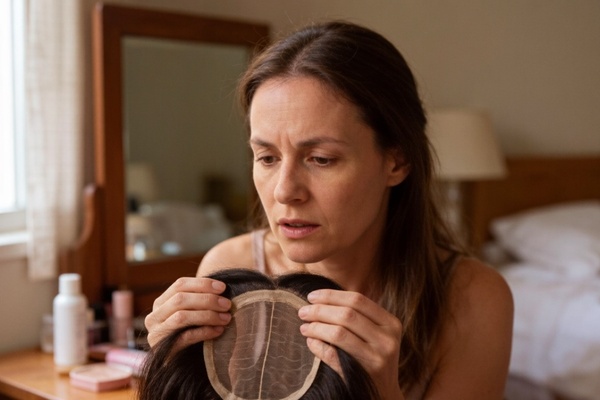
Fine hair has a smaller diameter than medium or coarse hair. It is more fragile and breaks under less force. When you clip a topper onto fine hair, the clip creates a pinch point. Each clip holds 5 to 10 grams of hair weight. On coarse hair, this is negligible. On fine hair, the pinch point can crush or bend the hair shaft. Over weeks and months, repeated crushing at the same spot causes breakage. I learned this the hard way. I wore my topper in the exact same position every day for two months. When I took it off, I found short broken hairs at every clip point. The solution is simple but important: rotate your clip positions. Move the topper slightly left or right each day so no single hair strand takes the full load. Also, choose toppers with fewer, wider clips instead of many small ones. Wider clips distribute pressure across more hair and reduce the crush force on each strand.
Silk vs. Mono Base and Long-Term Wear
The base material matters for long-term hair health. A silk base is gentler on natural hair because it has a smooth surface that reduces friction against your strands. A mono base has a mesh texture that can rub against the hair underneath throughout the day. Over months of daily wear, that constant friction causes wear and tear on your natural hair shaft. If you wear a silk hair topper daily, you still need to check your natural hair every week. Look for breakage at clip points, thinning patches, or sore spots on your scalp. If you notice any of these signs, give your hair a break for 2 to 3 days and let the follicles recover. I also recommend using a silk or satin pillowcase at night. This reduces friction on your natural hair while you sleep, which complements the gentle surface of a silk-base topper during the day.
| Base Type | Friction Level | Weight | Best For | Daily Wear Safe? |
|---|---|---|---|---|
| Silk base | Low — smooth surface | Lighter | Fine hair, sensitive scalp | Yes, up to 10 hours |
| Mono base | Medium — mesh texture | Medium | Medium to coarse hair | Yes, up to 8 hours |
| Lace base | Low — very thin | Lightest | Front hairline blending | Yes, but delicate |
| Silk + lace front | Low | Light | Full coverage + natural front | Yes, up to 10 hours |
Can Hair Topper Clips Cause Traction Alopecia?
You read that tight hairstyles cause permanent hair loss. Now you wonder if your topper clips do the same. The idea scares you, and you want the real risk.
Yes, hair topper clips can cause traction alopecia if they pull on the same hair follicles repeatedly. Traction alopecia is hair loss from constant tension. To prevent it, rotate clip positions, avoid sleeping in your topper, and never place clips on already-thinning areas.
Understanding Traction Alopecia
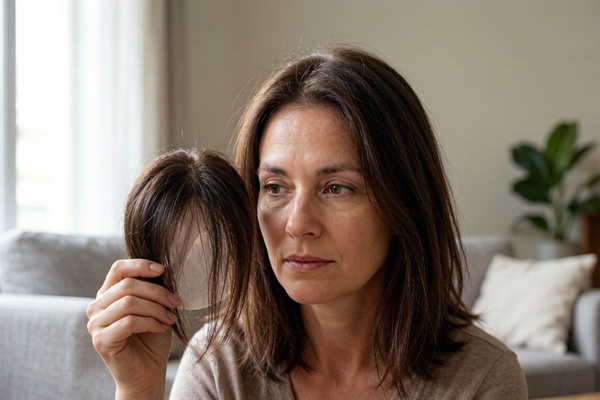
Traction alopecia is a form of hair loss caused by repeated pulling on hair follicles. The condition is linked to tight ponytails, braids, extensions, and clip-on hairpieces. When clips grip the same group of hairs day after day, the constant tension damages the follicle. At first, the hair sheds faster than normal. You might notice more hairs in your brush or on your pillow. If you catch it early and remove the tension, the hair grows back. But if you ignore the signs for months or years, the follicle scars permanently. Once scarring occurs, hair will not regrow. The condition known as traction alopecia[1] is well documented in medical literature. The Cleveland Clinic notes that early intervention[2] reverses most cases when the tension source is removed early. I check my scalp every Sunday. I run my fingers along the clip points and feel for tenderness, bumps, or gaps. If anything feels sore, I skip the topper for two days.
How to Prevent a Topper From Pulling Your Hair
Prevention is straightforward but requires daily discipline. First, never sleep in your topper. Sleeping creates friction and pulling that you cannot control, and your head moves against the pillow all night. Second, rotate your clip positions daily. Move the topper half an inch left, right, forward, or back so no single group of hairs bears the load every day. Third, use fewer clips on fine hair. Four clips are enough for most 5×5 toppers. Six or eight clips add unnecessary weight and create extra pinch points. Fourth, check your clip tension every time you attach the topper. Clips should snap closed with mild resistance, not a hard crunch. If a clip feels very tight, it is gripping too much hair. Open it and reattach with fewer strands. Fifth, massage your scalp for two minutes each evening after removing the topper. This improves blood flow to the follicles and helps them recover from the day’s tension.
| Prevention Step | Why It Works | How Often |
|---|---|---|
| Rotate clip position | Spreads tension across different hairs | Every wear |
| Remove before sleeping | Eliminates night friction and pulling | Every night |
| Use 4 clips, not 6+ | Reduces total pinch points | Permanent change |
| Check scalp for soreness | Catches early traction signs | Weekly |
| Take 1–2 rest days per week | Lets follicles recover | Weekly |
| Avoid clipping thinning areas | Prevents damage to fragile hairs | Every wear |
Are Hair Toppers Bad for a Sensitive Scalp?
Your scalp tingles, itches, or feels sore after wearing a topper. You wonder if the topper is the cause. You want to know if your sensitive scalp can handle daily wear.
Yes, hair toppers can be bad for a sensitive scalp. Clip pressure, base material friction, and leftover adhesive residue cause itching, redness, and soreness. Silk-base toppers, wide-tooth clip placement, and breathable caps reduce irritation for most sensitive scalp wearers.

What Causes Scalp Irritation Under a Topper
A sensitive scalp reacts to three things: pressure, friction, and trapped moisture. The clips create pressure points where they grip your hair. If your scalp is sensitive, these pressure points feel sore after a few hours of wear. The base material creates friction as it sits against your scalp throughout the day. Mono bases have a slightly rough mesh that can scratch sensitive skin. Silk bases are smoother and cause less friction. Moisture is the hidden problem. When you wear a topper, the base covers part of your scalp. Sweat and natural oils get trapped under the base. This creates a warm, damp environment that irritates sensitive skin. If you wear a topper for 10 hours without removing it, the trapped moisture can cause redness, itching, or small bumps. The solution is airflow. Remove your topper for 10 minutes at lunch. Let your scalp breathe. Wash your scalp every other day with a gentle, sulfate-free shampoo. If you use adhesive, remove all residue with an adhesive remover before reapplying. A general overview of hair loss causes[3] from Wikipedia includes scalp health as a contributing factor. I also switch to a silk-base topper when my scalp feels sensitive. The silk surface glides instead of scratching, and I can wear it comfortably for the full day.
| Irritation Source | Symptom | Quick Fix |
|---|---|---|
| Clip pressure | Sore spots at clip points | Move clips, use wider clips |
| Base friction | Itching under base | Switch to silk base |
| Trapped moisture | Redness, small bumps | Remove topper midday, wash scalp |
| Adhesive residue | Itching, flaking | Clean residue with adhesive remover |
| Tight attachment | Headache, tension | Loosen clips, reduce wear time |
Conclusion
Hair toppers have real disadvantages: clip tension, base friction, scalp irritation, and cost. But these risks are manageable. Rotate your clips, choose silk bases, take rest days, and check your scalp weekly. With proper care, you can wear a topper safely and keep your natural hair healthy.
References
Wikipedia — Traction alopecia — Overview of the condition, causes, and reversibility. ↑ Back
Cleveland Clinic — Traction alopecia — Medical information on symptoms, early intervention, and treatment. ↑ Back
Wikipedia — Hair loss — General overview of hair loss causes including scalp health factors. ↑ Back