

Hair loss can make every mirror feel like a decision point. The pressure gets worse when quick coverage and surgery seem like competing answers.
A hair topper and a hair transplant solve different needs. A topper gives immediate, removable coverage without surgery. A transplant redistributes your own healthy follicles and may provide lasting growth, but it needs suitable donor hair, medical assessment, recovery time, and months of patience.

When a woman asks me which option is “better,” I first change the question. I ask what she needs now, what kind of hair loss she has, how much maintenance she accepts, and whether she is comfortable with surgery. A topper and a transplant can also belong to the same long-term plan. One does not automatically rule out the other.
This article offers general education, not a diagnosis or personal medical advice. A dermatologist or qualified hair-restoration clinician should assess the cause and pattern of your hair loss before you make a medical decision.
Are Hair Toppers Better Than Hair Transplants for Women?
“Better” sounds simple, but choosing by popularity or permanence can lead to disappointment. The right answer depends on your scalp, donor hair, goals, and timing.
Hair toppers are better for immediate, non-surgical, adjustable coverage. Hair transplants may be better for medically suitable women who want growth from their own follicles and accept surgery, cost, recovery, and gradual results. Neither option is best for every woman or every type of hair loss.
How does a hair topper differ from a hair transplant?
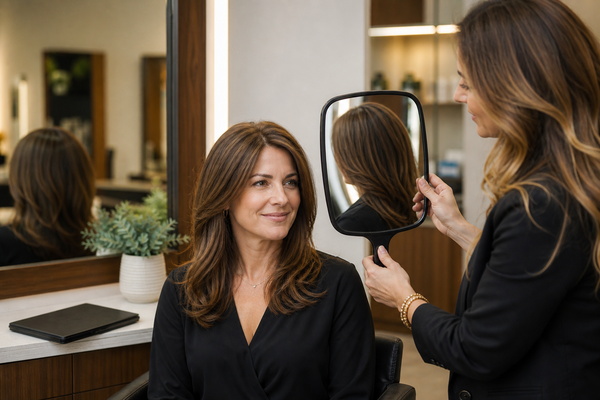
I describe a topper as a removable hair system that adds coverage over a thinning area. It changes the visible density as soon as it is fitted, cut, colored, and blended. It does not create new growth or treat the reason for hair loss. A hair transplant1, by contrast, moves hair-bearing grafts from a donor area to a thinning or bald area. It is surgery, and the visible improvement depends on graft survival, future growth, the amount of donor hair, and the design chosen by the surgeon. A topper can be removed, changed, or upgraded. Transplanted follicles cannot be casually moved again, so the plan must account for how your natural hair loss may progress.
Which goal does each option serve?
When I help a woman compare the two, I separate appearance goals from medical candidacy. A topper is mainly a cosmetic coverage tool. It can work for a widening part, crown show-through, uneven density, or a period when the diagnosis is still being explored. A transplant is a surgical redistribution of a limited natural resource. The AAD notes that candidacy requires enough healthy donor hair2 and the ability to grow hair in the receiving area. That means a transplant consultation is not only about where you look thin. It must also examine the quality and stability of the hair that would supply the grafts. I would not treat the word “permanent” as a promise of unlimited density.
| Decision factor | Hair topper | Hair transplant |
|---|---|---|
| Main purpose | Adds visible coverage with wearable hair | Moves your own follicles to a thinning area |
| Medical procedure | No surgery | Surgical procedure |
| Speed of visible change | Immediate after fitting and blending | Gradual after healing and regrowth |
| Reversibility | Removable and replaceable | Surgical design is not casually reversible |
| Key requirement | Secure, comfortable fit and enough hair or another safe attachment method | Stable, healthy donor hair and clinical suitability |
| Effect on the cause of hair loss | Does not diagnose or treat it | Does not automatically stop ongoing loss elsewhere |
How Do Cost, Timeline, and Maintenance Compare?
The purchase price tells only part of the story. Hidden time, upkeep, recovery, and possible future procedures can change the real value of either option.
A topper usually costs less upfront and works immediately, but it needs regular care and eventual replacement. A transplant usually has a much higher initial cost, a healing period, and months before full results. It may also require medicine, follow-up care, or additional sessions.

What should I include in the real cost?
I would compare total ownership, not one invoice. For a topper, the budget may include the piece, professional cutting, color work, extra clips or grip accessories, care products, occasional repair, and replacement when the hair or base reaches the end of its useful life. Human-hair toppers also need gentle washing, conditioning, detangling, heat control, and storage. For a transplant, the budget may include consultation, medical tests, the operation, prescriptions, travel, time away from work, follow-up care, and possible touch-ups. The Cleveland Clinic advises patients to consider both cost and healing time, and it notes that some people need several procedures. I therefore compare a well-maintained topper over its expected lifespan with the complete surgical plan, not with a promotional starting price.
How different are the timelines and maintenance routines?
A topper can change your look on fitting day, but the most natural result may still need customization. After that, maintenance is ongoing but familiar: remove it gently, release each clip instead of pulling, detangle from the ends upward, wash only when needed, and store it without crushing the base. A transplant reverses that pattern. The daily cosmetic upkeep may become simpler after successful growth, but the early process is far more demanding. The Cleveland Clinic says most procedures are outpatient, light activity may resume within days, and full results3 can take up to one year; it also notes that transplanted hair may shed during healing before it grows back. Natural hair loss outside the grafted area can still progress, so long-term medical management may remain part of the plan.
| Time or task | Hair topper | Hair transplant |
|---|---|---|
| First visible change | Same day after fitting | Not immediate |
| Early adjustment | Cut, color, placement, attachment comfort | Wound care, swelling management, activity limits, follow-up |
| Result timeline | Immediate cosmetic coverage | Growth develops over months; full result may take up to a year |
| Routine care | Washing, conditioning, detangling, storage, clip and base checks | Natural-hair care after healing, plus any clinician-directed treatment |
| Future expense | Repair or replacement | Possible touch-up, additional session, or ongoing treatment |
Which Option Fits Diffuse Thinning?
Diffuse thinning can look like one problem while affecting both the coverage area and the donor zone. Assuming surgery is suitable can waste money and limited hair.
A topper often suits diffuse thinning because it can add broad coverage without depending on a dense donor area. A transplant may fit some patterned cases, but thinning that also affects the back and sides can make donor hair unstable or insufficient. A detailed scalp and donor assessment is essential.
Why does the donor area matter so much?
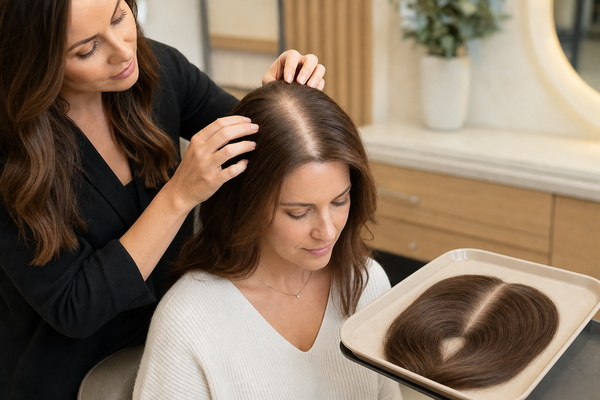
Many women focus on the visible top of the scalp, but a surgeon must also examine the back and sides. A peer-reviewed review of transplant candidacy distinguishes patterned loss from diffuse thinning4 that extends into the usual donor zone. If the donor follicles are also miniaturizing, moving them does not create a stable new supply. The paper identifies diffuse unpatterned alopecia as a reason not to transplant because there may be no reliable “safe donor area.” By contrast, some women with patterned thinning and a stable, dense donor zone may still be candidates. I would never decide this from a selfie, a part-width measurement, or the amount of scalp visible under bright light. The donor and recipient areas need a proper examination, and unusual findings may call for dermoscopy, blood tests, or a scalp biopsy.
How can a topper be matched to diffuse thinning?
For broad thinning, I look at coverage shape before hair length. The base should cover the area that needs help without forcing clips onto fragile, sparse hair. A base that is too small can create a dense island in the center and leave a visible step at the edge. A very heavy piece can also put more tension on the attachment points. I prefer a density that matches the remaining hair, a part that resembles the wearer’s natural pattern, and a color blend that considers roots, mid-lengths, and ends. If clips are uncomfortable or there is not enough strong hair to hold them, the wearer should discuss alternative attachment choices with an experienced topper professional and her clinician. The right topper should create believable distribution, not simply add the maximum possible hair.
| Diffuse-thinning pattern | Topper consideration | Transplant consideration |
|---|---|---|
| Top or crown thinning with stronger perimeter hair | A correctly sized base may provide broad, immediate coverage | Candidacy depends on diagnosis and a stable donor zone |
| Thinning across the top, sides, and back | Clip placement may need special care or another attachment method | Donor hair may be too unstable or limited |
| Rapid or unexplained shedding | A temporary topper can reduce styling pressure while the cause is assessed | Surgery should not replace diagnosis and stabilization |
| Active scalp pain, redness, scale, or scarring | Pause attachment over irritated areas and seek medical advice | Clinical evaluation is needed before any surgical plan |
Can I Wear a Hair Topper Before or After a Hair Transplant?
A topper can protect confidence during a long decision, but poor tension before surgery or premature pressure after surgery can create a new problem.
You can usually wear a topper while deciding about a transplant if it fits gently and does not pull fragile hair. After surgery, wear one only when your transplant surgeon clears the base and attachment method. The safe timing varies with healing, graft location, donor area, clips, tape, and pressure.
Can I wear a topper while I am still deciding?
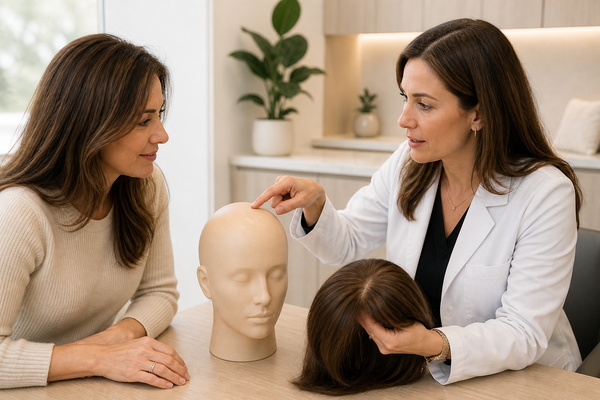
Yes, and I often see value in separating emotional urgency from a permanent medical choice. A topper can provide coverage while you monitor loss, seek a diagnosis, try clinician-recommended treatment, save for surgery, or compare qualified surgeons. It should not hurt, sting, or pull. Repeated stress on hair can contribute to traction alopecia5, and the AAD lists pain, stinging, crusting, and scalp “tenting” as warning signs that a style is too tight. I apply the same low-tension principle to topper wear. I would rotate clip positions when practical, avoid closing clips on the weakest hairs, remove the piece before sleep unless it is designed and professionally managed for extended wear, and stop if the scalp becomes sore. Coverage should give you breathing room, not rush you or damage the hair you still have.
When can I wear a topper after a transplant?
I would not give a universal day because a topper is not the same as a loose hat. Its base may press on recipient grafts, and its clips, tape, or adhesive may contact the recipient or donor area. The American Society of Plastic Surgeons says early recovery6 depends on the procedure and includes careful surgeon follow-up during the first month. I therefore recommend showing the actual topper, base size, clip map, tape, and intended daily wear time to the surgical team before the operation. Ask when each attachment point can safely touch the scalp. When clearance comes, start with short wear, place no hardware on tender or healing tissue, and stop if you notice pain, bleeding, swelling, drainage, unusual redness, or snagging. The surgeon’s instructions take priority over cosmetic convenience.
| Stage | Practical topper approach |
|---|---|
| While researching options | Wear a gentle, correctly fitted topper and continue medical evaluation |
| Before the operation | Show the surgeon the physical topper and attachment layout |
| Early healing | Do not assume a topper is safe because a hat is allowed; follow the surgical team’s instructions |
| After clearance | Begin with short wear and avoid pressure, clips, tape, or adhesive on healing areas |
| If symptoms appear | Remove the topper and contact the surgical team promptly |
When Should I Discuss Hair-Loss Treatment With a Qualified Clinician?
Waiting for a clear bald patch can delay a useful diagnosis. Sudden change, scalp symptoms, or emotional distress deserve attention before a cosmetic commitment.
Discuss hair loss with a qualified clinician when it is new, rapid, patchy, painful, itchy, scaly, scarring, or affecting your wellbeing. You should also seek an assessment before a transplant, when the cause is unclear, or when thinning involves the possible donor area.
What should be assessed before I choose either option?
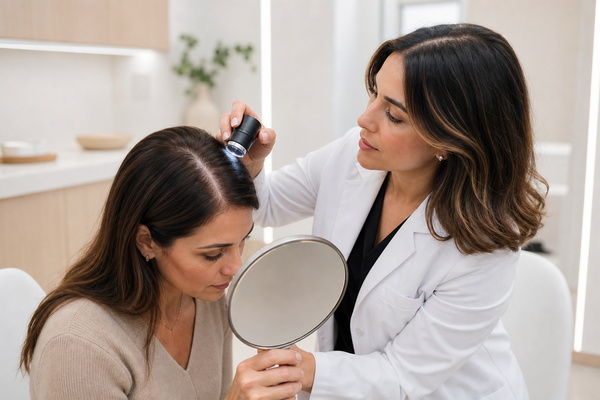
I would start with the cause, because women’s hair loss can have more than one explanation and different causes can look similar without an examination. The NHS advises seeing a GP to understand the likely cause7 before going to a commercial hair clinic. A clinician may review when the loss began, whether it is stable or progressing, family history, recent illness, medicines, nutrition, hormonal changes, styling tension, and scalp symptoms. Depending on the findings, the next step may involve a scalp examination, dermoscopy, laboratory tests, or a biopsy. This medical work does not prevent you from wearing a topper. It helps you choose and attach one more safely, and it prevents a cosmetic solution from hiding a condition that needs treatment. It also creates a stronger foundation for a later transplant consultation.
Which questions should I bring to a consultation?
I recommend taking clear photos from the same angles and lighting, a list of medicines and supplements, and a short timeline of shedding or thinning. Ask for the diagnosis, not only the name of a procedure. Ask whether the loss is active, whether the donor area is stable, what density is realistic, and what may happen to the non-transplanted hair over time. If surgery is proposed, ask who performs each step, which technique is planned, what complications are possible, how many sessions may be needed, and how the result will be supported if natural loss continues. If you wear a topper, bring it. Ask where clips, tape, adhesive, or base pressure can safely sit before and after treatment. A careful clinician should be willing to explain limitations as clearly as benefits.
| Bring or ask | Why it matters |
|---|---|
| Hair-loss timeline and consistent photos | Helps show speed, pattern, and progression |
| Medicine, supplement, illness, and family history | Helps the clinician look beyond appearance alone |
| Scalp symptoms | Pain, redness, scale, or scarring can change the plan |
| Donor-area assessment | Determines whether transplant supply is stable and sufficient |
| Your actual topper | Lets the clinician see where the base and attachments contact the scalp |
| Realistic density and future-loss plan | Clarifies what surgery can and cannot achieve over time |
Conclusion
A topper offers fast, flexible coverage; a transplant offers gradual surgical redistribution for suitable candidates. I would choose only after matching the option to your diagnosis, donor stability, timeline, budget, maintenance tolerance, and clinician’s advice.
References
ASPS defines hair transplantation as moving hair-bearing scalp grafts from a donor site to a thinning area and outlines how grafts are prepared and relocated. ↩
AAD explains transplant candidacy, including the need for enough healthy donor hair and the ability to grow hair in the recipient area after a thorough scalp examination. ↩
Cleveland Clinic describes outpatient recovery and notes that full transplant results may take up to one year, with temporary shedding and possible touch-up procedures. ↩
PMC reviews surgical candidacy and explains why diffuse unpatterned alopecia can make transplantation unsuitable when miniaturization extends into the usual safe donor area. ↩
AAD explains that repeated pulling or rubbing can cause traction alopecia and identifies pain, stinging, crusting, and scalp tenting as warning signs. ↩
ASPS Recovery says post-operative routines depend on procedure complexity and stresses following the surgeon’s advice during repeated checks in the first month. ↩
NHS recommends seeing a GP when hair loss is worrying and getting an idea of the cause before approaching a commercial hair clinic. ↩