

Thinning hair can make every mirror and overhead light feel unforgiving. The right non-surgical cover can restore visual density without demanding a permanent decision.
To hide thinning hair without surgery, I use a wider or softer part, volumizing styling, root spray, hair fibers, scarves, wigs, or a hair topper. The best choice depends on the location and size of the thinning area, the remaining hair strength, daily routine, and desired coverage.
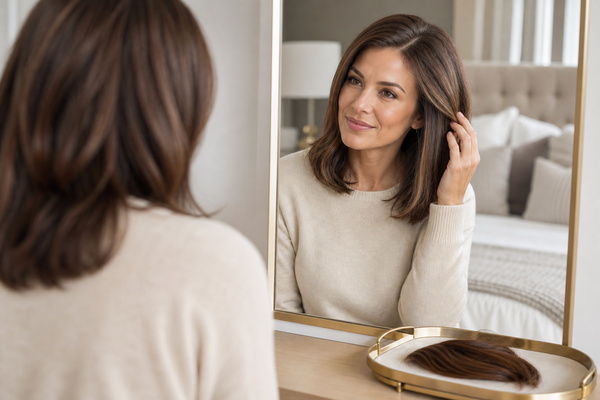
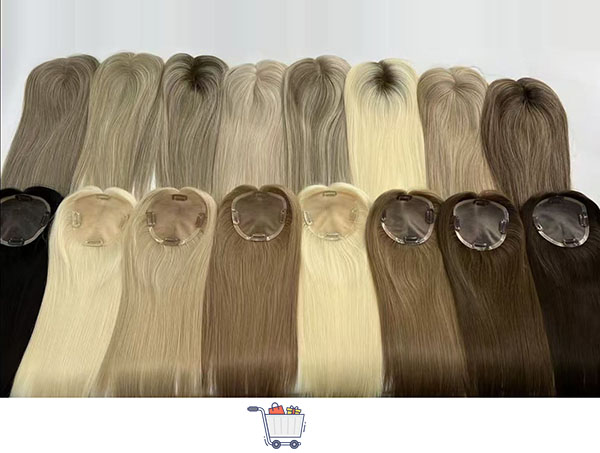
I do not treat every visible scalp area in the same way. A slightly wider part may need only subtle color and lift, while broader crown thinning often looks more balanced with a properly fitted topper,check our hair toppers collection.
How Can Women Hide Hair Loss Without Surgery?
The number of concealment products can feel overwhelming. Choosing by popularity alone often creates too much density, poor comfort, or a cover that fails in daily life.
Women can hide hair loss without surgery by matching the solution to the coverage area. Styling and scalp-color products suit mild thinning, fibers add temporary density, toppers cover the top or crown, and wigs provide complete coverage. A gradual approach usually produces the most natural and comfortable result.
Start with the smallest solution that gives enough coverage
I begin by mapping the area that bothers me instead of judging the entire head of hair. If natural hair still covers most of the scalp, a softer part, gentle root lift, a shorter layered cut, or a low-contrast color can reduce scalp show-through. I avoid aggressive backcombing because fragile hair1 is easier to damage. If styling alone is not enough, I add a root spray or fibers for small visible areas. I move to a topper when the part or crown needs reliable surface coverage, and I consider a wig when thinning is extensive or natural hair cannot support clips safely. This order is not a rule that every woman must follow. It is a practical way to avoid wearing more hair, weight, or attachment than the result requires. I also test every option in daylight, overhead light, photographs, and normal movement before trusting it for a full day.
| Level of Thinning | Practical First Option | Main Limitation |
|---|---|---|
| Mild scalp show-through | Part change and gentle volume | May collapse in humidity or after several hours |
| Small visible areas | Root spray or hair fibers | Temporary and may need reapplication |
| Wider part or crown thinning | Hair topper | Requires accurate size, color, density, and placement |
| Broad or advanced thinning | Wig | More coverage, heat, and cap-fit considerations |
| Occasional styling need | Scarf, headband, or decorative accessory | Does not copy the appearance of natural hair |
My goal is not to use the most dramatic product. My goal is to create enough coverage while protecting the hair that remains.
How Can You Cover Thinning Hair on Top and at the Part?
Top thinning is difficult because light reaches the scalp directly. Heavy teasing or dark color placed carelessly can make the contrast look even stronger.
To cover thinning hair on top or at the part, I reduce scalp contrast, add root volume, and keep the part irregular. Root sprays and fibers can disguise mild gaps. A correctly sized topper gives more dependable coverage when the part has widened or the crown remains visible after styling.
Use contrast, direction, and density together
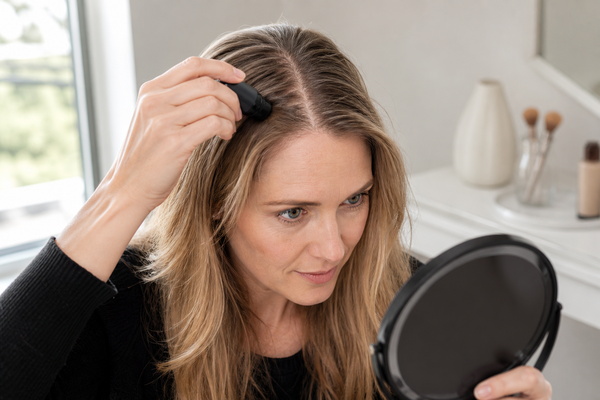
I first check whether the part is truly wider or simply more visible because of flat roots, bright lighting, or strong contrast between hair and scalp. A widening part2 can be a sign of female pattern hair loss, so I treat concealment and diagnosis as separate decisions. For mild show-through, I create a soft side or zigzag part and direct some hair across the visible line. I use a light volumizing product near the roots, not a heavy oil that separates fine strands. Medical dermatology guidance also lists colored sprays, fiber powders, and wigs as forms of cosmetic camouflage3. I apply scalp color sparingly and choose a shade close to the root rather than the lightest ends. If I can still see a long, continuous strip of scalp after styling, I stop adding product and compare a low-density topper. Too much fiber or spray can look powdery, transfer to fingers, and create a harder clean-up routine.
| Part-Coverage Detail | What I Look For | Common Mistake |
|---|---|---|
| Part direction | A soft line that follows natural growth | Forcing hair against a strong growth pattern |
| Root color | Low contrast between hair and scalp | Using a shade that is too dark or warm |
| Root volume | Lift without a stiff or tangled finish | Heavy teasing of fragile hair |
| Fibers or spray | Thin, even coverage on dry hair | Building a thick painted-looking layer |
| Topper density | Similar fullness to the sides and back | Choosing excessive density to hide every gap |
A close mirror can encourage over-application. I step back several feet because that distance better reflects how other people normally see the part.
How Can You Hide a Bald Spot Without Surgery?
A defined bald spot attracts the eye because it interrupts the surrounding hair pattern. Products that work on diffuse thinning may not bridge a smooth or larger bare area.
A small bald spot may be hidden with a changed part, surrounding hair, fibers, or scalp color when enough hair remains. A partial hairpiece or topper is usually reliable for a larger spot. A wig may be safer when the remaining hair is too sparse or fragile for secure clips.
Match the cover to the spot, not just its diameter
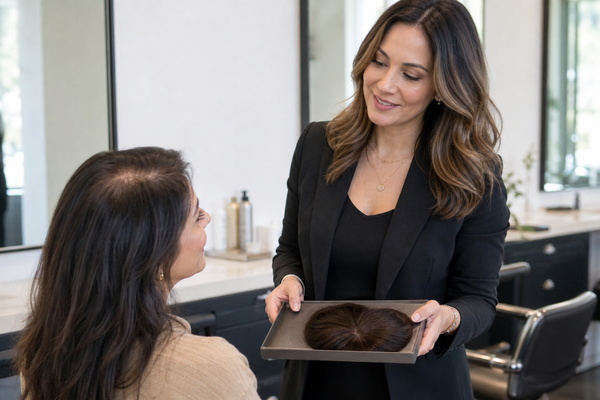
I look at four details: location, surface texture, surrounding density, and attachment space. Hair fibers cling to existing strands, so they work best when fine hairs remain inside or around the spot. A root spray can reduce scalp contrast, but it cannot create moving hair over a completely bare area. I can redirect nearby hair over a small spot, but I avoid a tight style that pulls from the opposite side. For more consistent coverage, I compare a partial piece or topper whose base extends beyond the visible area and sits on stable hair. The American Academy of Dermatology includes wigs, hairpieces, and scalp prostheses among scalp hairpieces4 that can hide hair loss for people with alopecia areata. That does not mean every bald spot has the same cause. It shows why a physical coverage option can help when styling products have too little hair to hold onto. I also avoid attaching a clip directly on an irritated, painful, or nearly bare area.
| Bald-Spot Situation | Possible Cover | When I Move to More Coverage |
|---|---|---|
| Small spot with fine hairs | Fibers or root spray | Product cannot create even visual density |
| Small spot near a flexible part | Redirected surrounding hair | Style requires strong pulling or constant fixing |
| Defined spot on top or crown | Partial hairpiece or topper | Base does not extend onto stable support hair |
| Several spots or broad thinning | Larger topper or wig | Natural hair cannot support the planned attachment |
| Tender, scaly, red, or sudden spot | Gentle temporary cover only | I seek clinical advice before repeated attachment |
I never measure coverage only while sitting still. I turn my head, bend forward, and check the result from above because movement often reveals the true edge of the covered area.
Does a Hair Topper Look Natural Enough to Hide Thinning?
A topper can solve the coverage problem yet still feel obvious when its root, density, part, or perimeter does not agree with the wearer’s own hair.
A hair topper can look natural enough to hide thinning when its base covers the full sparse area and its root color, density, part, texture, and cut blend with the wearer. The most believable topper adds only the missing coverage and moves as one hairstyle with the natural hair.
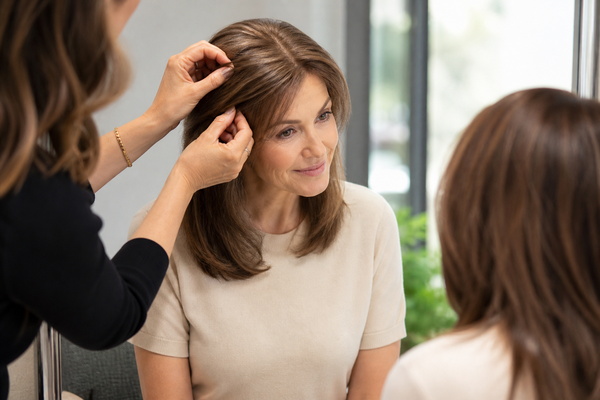
Natural appearance begins with fit rather than styling
I choose the base before I choose length. A base that is too small may sit inside the thinning area, so its clips land on weak hair and its perimeter stays visible. A base that is unnecessarily large can add heat, weight, and bulk. I then compare the topper root with the hair growing closest to the scalp. The British Association of Dermatologists notes that real-hair wigs and natural hairpieces5 can look more natural and can be styled using low heat. Material alone does not guarantee a natural result, so I also reduce excess density, align the part, soften the front, and blend the lengths with a professional cut. Attachment must feel secure without pain. Repeated pulling can contribute to traction alopecia6, so I loosen or change the attachment if I feel soreness, stinging, or persistent tension. A natural topper should not require me to ignore discomfort.
| Topper Detail | Natural-Looking Choice | Warning Sign |
|---|---|---|
| Base size | Covers beyond the complete thinning area | Clips sit inside sparse or painful hair |
| Root shade | Matches new growth near the scalp | Matches only the lighter ends |
| Density | Proportional to the sides and back | Sudden helmet-like fullness on top |
| Part and front | Follows the intended style and hairline | Hard line, lifting edge, or conflicting part |
| Length and texture | Cut and styled with natural hair | Two layers move separately |
| Attachment | Stable during normal movement | Pain, stinging, headaches, or repeated pulling |
I always judge the final blend in indirect daylight and a phone photograph. Salon lighting can soften differences that become easier to see outdoors.
When Should You Ask a Clinician About Thinning Hair?
Covering hair loss can improve confidence, but it does not identify the cause. Waiting behind a cosmetic solution may delay care for a changing scalp condition.
I ask a qualified clinician about hair loss when it appears suddenly, forms new patches, progresses quickly, causes scalp pain or inflammation, or worries me. I also seek advice when shedding follows illness, major weight change, medication changes, or other symptoms. Concealment can continue gently while the cause is assessed.
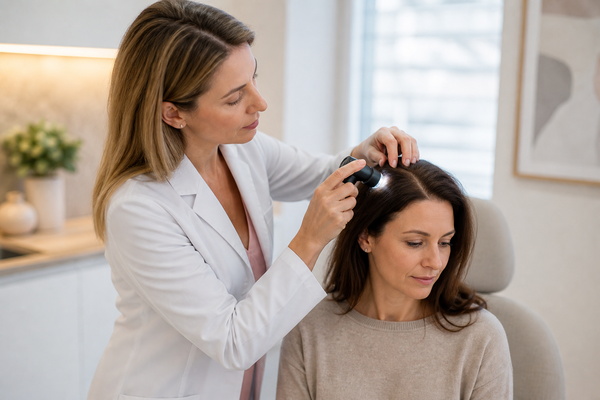
Cosmetic coverage and clinical assessment can happen together
I do not have to stop caring about my appearance while asking why my hair is changing. I can use a loose scarf, a light wig, a carefully fitted topper, or a small amount of camouflage as long as the scalp stays accessible and comfortable. The NHS lists several possible hair loss causes7, including illness, stress, treatment, weight loss, and iron deficiency, and it advises seeing a GP when hair loss is worrying. Mayo Clinic also recommends medical discussion for sudden hair loss8, patchy loss, or unusually heavy shedding. Before an appointment, I take clear photos in similar lighting, note when the change began, and list recent illnesses, stress, dietary changes, medicines, supplements, and styling habits. Those notes are more useful than guessing a diagnosis from an online photograph. A dermatologist or other qualified clinician can decide whether an examination or testing is appropriate.
| Change I Notice | Temporary Appearance Option | Sensible Next Step |
|---|---|---|
| Gradual widening part | Fibers, root spray, or a topper | Record progression and request assessment if concerned |
| Sudden round patch | Loose cover without scalp tension | Arrange a clinical evaluation |
| Pain, redness, scale, or sores | Avoid adhesive and pressure on the area | Seek professional advice promptly |
| Heavy shedding after a major change | Gentle style or lightweight cover | Share the timing and possible trigger with a clinician |
| Attachment pain | Remove or loosen the piece | Review base size and attachment method |
A topper can provide immediate visual relief, and a clinician can investigate the underlying change. I see those as complementary choices rather than competing ones.
Conclusion
I hide thinning hair by matching the smallest effective solution to the part, crown, or bald spot. Styling, fibers, sprays, toppers, and wigs can all help without surgery. Natural results require good color, density, fit, and comfort, while sudden or concerning hair loss deserves clinical assessment.
References
AAD explains that thinning or shedding hair is fragile and recommends gentle shampooing, conditioning, limited heat, and careful handling to reduce avoidable breakage and damage. ↩
Cleveland Clinic identifies widening of the center part and thinning on either side as common features of female pattern hair loss, especially as it progresses. ↩
DermNet lists colored hair sprays, hair-bulking fiber powder, and wigs as cosmetic camouflage options that may help some women disguise female pattern hair loss. ↩
AAD lists wigs, hairpieces, and custom scalp prostheses among the options that can hide scalp hair loss for people affected by alopecia areata. ↩
BAD explains that real-hair wigs and hairpieces can look more natural, feel cooler, and accept low-heat styling, while synthetic alternatives have different care and heat limitations. ↩
AAD explains that repeated pulling can cause traction alopecia and identifies pain, stinging, scalp crusting, broken hairs, and a receding hairline as warning signs. ↩
NHS notes that hair loss may be linked to illness, stress, cancer treatment, weight loss, or iron deficiency and advises seeing a GP when hair loss is concerning. ↩
Mayo Clinic advises medical discussion for persistent distressing hair loss and for sudden, patchy, or unusually heavy shedding, which may signal an underlying condition requiring treatment. ↩