
You got a topper but it looks obvious. The color is off, the part looks fake, and you worry people can tell. A few tweaks fix most of this.
Yes, you can make a hair topper look natural and undetectable. The key steps are matching color and density precisely, choosing a silk or lace base for a scalp-like part, blending the hairline, and avoiding synthetic shine. Proper placement and hairline alterations create the most realistic result.
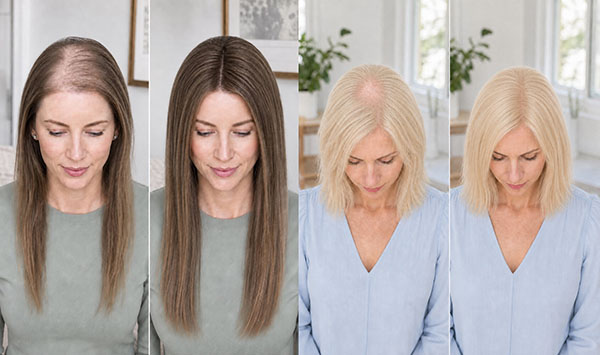
I remember the first hair topper for thinning hair I wore. It looked like a helmet. The color was close but not close enough, and the part looked like a painted line. I spent three months learning what makes a topper look real. Now my coworkers have no idea I wear one. Let me share everything I learned so you can skip the trial and error.
How to Make a Hair Topper Look Natural and Realistic?
You styled your topper and checked the mirror. Something looks wrong. The color almost matches, but the texture or density gives it away.
To make a hair topper look natural and realistic, match the color within one shade of your bio hair, choose similar density and texture, and style the topper together with your natural hair so both move as one unit.
Color, Density, and Texture Matching
The single biggest factor in a natural-looking topper is color matching. Your topper color must be within one shade of your natural hair. If your bio hair is dark brown with caramel highlights, your topper needs those same highlights. A flat, single-tone color looks unnatural because real hair has dimension. Order a color ring from your supplier and compare it under natural daylight. Indoor lighting lies. The color that matches in your bathroom may look completely different outside. Density is the second factor. Most human hair toppers come with 130% to 150% density. If your natural hair is fine and sparse, a 150% density topper will look like a helmet. Choose 120% to 130% for fine hair, and 130% to 140% for medium hair. Texture matters too. If your natural hair has a slight wave, a stick-straight topper will not blend. You need to match the wave pattern or style both together with heat tools.
| Factor | Why It Matters | How to Get It Right |
|---|---|---|
| Color match | Off-color is the #1 giveaway | Compare under daylight, order a color ring |
| Density | Too high looks like a helmet | 120–130% for fine hair, 130–140% for medium |
| Texture | Straight vs wave mismatch is obvious | Match wave pattern or style together |
| Part line | A strip-like part looks fake | Choose silk base for scalp-like part |
Styling Both Together as One
After you match color and density, you need to blend the topper with your natural hair. The trick is to style both together as if they are one. Use a curling iron or flat iron on both your bio hair and the topper hair at the same time. This creates a unified texture and wave pattern that makes the transition invisible. Pull a few strands of your natural hair over the topper’s front edge to hide the base line. I also use a small amount of styling cream on my bio hair and the topper hair together. This makes them move as one unit instead of looking like two separate pieces.
What Is the Most Realistic Hair Topper — and Can You Alter One to Look Better?
You want the most natural topper but you see dozens of options. Silk, mono, lace — which one truly looks like your own scalp? And if you already own a topper, can it be improved?
The most realistic hair topper is a silk-base topper with a lace front. Silk mimics a real scalp at the part, and lace creates an invisible hairline. You can also alter any topper you already own — pluck the hairline, thin the density, and add baby hairs — for a more natural appearance.
Silk vs. Mono vs. Lace: Which Base Looks Most Real?
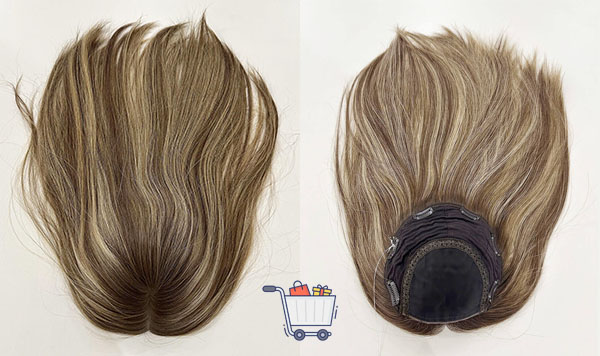
The base material determines how realistic the part looks. A silk base is the gold standard for a natural part because it has two layers. The top layer is silk fabric that matches your scalp color. The hair is hand-tied through the silk, so the knots are hidden between the layers. When you look at the part, you see what looks like scalp with hair growing from it. A mono base is a fine mesh that lets your real scalp show through. It looks natural but slightly less realistic than silk because the mesh texture is visible up close. A lace base is the thinnest and most breathable, but it shows the knots more visibly at the part. For the most natural result, choose a silk base with a lace front. The silk handles the part, and the lace handles the hairline. The concept of a hairpiece for partial coverage[1] has evolved from basic toupees into today’s silk and lace technology.
| Base Type | Part Realism | Hairline Realism | Breathability | Best For |
|---|---|---|---|---|
| Silk base | Highest — looks like real scalp | Medium | Medium | Natural part line |
| Mono base | Medium — mesh visible up close | Medium | High | Durability + decent realism |
| Lace front + silk | High at both | Highest — invisible edge | Medium | Most natural overall combo |
| Lace base only | Low — knots visible | Highest | Highest | Front hairline blending |
Altering a Topper You Already Own
You can alter almost any topper to make it look more natural. All the key hairline work happens here. First, pluck the hairline. Use tweezers to remove a few hairs from the front edge. This thins the density at the hairline so it looks like natural baby hairs growing. A thick, uniform hairline is the most obvious sign of a hairpiece — real hairlines have gaps, baby hairs, and uneven density, and you want to mimic that randomness. Second, thin the overall density if the topper is too thick. A stylist can thin it with thinning shears down to 120–130%. Third, darken or lighten the part. If the part looks too light, brush a tiny amount of dry shampoo or colored powder along the part to match your scalp tone.
Can People Tell You Are Wearing a Hair Topper?
You walk into a meeting and feel paranoid. Will the office lights expose your topper? Will someone notice it at lunch outside?
Most people cannot tell you are wearing a hair topper if it matches your color, density, and hairline. Toppers become visible mainly under harsh sunlight when the base color mismatches your scalp or the hair shines more than your bio hair. In professional settings, proper blending makes a topper completely undetectable.

Detectability Under Sunlight and in Professional Settings
The fear of being caught is the number one worry for new topper wearers. Here is the truth: in normal indoor lighting, a well-matched topper is invisible. The problems start outdoors. Direct sunlight is harsh and revealing. If your topper hair has more shine than your natural hair, the sunlight catches it and the difference is obvious. Human hair toppers should not shine more than your bio hair. If they do, wash the topper with a clarifying shampoo to remove any coating. Sunlight also exposes color mismatches. A topper that looks fine indoors may look redder or brassier in sunlight. Always check your color match outdoors before committing. In professional settings, the risk is lower. Office lighting is soft and diffused. As long as your hairline is blended and the density is not too high, coworkers will not notice. The psychological impact of hair loss[2] drives many people to seek invisible solutions, and modern toppers meet that need. I have worn a silk-base topper to client meetings, video calls, and outdoor lunches. No one has ever asked.
| Situation | Detection Risk | Main Risk Factor | Prevention |
|---|---|---|---|
| Office lighting | Low | None if blended | Style together with bio hair |
| Direct sunlight | Medium | Color mismatch, shine | Check match outdoors, wash shine |
| Video calls | Low | Hairline edge visible | Use lace front, blend baby hairs |
| Windy outdoor | Medium | Base edge lifts | Secure clips, use grip band |
| Close-up conversation | Low if silk base | Part line visibility | Silk base for scalp-like part |
| Swimming or heavy rain | High | Adhesive fails, clips slip | Remove before swimming |
Why Does My Hair Topper Look Fake — and How Do I Make the Part Look Like Scalp?
You tried everything but your topper still looks fake. The part is too straight, the base is visible, and the hair shines too much.
Your hair topper looks fake because of four issues: mismatched color, excessive density, an unnatural part line, or synthetic shine. To make a topper part look like scalp, choose a silk base that mimics your scalp color, or apply a thin line of concealer along the part.
Fixing Each Fake-Look Problem
When a topper looks fake, one of four things is wrong. First, the color is off. Even a half-shade difference is visible. Fix this by ordering a custom color or dyeing the topper to match. Always test the dye on a small hidden strand first. Second, the density is too high. A 150% density topper on someone with fine bio hair looks like a helmet. Have a stylist thin it to 120% or 130%. Third, the part looks like a strip. A natural part has individual hairs emerging from scalp-colored skin. A fake part looks like a row of hair on a fabric strip. The fix is a silk base, which hides the knots and shows scalp through the silk. If you cannot get a silk base, apply a thin line of concealer or foundation along the part, matched to your scalp tone. This tricks the eye into seeing scalp instead of base material. Fourth, the hair shines too much. Some human hair toppers have a silicone coating that makes them unnaturally shiny. Wash with a clarifying shampoo to strip the coating.
| Problem | What It Looks Like | Fix |
|---|---|---|
| Color mismatch | Topper is lighter, redder, or flatter than bio hair | Custom dye or order color ring |
| Density too high | Looks like a helmet, too thick at roots | Thinning shears to 120–130% |
| Unnatural part | Strip of hair on fabric, no scalp visible | Silk base or concealer along part |
| Synthetic shine | Hair reflects light more than bio hair | Clarifying shampoo to strip coating |
| Visible base edge | You can see the fabric line | Lace front, blend bio hair over edge |
Conclusion
A natural-looking topper comes down to five things: exact color match, correct density, a silk or lace base for a realistic part, a plucked hairline with baby hairs, and matte hair without shine. Get these right, and no one will know.
References
Wikipedia — Toupee — History and evolution of hairpieces for partial coverage, from basic toupees to modern silk and lace bases. ↑ Back
Wikipedia — Hair loss — Overview of hair loss causes and the psychological drive behind seeking invisible hair replacement solutions. ↑ Back