

Your topper arrived this morning. You clipped it in, checked the mirror, and took it right back off. Too far forward. Crooked. Lifting at one corner. Nothing like the photos.
To wear a hair topper, place the front edge one to two finger-widths behind your hairline, anchor the clips into a light, teased layer of hair, blend your own hair over the edges, and check the result in two mirrors. Set correctly, a topper stays in place from morning to night.

The topper (check our hair toppers)was not the problem. Positioning was. Almost every first-day miss comes down to three things: where the piece sits, what the clips grip, and how your own hair meets the edge. Get those right and the rest is styling. In this guide, I walk through the full routine: putting it on, securing it for a whole day, blending, choosing hairstyles, staying comfortable, and fixing the problems that show up along the way. None of it takes longer than five minutes once your hands learn the moves.
How Do You Put On a Hair Topper Step by Step?
Toppers belong to the wider family of hairpieces[1], but they attach differently from a full wig. A wig caps the whole head. A topper anchors to the hair you still have, and that is why placement matters so much: it depends on your own hairline and part to look real.
To put on a hair topper, brush your own hair smooth, place the front edge one to two finger-widths behind your hairline, snap the front clips into a lightly teased layer, then the sides and back, and blend your hair over the edges. Take it slowly the first week. Speed comes by itself.
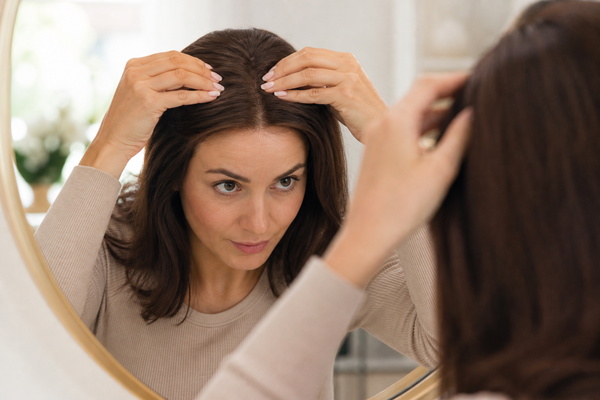
The Five Steps
- Prep your own hair. Brush it smooth and tangle-free. Then lift a thin layer at each anchor point and tease the roots very lightly with a comb. Clips hold on texture, not on slick, freshly washed hair.
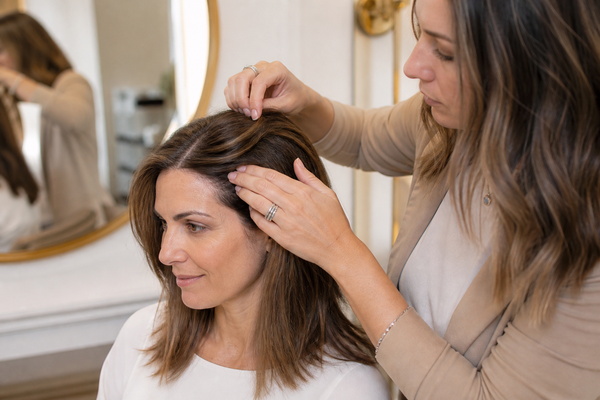
- Find the position. Place the front edge one to two finger-widths behind your natural hairline, centered on your part. Resist the urge to pull it forward to cover more. A topper that sits too far forward announces itself.
- Snap the front clips. Press each clip downward until you feel it close. The front edge sets the line everyone sees, so fix it first and let the rest follow.
- Snap the sides, then the back. Work outward and check the mirror between clips. If one side feels tighter, the topper will sit crooked within the hour.
- Blend. Release the hair you teased, comb your own hair down over the edges, and smooth everything with your fingers or a wide-tooth comb.
The Two-Mirror Check
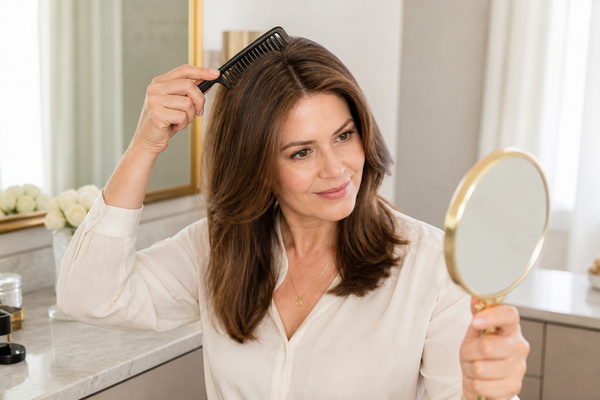
One mirror lies. A front view hides the crown, and the crown is where most placement errors live. Hold a hand mirror behind your head and check the back and sides in the bathroom mirror. Thirty seconds here saves an entire day of wearing a crooked topper.
How Do You Secure a Topper So It Stays All Day?
A topper that slips was rarely clipped wrong. It was clipped into the wrong hair. Clips that bite scalp-level strands have nothing to hold. Clips that bite a lifted, lightly teased layer hold through wind, sweat, and a full workday.
Secure a hair topper by snapping each clip into a lifted layer of hair with slight texture, keeping the tension even on both sides, and checking the fit with a gentle tug. The topper should feel snug, never tight. If it pulls or gives you a headache by lunch, something is anchored too hard.
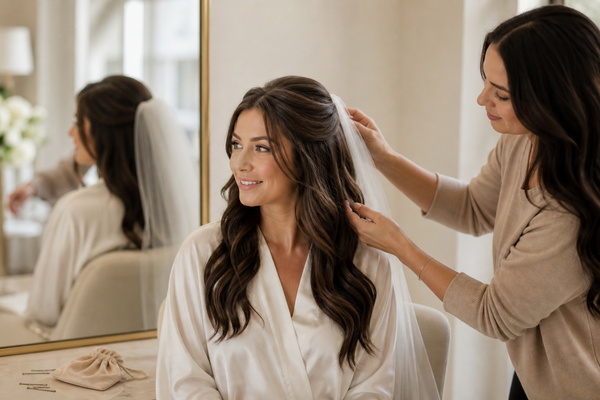
Where Each Clip Should Bite
| Clip position | What it should grip | Tip |
|---|---|---|
| Front clips | A thin, lightly teased layer near the hairline | Press straight down, never sideways |
| Side clips | Hair above the ears with some volume | Keep both sides equally tight |
| Back clips | The fullest layer at the back | Snap last, after the position is set |
Respect the hair that holds the topper. Clips should never pull hard, and constant tension on the same strands can contribute to traction alopecia[2] over time. Two habits protect you: shift the anchor points slightly from wear to wear, and give your hair a rest on quieter days at home.
Wind, Sweat, and Long Days
Wind finds a loose edge, and sweat makes roots slippery. For a long day outdoors or an important event, add two bobby pins crossed over the topper edge where your own hair covers them, and keep a light hold spray off the base itself. Micro-adjust the moment something shifts. A five-second fix now prevents the slow slide that ends with a topper sitting half an inch too low by dinner.
What If You Can’t or Won’t Use Clips?
Clips work for most wearers, but not for all. Fine, fragile hair may not offer a solid layer to grip. A sensitive scalp can react to pressure. And some wearers simply want a longer-lasting hold than daily clipping.
If clips are not an option, hair toppers can also be held with wig tape for short wears, skin-safe adhesive for extended wear, or integration systems where your own hair threads through the base. Tape suits special occasions and holds for a day or two. Adhesive bonding, best with professional help, holds for weeks and needs careful removal. Integration systems blend your growing hair through a mesh base for a semi-permanent result. Each method trades convenience for commitment, so I compare them in full in a separate clipless toppers guide.
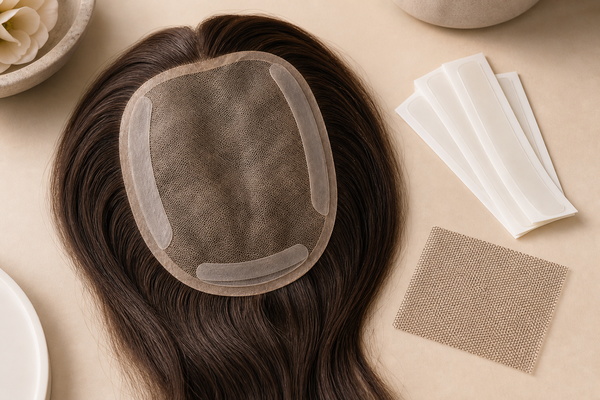
How Do You Blend Your Natural Hair with a Topper?
The topper for thinning hair should never hide its own edge. Your own hair does that. When the blend fails, it is almost always because the topper hair sits on top like a second layer instead of merging into one.
Blend a hair topper by combing your own hair down over the front and side edges, matching the texture of both hair types, and softening any visible line with a wide-tooth comb or a light touch of backcombing underneath. The goal is one silhouette, not two.
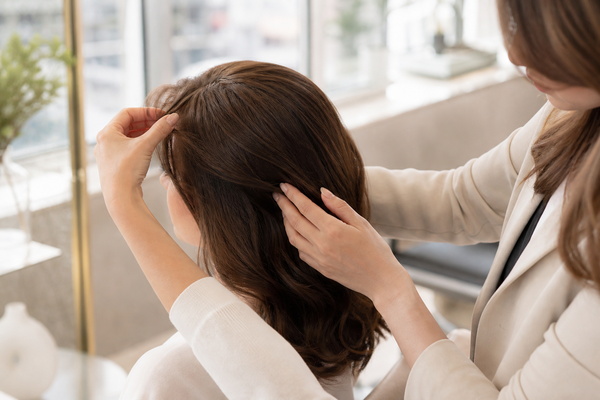
Four Moves That Blend
- Cover the front edge. Comb your own hair down and forward so it falls over the first half inch of the base.
- Match the texture. If your hair is wavy, give the topper a soft wave with a large-barrel curling iron on low heat. Straight topper over wavy hair shows a seam.
- Unify with a wide-tooth comb. One or two gentle passes bring the two hair types together without flattening the volume you just added.
- Soften any line. If a hard edge still shows, backcomb a pinch of your own hair just behind it, or let a few face-framing pieces fall forward.
The strongest blends hide in plain sight. Nobody notices one head of hair. They notice two.
What Hairstyles Work Best with a Topper?
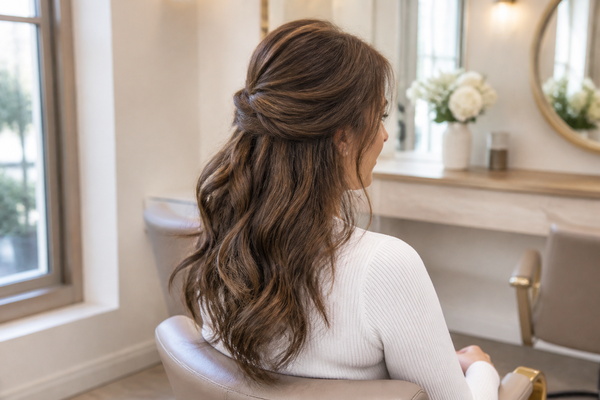
A topper frees you more than it restricts you, but not every style is free. The rule of thumb is simple: styles that pull hair up and away from the base expose it. Styles that keep hair down or gathered low protect it.
Wear a hair topper with hair down, half-up styles, low ponytails, and loose braids. Avoid high, tight ponytails and slicked-back styles, which pull the hair away from the base and can expose the edge.
Style by Style
| Hairstyle | Works with a topper? | Notes |
|---|---|---|
| Hair down | Yes | The most natural option; edge stays fully covered |
| Half-up | Yes | Keep the gathered section behind the topper base |
| Low ponytail | Yes, with care | Blend your hair and topper hair together first |
| High ponytail | Rarely | Pulls away from the base and exposes the edge |
| Loose braids | Yes | Keep the start of the braid below the base |
| Sleek bun | No | Tension plus exposed edge; save it for off days |
Dermatologists also warn against constant tension from tight styling. Styles that pull on the hair can cause breakage and gradual hair loss[3] when worn day after day, so keep ponytails loose and let your hair down on quiet days. The same experts recommend keeping heat moderate: irons on dry hair, low or medium settings, and rest days in between.
How Do You Keep It Comfortable for All-Day Wear?
A well-fitted topper disappears. You forget it is on. Comfort is the honest signal that the fit is right, so learn to read it.
A hair topper is comfortable when it feels snug but painless, stays put under a gentle tug, and leaves no marks or headache by evening. Test the fit with the tug check: lift the edge gently with one finger. It should resist, then spring back. If it slides, a clip is loose. If it hurts, a clip is anchored too hard.

Comfort Signals and What They Mean
| Signal | Meaning | Fix |
|---|---|---|
| Headache by midday | Clips anchored too tight | Open, re-tease a thinner layer, re-snap |
| Edge slides under a tug | Slick or too-fine anchor hair | Light backcomb at the anchor points |
| Tender spots after removing | Same roots bear the load daily | Shift clip positions slightly between wears |
| Warm, itchy scalp | Base sitting flat with no airflow | Lift the base when re-positioning; choose days off |
One boundary worth naming: a topper covers thinning hair, and clips rest on the hair you have. If your natural hair seems to be thinning faster than before, do not solve it with a tighter topper. Read about hair loss[4] causes and speak with a doctor about what is happening underneath.
Can You Sleep, Work Out, or Swim in It?
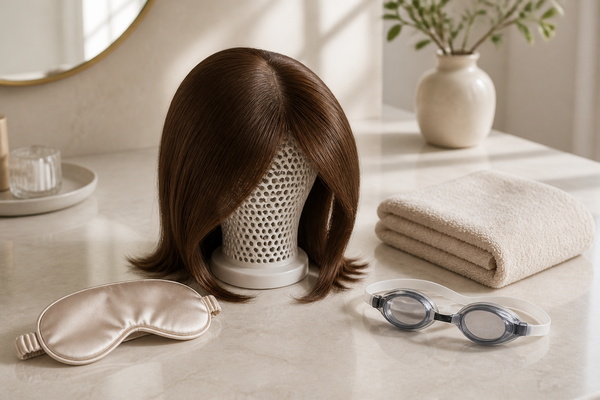
The short, honest answer: a clip-in topper comes out at night. Sleeping on it tangles the hair and bends the clips out of shape. Workouts depend on intensity: a walk or gentle yoga is fine when the topper is anchored well, but running and high-intensity training need a tighter strategy, and swimming is best done without it. Chlorine and salt water age topper hair fast, and wet hair under the clips slips. I cover the full rules for sleeping, exercise, and water in a separate guide, so this one stays focused on the daily wear routine.
Why Does a Topper Slip, Lift, or Look Bulky—and How Do You Fix It?
Every wear problem traces back to one of three causes: the clips grip the wrong hair, the tension sits uneven, or the edge never got blended. Diagnose before you adjust, because the fixes are different.
A hair topper slips when clips grip hair that is too fine or too slick, lifts when the front sits too far back or the edge is unblended, and looks bulky when your own hair is flat while the topper is full. Match the fix to the cause instead of re-clipping the same way harder.
Quick Fixes for Common Problems
| Problem | Likely cause | Fix |
|---|---|---|
| Slides during the day | Clips gripping slick, fine hair | Light backcomb at anchor points, re-snap |
| Front lifts when you smile | Edge too far back or unblended | Re-position forward slightly, comb hair over |
| Looks bulky and "wiggy" | Flat natural hair under a full topper | Tease your crown lightly before blending |
| Sits crooked by afternoon | Uneven side tension | Re-snap the looser side first, then balance |
| Bulge at the back | Base folded when stored | Smooth the base flat before positioning |
What Does a Five-Minute Morning Routine Look Like?
Everything in this guide compresses into one short routine. Position, anchor, blend, check, set. Practice it for two weeks and it takes five minutes flat, mirror included.
A five-minute topper routine: position the front edge, anchor the clips front to back, blend your hair over the edges, check with two mirrors, and set the style with one light pass of the comb. That is the whole morning.
The Routine at a Glance
| Step | Action | Time |
|---|---|---|
| 1. Position | Place the front edge, center on the part | 30 seconds |
| 2. Anchor | Tease lightly, snap clips front to back | 90 seconds |
| 3. Blend | Comb your hair over the edges, match texture | 2 minutes |
| 4. Check | Two mirrors: front, sides, crown | 30 seconds |
| 5. Set | One light comb pass, optional soft hold | 30 seconds |
Save this table to your phone for the first two weeks. After that, your hands will know the routine better than the list does, and the topper becomes what it should be: the easiest part of getting ready.
Conclusion
Wearing a topper well is a five-minute skill, not a talent. Place the edge behind your hairline, anchor into a teased layer with even tension, blend with your own hair, and keep styles low and loose. Comfort tells you the fit is right, and small fixes keep it that way. If you are ready to make it part of your morning, browse our human hair toppers collection.
References
Wikipedia — Toupée and the wider family of hairpieces. ↑ Back
Wikipedia — Traction alopecia and hair loss from constant tension. ↑ Back
American Academy of Dermatology — Hair styling without damage: heat settings and tension hairstyles. ↑ Back
Mayo Clinic — Hair loss symptoms and causes overview. ↑ Back