

What Are Hairline Extensions?
Hairline extensions are small, lightweight hairpieces designed to add volume around thinning temples, the front hairline, and the sides of the head. Unlike full hair toppers or traditional clip-in extensions, they provide targeted coverage exactly where extra fullness is needed.
Why We Created Hairline Extensions
- Full extension sets can add too much hair and look unnatural on fine or thinning hair.
- Traditional extensions may feel too heavy for delicate hair.
- Clips and wefts can show through areas with less coverage.
- Many women only need extra volume around the temples or sides of the hairline.
- Halo extensions, tape-ins, and full clip-in sets can feel unnecessarily complicated for everyday wear.
- Salon extensions can be expensive and require ongoing maintenance.
That is why we created lightweight, targeted Hairline Extensions that can be placed exactly where extra fullness is needed.
What Does Our Hairline Extensions Collection Include?
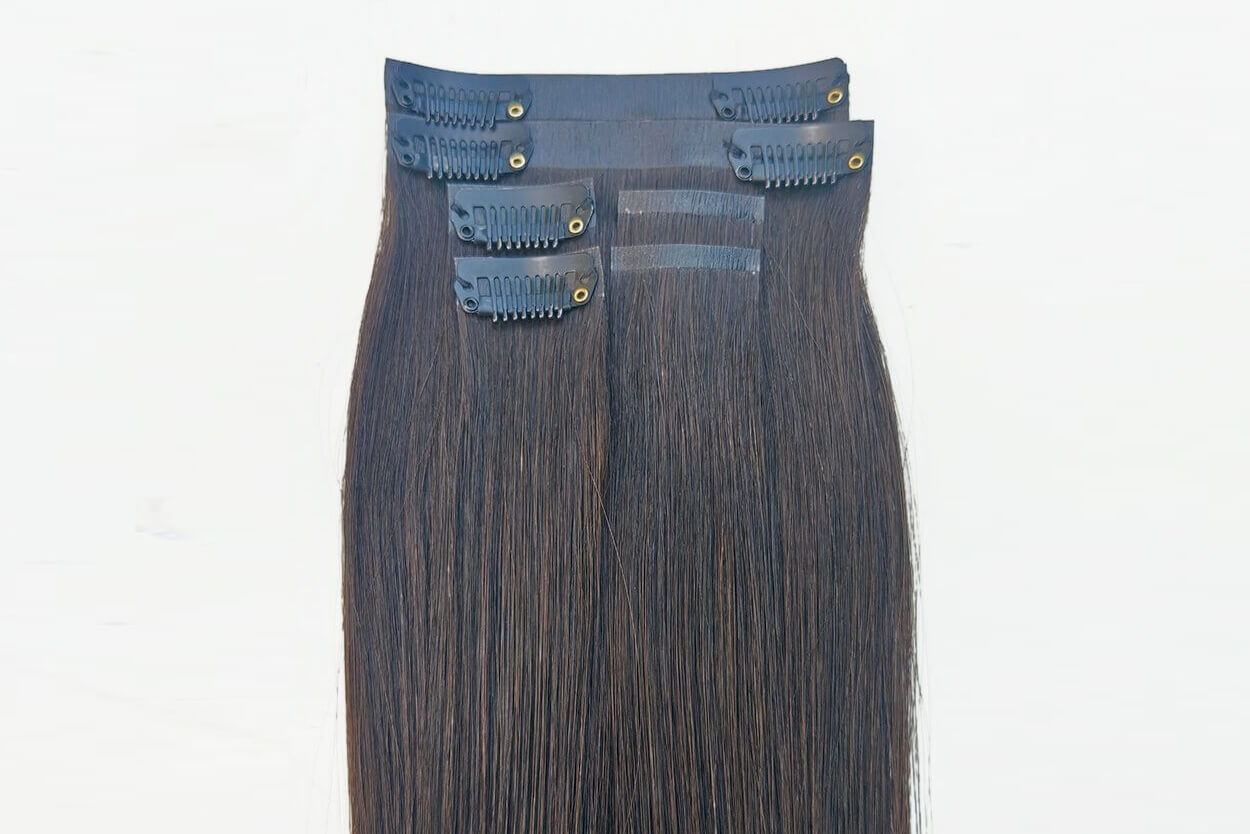
- Lengths: 12 inches and 14 inches
- Colors: 13 colors
- Weight: 40g for the 12-inch set and 45g for the 14-inch set
- Pieces: Each set contains six pieces—four 1-inch pieces and two 4-inch pieces
Who Can Benefit from Hairline Extensions?
- Women with fine or naturally thin hair.
- Women experiencing reduced volume around the temples or sides of the hairline.
- Women whose hair has become thinner with age.
- Women experiencing temporary hair thinning after pregnancy, stress, illness, or medical treatment.
- Women who want targeted fullness without wearing a full hair topper.
- Women who find traditional clip-ins too heavy or difficult to conceal.
- Women who want lightweight, natural-looking volume for everyday wear.
Hairline Extensions should only be clipped into areas with enough healthy hair to support and conceal the clips.
How Do Hairline Extensions Work?
- Small, lightweight pieces clip into healthy hair around the temples and sides of the hairline.
- The pieces are placed only where additional volume is needed.
- Natural hair is gently layered over the clips to conceal the attachment points.
- The added hair blends with your own hair, creating a fuller and more balanced appearance.
- Each piece can be repositioned to suit your hairline, hairstyle, and areas of thinning.
- They can be applied and removed at home without glue, tape, or salon maintenance.
Always attach them to areas with enough healthy hair to support and conceal the clips.
Where Should You Place Hairline Extensions?
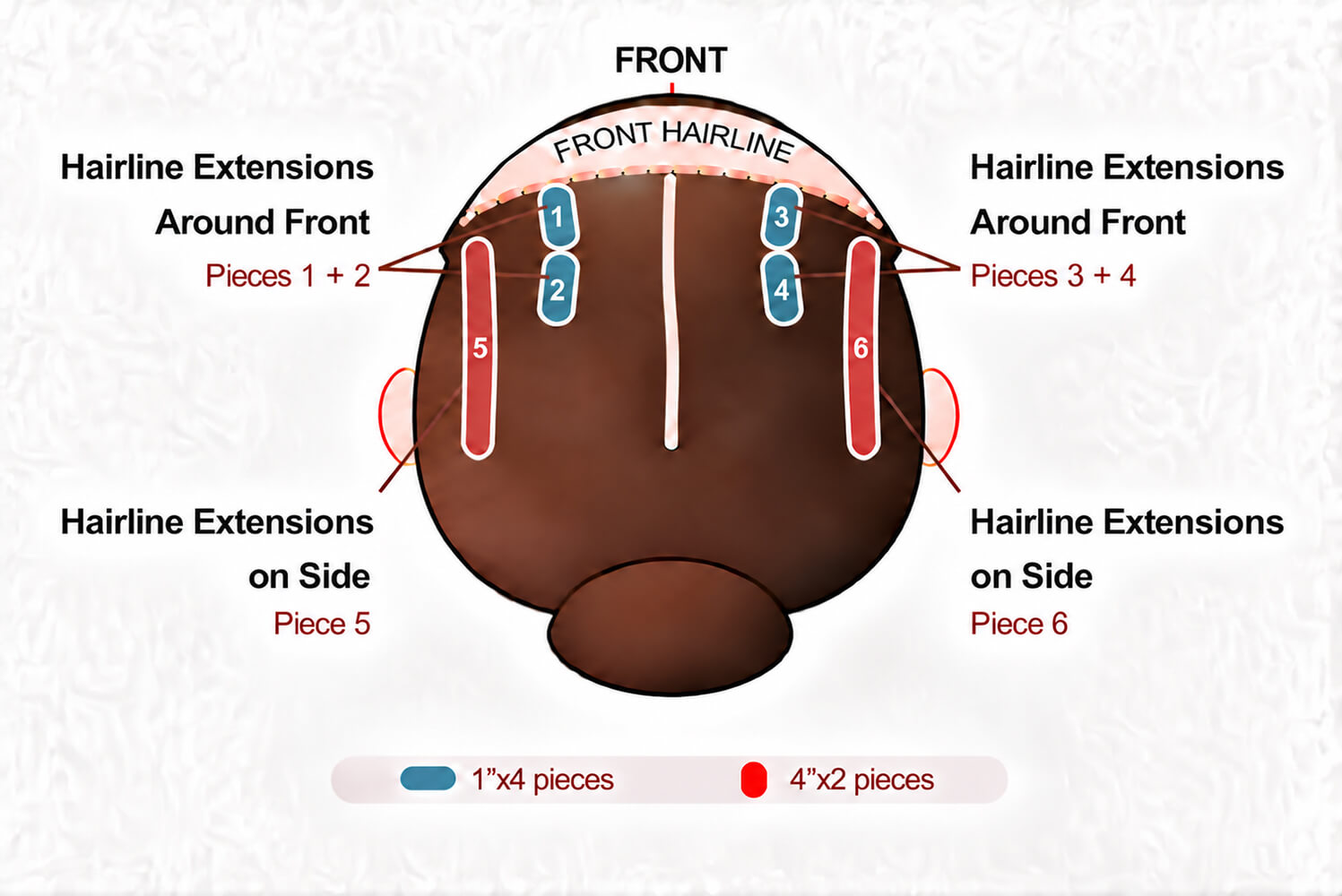
- Place the smaller pieces near the temples and front sides of the hairline.
- Position the longer pieces above the ears or along both sides of the head.
- Attach each piece slightly behind the visible hairline, not directly at the front edge.
- Cover the clips with a thin layer of natural hair for a seamless finish.
- Adjust the placement based on where you need additional fullness.
Safety Tips for Wearing Hairline Extensions
- Attach the clips only to areas with enough healthy hair to support and conceal them.
- Avoid clipping them directly onto very fragile, actively shedding, irritated, or extremely sparse areas.
- Place the clips slightly behind the visible hairline rather than directly on the delicate front edge.
- Change the placement slightly between wears to avoid repeatedly pulling on the same strands.
- Remove the hair extensions gently by opening each clip before lifting the piece away from your hair.
- Do not sleep, shower, swim, or exercise heavily while wearing the extensions.
- Remove them immediately if you experience pain, pulling, itching, redness, headaches, increased shedding, or broken hairs.
- Give your natural hair regular breaks between wears.
- Hairline Extensions add cosmetic volume but do not treat the underlying cause of hair loss.
- Speak with a dermatologist if your hair loss is sudden, severe, worsening, or accompanied by scalp discomfort.
Repeated pulling from extensions can contribute to traction alopecia1, so the extensions should never feel tight or painful.
Hairline Extensions vs. Hair Toppers
Hairline Extensions and hair toppers address different areas of thinning. Hairline Extensions add targeted volume around the temples and sides of the hairline, while hair toppers provide broader coverage across the top, crown, or part line.
| Feature | Hairline Extensions | Hair Topper |
|---|---|---|
| Main purpose | Add targeted volume around the hairline and temples | Cover wider thinning areas on the top or crown |
| Coverage area | Front sides, temples, and sides of the hairline | Part line, top, crown, and sometimes the front hairline |
| Construction | Several small, lightweight clip-in pieces | One larger hairpiece with a base |
| Volume | Light, localized fullness | Broader coverage and fuller volume |
| Best suited for | Mild or localized thinning with enough healthy supporting hair | More noticeable thinning across the top or crown |
| Placement flexibility | Each piece can be positioned separately | The entire topper is positioned as one piece |
| Daily appearance | Subtle and easy to blend into existing hair | Provides more complete coverage |
| Maintenance | Simple application and removal at home | May require more positioning, blending, and styling |
Choose Hairline Extensions when you only need extra fullness around the temples or sides. Choose a hair topper when the thinning extends across the part line, top, or crown.
Hairline Extensions vs. Traditional Clip-In Extensions
Traditional clip-in extensions are mainly designed to add noticeable length and volume throughout the hair. Hairline Extensions use smaller, lighter pieces to add subtle fullness only where it is needed.
| Feature | Hairline Extensions | Traditional Clip-In Extensions |
|---|---|---|
| Main purpose | Fill thinning areas around the hairline | Add overall length and volume |
| Piece size | Small, lightweight pieces | Wider wefts covering larger areas |
| Placement | Temples, front sides, and sides of the hairline | Back and sides of the head |
| Weight | 40g for 12 inches or 45g for 14 inches | Usually heavier because more hair is included |
| Coverage | Targeted and localized | Distributed across most of the head |
| Appearance | Designed for subtle, natural-looking fullness | Designed for a fuller and often longer hairstyle |
| Fine-hair suitability | Easier to position in areas with limited coverage | Wider wefts may be harder to conceal in fine hair |
| Application | Use only the pieces needed for each area | Usually requires arranging several wider wefts |
| Best suited for | Women who need targeted volume without a full set | Women who want noticeable length and overall volume |
Hairline Extensions are a better choice when a full clip-in set feels too heavy, provides too much hair, or is difficult to conceal. They are not intended to create the same dramatic length or full-head volume as traditional clip-ins.