

You found a topper online for $69. The photos look lush, and the seller promises real human hair. Then it arrives stiff, shiny, and thin at the roots.
You can buy a quality hair topper from a factory-direct brand online, a specialty hair loss retailer, or a wig salon. You judge quality by hair grade, cuticle alignment, base construction, density, and the seller’s return policy — not by price alone.
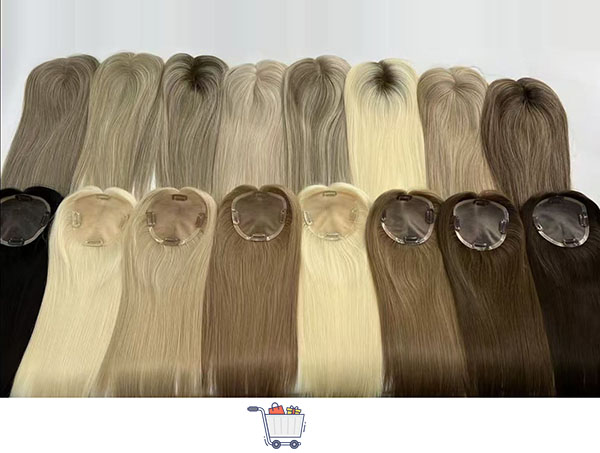
I have bought toppers through all three routes over the years, and I have also returned a few of them. Each route has a place, and each has traps. I will walk you through where the good toppers actually come from, how to spot a bad one before checkout, and the questions that separate honest sellers from resellers.
Where Can You Find the Best Human Hair Toppers?
Type "human hair topper" into any marketplace and thousands of listings appear. Many sell the same low-grade pieces at different prices. Only a few sellers deserve your money.
You can find the best human hair toppers from three sources: factory-direct brands that make their own pieces, specialty hair loss retailers with trained consultants, and wig salons that fit and cut in person. Factory-direct brands give the best value for the same hair.
What separates real factories from resellers
Serious sellers understand why you are buying. Most topper wearers start because of female pattern hair loss[1], not fashion, so a good seller asks about your coverage area before pushing a product. The hair itself usually comes from the same supply chain as hair extensions[2], and the price difference comes from sorting and quality control. Factory-direct brands cut the middle layer, so you pay for the hair, not for three markups.
| Where to buy | Typical price | Best for | Watch out for |
|---|---|---|---|
| Factory-direct brand online | $150–$400 | Known size and color, best value | Slow shipping, no in-person matching |
| Specialty hair loss retailer | $300–$700 | Guided selection, consultations | Higher markup on the same hair |
| Wig salon | $600–$1,500 | First-timers, fitting and blending | Price often triple the online cost |
| General marketplaces | $50–$150 | Nothing I would recommend | Mixed stock, no returns, fake photos |
Should You Buy a Hair Topper Online or From a Salon?
Salons often charge three times the online price. That gap makes buyers doubt everything. The real question is not price, though. It is what happens when the topper disappoints.
You should buy a hair topper online when you know your base size, color code, and length, because factory-direct online brands cost 40–70% less than salons. Choose a salon when you are a first-time wearer or need in-person color matching and blending.
The real risks of cheap online toppers
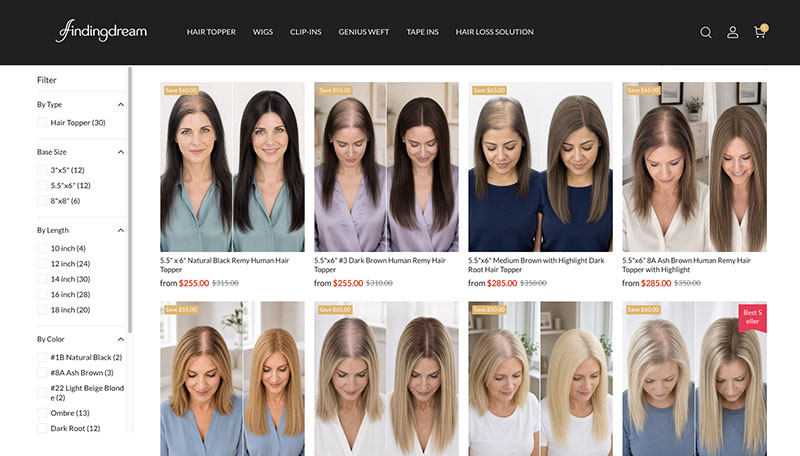
I learned the cheap-topper lesson myself. My first marketplace topper cost $58 and shed a handful of hair in one wash. The roots were see-through, and returns were "not accepted for hygiene reasons." Sellers count on that phrase. Because thinning from androgenetic alopecia[3] progresses slowly, buyers often blame their scalp instead of the piece. Insist on a written return window, even with a restocking fee.
| Question to ask before ordering | Why it matters |
|---|---|
| Is the hair cuticle aligned (remy)? | Reversed cuticles tangle within weeks |
| Can I see photos of the exact piece? | Stock photos hide thin density |
| What is your return window and fee? | 14–30 days with 10–20% restocking is fair |
| Can I exchange for a different color? | Color mismatch is the top return reason |
| Who pays return shipping? | International returns can cost $30+ |
What return policy should you expect?
Expect at least 14 days for an unworn piece with tags attached. Good sellers allow exchanges for color, because screens distort shade. If a listing says "all sales final" on human hair, treat that as a red flag, not a bargain.
How Can You Tell If a Human Hair Topper Is Good Quality?
Every listing claims "100% remy human hair." Those words mean nothing without proof. Quality shows up in details most shoppers never check before checkout.
You can tell a good human hair topper by five checks: cuticles running in one direction, full density at the root, a hand-tied or silk base, natural color graduation, and hair that stays soft after washing. Check these before you pay.
Five quality checks before you pay
The hair shaft[4] is your best lie detector. Aligned cuticles lie flat and reflect light softly, like bio hair. Stripped or reversed hair glitters under flash photos and mats at the neck within a month. I also part the piece at the root and hold it to daylight, because thin root density reads as a "wig line" no matter how full the ends look. Ashy roots fading into warm ends is natural; a flat single tone is not.
| Quality check | What good looks like | Red flag |
|---|---|---|
| Cuticle direction | Soft shine, no matting at the nape | High gloss, tangles after two washes |
| Root density | Full coverage at the hairline | See-through base at the part |
| Base construction | Hand-tied or silk, invisible knotting | Thick machine wefts at the front |
| Color graduation | Slight root shadow, natural tones | One flat color, plastic brightness |
| After a wash | Air-dries soft with light steam | Turns dry, bushy, or wiry |
How Many Hair Toppers Do You Need?
Your topper ages faster when it never gets a rest day. Wash day becomes a problem because you have nothing to wear. So the count matters more than people think.
Most women need two hair toppers: one to wear and one to rest, wash, or repair. If your hair loss is still progressing, buy one first, confirm the fit, then order the backup six to twelve months later.
Match your topper count to your stage of hair loss
One topper can last 10–14 months with daily wear, because hair loss[5] stages change and pieces wear out. I rotate two toppers and each has lasted past two years, because resting lets the knots tighten back after washing. But do not buy a drawer of pieces early. Your base size may grow as thinning spreads, and a backup bought too soon becomes useless. One, verify, then duplicate — that order saves money.
| Your situation | Toppers to own | Why |
|---|---|---|
| First topper, still testing color | 1 | Confirm fit before doubling down |
| Daily wear, stable thinning | 2 | Rotation doubles lifespan |
| Progressing coverage area | 2 in different base sizes | The larger base covers new thinning |
| Special events plus daily wear | 2 (one dressy, one casual) | Protects the everyday piece |
Do You Need a Professional Fitting or a Custom Hair Topper?
You ordered your usual base size, but the topper still gaps at the temples. Standard sizes do not fit every head. Sometimes only a fitting or a custom build works.
You do not need a professional fitting for a clip-in topper in a standard base size, but you do need one for bonded bases or unusual hair loss patterns. A topper can be custom made to match your exact density, color, and base.
When custom makes sense, and when it does not
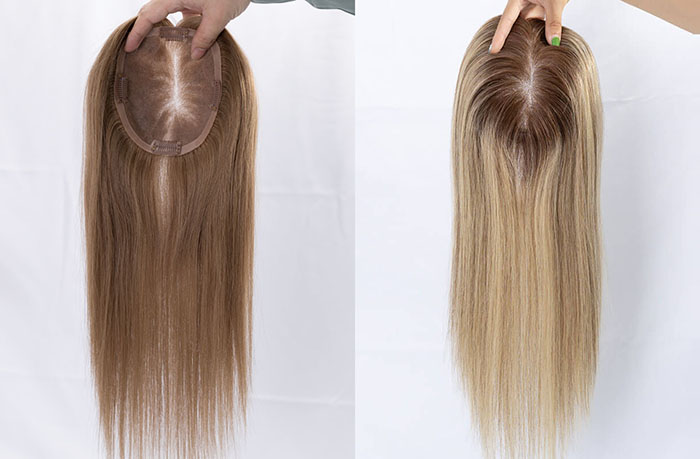
Custom is worth it for patchy loss such as alopecia areata[6], because standard rectangles rarely match uneven coverage. A custom base follows your exact thinning map, and the factory matches density and color from your sample. Expect four to eight weeks and a 20–40% price premium. But if a standard 5×5 or 6×6 covers you today, custom is money spent on patience you do not need.
How to find a stylist who cuts toppers
Ask any salon two questions: "How many toppers or wigs do you cut each month?" and "Do you cut on the head or on a block?" You want monthly experience and on-head blending, because a topper cut on a block sits wrong on your bio hair. Word of mouth in hair loss Facebook groups beats any directory listing.
| Service | Do you need it? | Typical cost |
|---|---|---|
| Clip-in topper, standard base | No fitting needed | $0 |
| Bonded or glued base | Yes, every refit | $50–$120 per visit |
| Custom base or color | Yes, for uneven loss patterns | +20–40% of piece price |
| Blending cut on the head | Recommended once | $40–$80 |
Conclusion
Buy where you can verify the hair and return the piece. Judge toppers by cuticle direction, root density, and base construction, not price. Start with one well-made piece, confirm fit and color, then rotate a second. Use a salon for fitting and blending, and go custom only when standard sizes truly fail you.
References
American Academy of Dermatology — Hair loss resource center with causes and treatment overviews from board-certified dermatologists. ↑ Back
Wikipedia — Artificial hair integrations: hair sourcing, fiber types, and attachment methods. ↑ Back
MedlinePlus Genetics — Androgenetic alopecia: how pattern hair loss progresses in women. ↑ Back
Wikipedia — Hair structure, including the hair shaft and cuticle layers. ↑ Back
Mayo Clinic — Hair loss symptoms and causes overview. ↑ Back
Mayo Clinic — Alopecia areata: patchy hair loss symptoms and causes. ↑ Back